

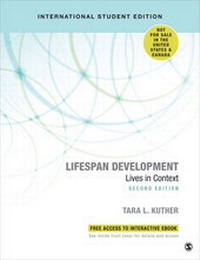
Lifespan Development - International Student Edition
Lives in Context
2nd Edition
Published on 14. February 2019
Book
Mixed media product
978-1-5443-7181-8 (ISBN)
Description
Integrating current research findings with foundational, classic theory and research, the second edition presents a comprehensive yet concise introduction to the field, exploring the diverse contexts that shape human development, including gender, race and ethnicity and socioeconomic status,. The text is organized around overviews brought to life in Dr. Kuther's Chalk Talks, a series of whiteboard-style animations that feature brief, captivating videos. Lively feature boxes and critical thinking questions encourage students to compare concepts, apply theoretical perspectives, and consider applications of research findings in their own lives and future careers.
The new edition features:
A streamlined organization for improved readability while retaining and enhancing coverage of major findings in developmental science
New and current research reflecting over 1,400 references published since 2016, including nearly 900 published in 2017 and 2018, in addition to discussions of classic research
A new chapter on death and dying (Chapter 19) covering the processes of death, how children and adults understand death, and coping with bereavement
The new edition features:
A streamlined organization for improved readability while retaining and enhancing coverage of major findings in developmental science
New and current research reflecting over 1,400 references published since 2016, including nearly 900 published in 2017 and 2018, in addition to discussions of classic research
A new chapter on death and dying (Chapter 19) covering the processes of death, how children and adults understand death, and coping with bereavement
More details
Edition
2nd Revised edition
Language
English
Place of publication
Thousand Oaks
United States
Target group
College/higher education
Edition type
Revised edition
Dimensions
Height: 276 mm
Width: 213 mm
Weight
1728 gr
ISBN-13
978-1-5443-7181-8 (9781544371818)
Copyright in bibliographic data and cover images is held by Nielsen Book Services Limited or by the publishers or by their respective licensors: all rights reserved.
Schweitzer Classification
Other editions
Additional editions
Book
04/2020
2nd Edition
SAGE Publications Inc
€142.62
The article will not be published
Person
Tara L. Kuther is professor of psychology at Western Connecticut State University where she has taught courses in child, adolescent, and adult development for 30 years. She earned her PhD in developmental psychology at Fordham University. Dr. Kuther is fellow of the Society for the Teaching of Psychology (APA, Division 2), has served in various capacities in the Society for the Teaching of Psychology and Society for Research on Adolescence, and is the former chair of the Teaching Committee for the Society for Research in Child Development. Her research interests include social cognition and risky activity in adolescence and adulthood. She is the award-winning author of Lifespan Development: Lives in Context, other developmental psychology texts, as well as books to promote student professional development and help them succeed in college and afterward.
Content
PART I. Foundations of LifeSpan Human Development
1. UNDERSTANDING HUMAN DEVELOPMENT: APPROACHES AND THEORIES
What Is LifeSpan Human Development?
Basic Issues in LifeSpan Human Development
Theoretical Perspectives on Human Development
Research in Human Development
Research Ethics
2. BIOLOGICAL AND ENVIRONMENTAL FOUNDATIONS
Genetic Foundations of Development
Chromosomal and Genetic Problems
Heredity and Environment
3. THE PRENATAL PERIOD, BIRTH, AND THE NEWBORN
Prenatal Development
Environmental Influences on Prenatal Development
Birth and the Newborn
PART II. Infancy and Toddlerhood
4. PHYSICAL DEVELOPMENT IN INFANCY AND TODDLERHOOD
Body Growth
Brain Development During Infancy and Toddlerhood
Early Learning Capacities
Sensation and Perception During Infancy and Toddlerhood
Motor Development During Infancy and Toddlerhood
5. COGNITIVE DEVELOPMENT IN INFANCY AND TODDLERHOOD
Piaget's Cognitive-Developmental Perspective
Information Processing
Individual Differences in Infant Intelligence
Language Development in Infancy
6. SOCIOEMOTIONAL DEVELOPMENT IN INFANCY AND TODDLERHOOD
Psychosocial Development in Infancy and Toddlerhood
Emotional Development in Infancy and Toddlerhood
Temperament
Attachment
Self-Concept and Self-Recognition
PART III. Early Childhood
7. PHYSICAL AND COGNITIVE DEVELOPMENT IN EARLY CHILDHOOD
Physical Development in Early Childhood
Cognitive-Developmental and Sociocultural Reasoning in Early Childhood
Information Processing in Early Childhood
Young Children's Language Development
Moral Development in Early Childhood
Early Childhood Education
8. SOCIOEMOTIONAL DEVELOPMENT IN EARLY CHILDHOOD
Emerging Sense of Self
Emotional Development
Parenting
Gender Stereotypes, Gender Differences, and Gender Development
Play and Peer Relationships
PART IV. Middle Childhood
9. PHYSICAL AND COGNITIVE DEVELOPMENT IN MIDDLE CHILDHOOD
Physical and Motor Development
Cognitive Development
Intelligence
Moral Development
Language Development
Learning and Schooling
10. SOCIOEMOTIONAL DEVELOPMENT IN MIDDLE CHILDHOOD
Psychosocial Development in Middle Childhood
Peer Relationships in Middle Childhood
Families in Middle Childhood
Common Socioemotional and Developmental Problems in Middle Childhood
PART V. Adolescence
11. PHYSICAL AND COGNITIVE DEVELOPMENT IN ADOLESCENCE
Conceptions of Adolescence
Physical Development in Adolescence
Brain Development in Adolescence
Adolescent Cognitive Development
Adolescent Moral Development
Schools and Academic Functioning in Adolescence 1870
12. SOCIOEMOTIONAL DEVELOPMENT IN ADOLESCENCE
Psychosocial Development: The Changing Self
Adolescents and Their Families
Adolescents and Their Peers
Adolescent Sexuality
Problems in Adolescence
PART VI. Early Adulthood
13. PHYSICAL AND COGNITIVE DEVELOPMENT IN EARLY ADULTHOOD
Emerging Adulthood: Transition to Adulthood
Physical Development in Emerging and Early Adulthood
Health, Fitness, and Wellness in Emerging and Early Adulthood
Cognitive Development in Emerging and Early Adulthood
Education in Emerging and Early Adulthood
Career Development in Emerging and Early Adulthood
14. SOCIOEMOTIONAL DEVELOPMENT IN EMERGING AND EARLY ADULTHOOD
Psychosocial Development in Emerging Adulthood and Early Adulthood
Relationships in Psychosocial Development in Emerging Adulthood and Early Adulthood
Lifestyles and Romantic Partnerships
Parenthood in Early Adulthood
PART VII. Middle Adulthood
15. PHYSICAL AND COGNITIVE DEVELOPMENT IN MIDDLE ADULTHOOD
Physical Development in Middle Adulthood
Health in Middle Adulthood
Intellectual Abilities in Middle Adulthood
Cognitive Development in Middle Adulthood
16. SOCIOEMOTIONAL DEVELOPMENT IN MIDDLE ADULTHOOD
Psychosocial Development in Middle Adulthood
The Self in Middle Adulthood
Relationships in Middle Adulthood
Careers in Middle Adulthood
PART VIII. Late Adulthood
17. PHYSICAL AND COGNITIVE DEVELOPMENT IN LATE ADULTHOOD
Physical Development in Late Adulthood
Health in Late Adulthood
Dementia in Late Adulthood
Cognitive Development in Late Adulthood
18. SOCIOEMOTIONAL DEVELOPMENT IN LATE ADULTHOOD
The Self in Late Adulthood
Late Adulthood and Social Contexts
Relationships in Late Adulthood
Retirement
19. DEATH AND DYING
Patterns of Mortality and Defining Death
Conceptions of Death Across the Lifespan
Dying and the Experience of Death
Bereavement and Grief
PART IX: ENDINGS
1. UNDERSTANDING HUMAN DEVELOPMENT: APPROACHES AND THEORIES
What Is LifeSpan Human Development?
Basic Issues in LifeSpan Human Development
Theoretical Perspectives on Human Development
Research in Human Development
Research Ethics
2. BIOLOGICAL AND ENVIRONMENTAL FOUNDATIONS
Genetic Foundations of Development
Chromosomal and Genetic Problems
Heredity and Environment
3. THE PRENATAL PERIOD, BIRTH, AND THE NEWBORN
Prenatal Development
Environmental Influences on Prenatal Development
Birth and the Newborn
PART II. Infancy and Toddlerhood
4. PHYSICAL DEVELOPMENT IN INFANCY AND TODDLERHOOD
Body Growth
Brain Development During Infancy and Toddlerhood
Early Learning Capacities
Sensation and Perception During Infancy and Toddlerhood
Motor Development During Infancy and Toddlerhood
5. COGNITIVE DEVELOPMENT IN INFANCY AND TODDLERHOOD
Piaget's Cognitive-Developmental Perspective
Information Processing
Individual Differences in Infant Intelligence
Language Development in Infancy
6. SOCIOEMOTIONAL DEVELOPMENT IN INFANCY AND TODDLERHOOD
Psychosocial Development in Infancy and Toddlerhood
Emotional Development in Infancy and Toddlerhood
Temperament
Attachment
Self-Concept and Self-Recognition
PART III. Early Childhood
7. PHYSICAL AND COGNITIVE DEVELOPMENT IN EARLY CHILDHOOD
Physical Development in Early Childhood
Cognitive-Developmental and Sociocultural Reasoning in Early Childhood
Information Processing in Early Childhood
Young Children's Language Development
Moral Development in Early Childhood
Early Childhood Education
8. SOCIOEMOTIONAL DEVELOPMENT IN EARLY CHILDHOOD
Emerging Sense of Self
Emotional Development
Parenting
Gender Stereotypes, Gender Differences, and Gender Development
Play and Peer Relationships
PART IV. Middle Childhood
9. PHYSICAL AND COGNITIVE DEVELOPMENT IN MIDDLE CHILDHOOD
Physical and Motor Development
Cognitive Development
Intelligence
Moral Development
Language Development
Learning and Schooling
10. SOCIOEMOTIONAL DEVELOPMENT IN MIDDLE CHILDHOOD
Psychosocial Development in Middle Childhood
Peer Relationships in Middle Childhood
Families in Middle Childhood
Common Socioemotional and Developmental Problems in Middle Childhood
PART V. Adolescence
11. PHYSICAL AND COGNITIVE DEVELOPMENT IN ADOLESCENCE
Conceptions of Adolescence
Physical Development in Adolescence
Brain Development in Adolescence
Adolescent Cognitive Development
Adolescent Moral Development
Schools and Academic Functioning in Adolescence 1870
12. SOCIOEMOTIONAL DEVELOPMENT IN ADOLESCENCE
Psychosocial Development: The Changing Self
Adolescents and Their Families
Adolescents and Their Peers
Adolescent Sexuality
Problems in Adolescence
PART VI. Early Adulthood
13. PHYSICAL AND COGNITIVE DEVELOPMENT IN EARLY ADULTHOOD
Emerging Adulthood: Transition to Adulthood
Physical Development in Emerging and Early Adulthood
Health, Fitness, and Wellness in Emerging and Early Adulthood
Cognitive Development in Emerging and Early Adulthood
Education in Emerging and Early Adulthood
Career Development in Emerging and Early Adulthood
14. SOCIOEMOTIONAL DEVELOPMENT IN EMERGING AND EARLY ADULTHOOD
Psychosocial Development in Emerging Adulthood and Early Adulthood
Relationships in Psychosocial Development in Emerging Adulthood and Early Adulthood
Lifestyles and Romantic Partnerships
Parenthood in Early Adulthood
PART VII. Middle Adulthood
15. PHYSICAL AND COGNITIVE DEVELOPMENT IN MIDDLE ADULTHOOD
Physical Development in Middle Adulthood
Health in Middle Adulthood
Intellectual Abilities in Middle Adulthood
Cognitive Development in Middle Adulthood
16. SOCIOEMOTIONAL DEVELOPMENT IN MIDDLE ADULTHOOD
Psychosocial Development in Middle Adulthood
The Self in Middle Adulthood
Relationships in Middle Adulthood
Careers in Middle Adulthood
PART VIII. Late Adulthood
17. PHYSICAL AND COGNITIVE DEVELOPMENT IN LATE ADULTHOOD
Physical Development in Late Adulthood
Health in Late Adulthood
Dementia in Late Adulthood
Cognitive Development in Late Adulthood
18. SOCIOEMOTIONAL DEVELOPMENT IN LATE ADULTHOOD
The Self in Late Adulthood
Late Adulthood and Social Contexts
Relationships in Late Adulthood
Retirement
19. DEATH AND DYING
Patterns of Mortality and Defining Death
Conceptions of Death Across the Lifespan
Dying and the Experience of Death
Bereavement and Grief
PART IX: ENDINGS