

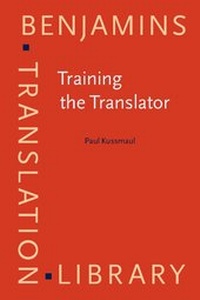
Training the Translator
Published on 16. March 1995
Book
Paperback/Softback
178 pages
978-90-272-1623-6 (ISBN)
Description
This book begins by investigating, through the use of think-aloud protocols, the mental processes of students when they translate. The creative and successful processes observed can be used directly for teaching purposes, while the unsuccessful ones can serve to find out where remedial training is needed. The book then goes on to discuss methods for improving a translator's competence. The strategies offered are based on the pragmatic and semantic analysis of texts from a functional point of view, and they include such practical matters as the use of dictionaries and the evaluation of translations and error analysis. The book is intended for teachers in translator-training institutions, but it can also be used by students for self-training.
Reviews / Votes
[...] a welcome addition to the library of anyone who has given some thought to the process of training future translators and wrestled with striking a balance between the theory and the practice of translation in their teaching. The book will be equally interesting to those translators who have pondered the basic issues involved in learning how to become adept in our professions. -- Loie Feuerle, The Gotham Translator, February 1996More details
Series
Language
English
Place of publication
Amsterdam
Netherlands
Target group
College/higher education
Professional and scholarly
Dimensions
Height: 240 mm
Width: 160 mm
Weight
270 gr
ISBN-13
978-90-272-1623-6 (9789027216236)
Copyright in bibliographic data and cover images is held by Nielsen Book Services Limited or by the publishers or by their respective licensors: all rights reserved.
Schweitzer Classification
Person
Content
1. Acknowledgements; 2. Introduction; 3. Chapter 1. What goes on in the translator's mind?; 4. Chapter 2. Creativity in translation; 5. Chapter 3. Pragmatic analysis; 6. Chapter 4. the analysis of meaning; 7. Chapter 5. Text analysis and the use of dictionairies; 8. Chapter 6. Evaluation and errors; 9. Chapter 7. A summary of strategies; 10. Bibliography; 11. Subject index; 12. Author index