

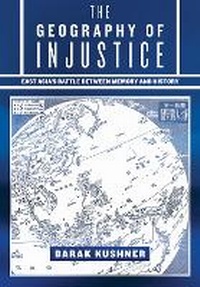
The Geography of Injustice
East Asia's Battle Between Memory and History
Published on 15. March 2024
Book
Hardback
360 pages
978-1-5017-7401-0 (ISBN)
Description
In The Geography of Injustice, Barak Kushner argues that the war crimes tribunals in East Asia formed and cemented national divides that persist into the present day. In 1946 the Allies convened the Tokyo Trial to prosecute Japanese wartime atrocities and Japan's empire. At its conclusion one of the judges voiced dissent, claiming that the justice found at Tokyo was only "the sham employment of a legal process for the satisfaction of a thirst for revenge."
War crimes tribunals, Kushner shows, allow for the history of the defeated to be heard. In contemporary East Asia a fierce battle between memory and history has consolidated political camps across this debate. The Tokyo Trial courtroom, as well as the thousands of other war crimes tribunals opened in about fifty venues across Asia, were legal stages where prosecution and defense curated facts and evidence to craft their story about World War Two. These narratives and counter narratives form the basis of postwar memory concerning Japan's imperial aims across the region. The archival record and the interpretation of court testimony together shape a competing set of histories for public consumption. The Geography of Injustice offers compelling evidence that despite the passage of seven decades since the end of the war, East Asia is more divided than united by history.
War crimes tribunals, Kushner shows, allow for the history of the defeated to be heard. In contemporary East Asia a fierce battle between memory and history has consolidated political camps across this debate. The Tokyo Trial courtroom, as well as the thousands of other war crimes tribunals opened in about fifty venues across Asia, were legal stages where prosecution and defense curated facts and evidence to craft their story about World War Two. These narratives and counter narratives form the basis of postwar memory concerning Japan's imperial aims across the region. The archival record and the interpretation of court testimony together shape a competing set of histories for public consumption. The Geography of Injustice offers compelling evidence that despite the passage of seven decades since the end of the war, East Asia is more divided than united by history.
Reviews / Votes
Through revealing details and astute commentaries, Kushner demonstrates why WWII has cast such a haunting shadow over East Asia while the rest of the world seems to have long moved on.(International Affairs) With its rich analysis of post-WWII legal, political, and cultural dynamics, this book is essential reading for understanding the region's historical and ongoing tensions.
(Australian Outlook)
More details
Language
English
Place of publication
Ithaca
United States
Product notice
Paper over boards
Illustrations
11 b&w halftones, 3 maps - 3 Maps - 11 Halftones, black and white
Dimensions
Height: 229 mm
Width: 152 mm
Thickness: 30 mm
Weight
907 gr
ISBN-13
978-1-5017-7401-0 (9781501774010)
Copyright in bibliographic data and cover images is held by Nielsen Book Services Limited or by the publishers or by their respective licensors: all rights reserved.
Schweitzer Classification
Other editions
Additional editions
E-Book
03/2024
Cornell University Press
€41.49
Available for download
Person
Barak Kushner is Professor of East Asian History in the Faculty of Asian and Middle Eastern Studies, Cambridge University. He is the author of several edited volumes and monographs, including Men to Devils, Devils to Men, The Thought War, and Slurp!
Content
Introduction: Making Bad Television
1. The Kaleidoscope of Defeat in East Asia
2. The Shape of Justice: Creating New Symbols of InternationalStature
3. When the Hero of Your Story is the Villain of Another
4. Laying Blame for Japan's War Responsibility
5. The Tyranny of Tiny Decisions: the Failure of the Japanese Left
6. The Violence of Imperial Dissolution at the Periphery
7. The Geography of Power: Producing Political Legitimacy inRepublican China
8. Creating a Theater of Law in Mao's China
9. The Pathology of Justice in Post-Occupation Japan
10. Behind the Curtain: Shaping Sino-Japanese Postwar AttitudesToward Justice
11. Evaporating Legal Memory and KMT War Criminals
12. Owning the War: Constructing the Contours of National History,1970s-1980s
13. Afterlives of the Damned : the Commemoration of Justice and Injustice, 1990s to the Present
Conclusion: The Poverty of Political Ambition in East Asia
1. The Kaleidoscope of Defeat in East Asia
2. The Shape of Justice: Creating New Symbols of InternationalStature
3. When the Hero of Your Story is the Villain of Another
4. Laying Blame for Japan's War Responsibility
5. The Tyranny of Tiny Decisions: the Failure of the Japanese Left
6. The Violence of Imperial Dissolution at the Periphery
7. The Geography of Power: Producing Political Legitimacy inRepublican China
8. Creating a Theater of Law in Mao's China
9. The Pathology of Justice in Post-Occupation Japan
10. Behind the Curtain: Shaping Sino-Japanese Postwar AttitudesToward Justice
11. Evaporating Legal Memory and KMT War Criminals
12. Owning the War: Constructing the Contours of National History,1970s-1980s
13. Afterlives of the Damned : the Commemoration of Justice and Injustice, 1990s to the Present
Conclusion: The Poverty of Political Ambition in East Asia