

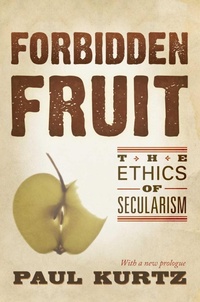
Forbidden Fruit
The Ethics of Secularism
Published on 25. November 2008
Book
Paperback/Softback
326 pages
978-1-59102-666-2 (ISBN)
Description
Paul Kurtz, America's leading secular humanist philosopher, affirms that it is possible to live the good life and be morally responsible, without belief in religion. In this original and penetrating book, Kurtz delineates the means by which humanity can transcend the limitations of traditional religious loyalties and achieve a higher stage of ethics.
Fundamentalists deny the possibility ofethics without belief in God. Conservatives rail against secularists. Yet belief in God is no guarantee of moral virtue - as the evils committed in the name of religion have vividly shown. Are there secularethical principles and values that are vital for a world in crisis?
In this new edition ofForbidden Fruit, Kurtz defends the ethics of secularism and humanism. In order to progress to a maximum level of creative development, he maintains that we must be nourished by the "forbidden fruit" of the knowledge of good and evil, grounding principles and values in autonomous reason. This is the path that leads to the discovery of significant ethical truths that can guide both self-reliant conduct and consideration for the rights of others. By breaking the bonds of theistic illusion, we can summon the courage and wisdom to develop a rational ethic based on a realistic appraisal of nature and an awareness of the centrality of the moral decencies common to all peoples.
The ultimate key to the good life, Kurtz writes, is to eat of the fruit of the second tree in the Garden of Eden - the tree of life - discovering for ourselves the manifold potentialities for a bountiful existance.
Forbidden Fruitcontains important chapters on ethical excellences for individuals, moral education for children, and thoughts on privacy and human rights,in addition to presenting concrete ethical recommendations as alternatives to the reigning orthodoxies.
Fundamentalists deny the possibility ofethics without belief in God. Conservatives rail against secularists. Yet belief in God is no guarantee of moral virtue - as the evils committed in the name of religion have vividly shown. Are there secularethical principles and values that are vital for a world in crisis?
In this new edition ofForbidden Fruit, Kurtz defends the ethics of secularism and humanism. In order to progress to a maximum level of creative development, he maintains that we must be nourished by the "forbidden fruit" of the knowledge of good and evil, grounding principles and values in autonomous reason. This is the path that leads to the discovery of significant ethical truths that can guide both self-reliant conduct and consideration for the rights of others. By breaking the bonds of theistic illusion, we can summon the courage and wisdom to develop a rational ethic based on a realistic appraisal of nature and an awareness of the centrality of the moral decencies common to all peoples.
The ultimate key to the good life, Kurtz writes, is to eat of the fruit of the second tree in the Garden of Eden - the tree of life - discovering for ourselves the manifold potentialities for a bountiful existance.
Forbidden Fruitcontains important chapters on ethical excellences for individuals, moral education for children, and thoughts on privacy and human rights,in addition to presenting concrete ethical recommendations as alternatives to the reigning orthodoxies.
More details
Language
English
Place of publication
Amherst
United States
Product notice
Paperback (trade)
Dimensions
Height: 226 mm
Width: 153 mm
Thickness: 18 mm
Weight
431 gr
ISBN-13
978-1-59102-666-2 (9781591026662)
Copyright in bibliographic data and cover images is held by Nielsen Book Services Limited or by the publishers or by their respective licensors: all rights reserved.
Schweitzer Classification
Other editions
Additional editions
E-Book
10/2010
Prometheus Books
€14.83
Available for download
Person
By Paul Kurtz