

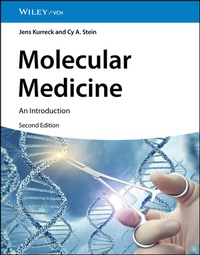
Molecular Medicine
An Introduction
2nd Edition
Published on 23. April 2025
Book
Paperback/Softback
464 pages
978-3-527-35239-5 (ISBN)
Description
Extensively updated, the new edition of this pioneering textbook for Molecular Medicine covers 14 modules from molecular diagnostics to precision medicine approaches, stem cells, and gene therapy.
Reviews / Votes
Ein sehr gut strukturiertes, übersichtliches und sehr aktuelles Lehrbuch mit sehr gut erklärenden Abbildungen. (Dr. Ursula Hoja, Paracelsus Medizinische Universität, Nürnberg)More details
Edition
2. Auflage
Language
English
Place of publication
New York
United States
Publishing group
Wiley-VCH
Target group
College/higher education
Professional and scholarly
Illustrations
307
307 farbige Abbildungen
307 farbige Abbildungen
Dimensions
Height: 276 mm
Width: 219 mm
Thickness: 30 mm
Weight
1277 gr
ISBN-13
978-3-527-35239-5 (9783527352395)
Schweitzer Classification
Other editions
Additional editions
E-Book
03/2025
2nd Edition
Wiley
€93.99
Available for download
E-Book
03/2025
2nd Edition
Wiley
€93.99
Available for download
Previous edition
Book
12/2015
1st Edition
Wiley-Blackwell
€95.90
Article exhausted; check for reprint
Persons
Jens Kurreck is full Professor for Applied Biochemistry at the Berlin University of Technology (TUB), Germany. He studied biochemistry and philosophy at the Free University of Berlin (FUB) and completed his PhD at the TUB in 1998. His research focuses on RNA technologies, pain research and virology.
Cy A. Stein is Professor of Oncology and Experimental Therapeutics at the City of Hope Medical Center in Duarte, CA, USA. He received a Ph.D. in chemistry from Stanford University and the M.D. degree at the Albert Einstein College of Medicine, NY, in 1982. He has received numerous awards, among them the Clinical Career Development Award of the American Cancer Society.
Cy A. Stein is Professor of Oncology and Experimental Therapeutics at the City of Hope Medical Center in Duarte, CA, USA. He received a Ph.D. in chemistry from Stanford University and the M.D. degree at the Albert Einstein College of Medicine, NY, in 1982. He has received numerous awards, among them the Clinical Career Development Award of the American Cancer Society.
Content
1 Introduction
1.1 The Basics of Molecular Medicine
1.2 The Human Cell
1.3 DNA Replication and Gene Expression
1.4 Biological Communication
1.5 The Immune System
2 Methods in Molecular Medicine
2.1 DNA Microarrays
2.2 Quantitative Polymerase Chain Reaction
2.3 Next-Generation Sequencing
2.4 Proteomics
2.5 Animal Models in Biomedical Research
2.6 Alternatives to Animal Testing
2.7 Additional Methods
3 Genetic Disorders
3.1 Single-Gene Disorders
3.2 Polygenic Disorders
4 Molecular Oncology
4.1 Basics of Oncology
4.2 Selected Cancer Diseases
4.3 Oncolytic Virus Therapy
4.4 Cancer Stem Cells
4.5 Cancer Immunotherapy
5 Molecular Virology
5.1 The Basics of Virology
5.2 Vaccination
5.3 Detection of Viruses
5.4 Antiviral Therapy
5.5 Prions
6 Bacteria and Eukaryotic Pathogens
6.1 Bacteria
6.2 Eukaryotic Pathogens
7 Genomics and Proteomics
7.1 Whole Genome Sequencing
7.2 The Human Genome
7.3 Sequencing of Ancient DNA
7.4 Follow-up Initiatives of the Human Genome Project
8 Genetic Testing
8.1 Types of Genetic Tests
8.2 Chromosome Abnormalities
8.3 Molecular Diagnosis
9 Pharmacogenetics/Pharmacogenomics
9.1 Uptake and Transport of Drugs
9.2 Drug Metabolism
9.3 Drug Targeting
9.4 Drug Toxicity and Hypersensitivity
9.5 Drug Development and Individual Pharmacotherapy
10 Recombinant Protein Drugs
10.1 Production of Recombinant Proteins
10.2 Classes of Recombinant Drugs
11 Gene Therapy
11.1 Types of Gene Therapy
11.2 Methods of Gene Transfer
11.3 Tissue Specificity of Gene Transfer and Gene Expression
11.4 Applications of Gene Therapy
11.5 Genome Editing with CRISPR/Cas
11.6 Future Prospects
12 Stem Cells
12.1 Embryonic Stem Cells
12.2 Adult Stem Cells
12.3 Induced Pluripotent Stem Cells
12.4 Transdifferentiation and Direct Reprogramming
12.5 Differentiation of Stem Cells
12.6 Medical Applications of Stem Cells
13 Oligonucleotide-based Strategies
13.1 Antisense Oligonucleotides
13.2 RNA Interference
13.3 MicroRNAs
13.4 Aptamers, Decoy Oligonucleotides, and Immunostimulatory Oligonucleotides
14 Ethics in Molecular Medicine
14.1 The Basis of Bioethics
14.2 Fields of Application
1.1 The Basics of Molecular Medicine
1.2 The Human Cell
1.3 DNA Replication and Gene Expression
1.4 Biological Communication
1.5 The Immune System
2 Methods in Molecular Medicine
2.1 DNA Microarrays
2.2 Quantitative Polymerase Chain Reaction
2.3 Next-Generation Sequencing
2.4 Proteomics
2.5 Animal Models in Biomedical Research
2.6 Alternatives to Animal Testing
2.7 Additional Methods
3 Genetic Disorders
3.1 Single-Gene Disorders
3.2 Polygenic Disorders
4 Molecular Oncology
4.1 Basics of Oncology
4.2 Selected Cancer Diseases
4.3 Oncolytic Virus Therapy
4.4 Cancer Stem Cells
4.5 Cancer Immunotherapy
5 Molecular Virology
5.1 The Basics of Virology
5.2 Vaccination
5.3 Detection of Viruses
5.4 Antiviral Therapy
5.5 Prions
6 Bacteria and Eukaryotic Pathogens
6.1 Bacteria
6.2 Eukaryotic Pathogens
7 Genomics and Proteomics
7.1 Whole Genome Sequencing
7.2 The Human Genome
7.3 Sequencing of Ancient DNA
7.4 Follow-up Initiatives of the Human Genome Project
8 Genetic Testing
8.1 Types of Genetic Tests
8.2 Chromosome Abnormalities
8.3 Molecular Diagnosis
9 Pharmacogenetics/Pharmacogenomics
9.1 Uptake and Transport of Drugs
9.2 Drug Metabolism
9.3 Drug Targeting
9.4 Drug Toxicity and Hypersensitivity
9.5 Drug Development and Individual Pharmacotherapy
10 Recombinant Protein Drugs
10.1 Production of Recombinant Proteins
10.2 Classes of Recombinant Drugs
11 Gene Therapy
11.1 Types of Gene Therapy
11.2 Methods of Gene Transfer
11.3 Tissue Specificity of Gene Transfer and Gene Expression
11.4 Applications of Gene Therapy
11.5 Genome Editing with CRISPR/Cas
11.6 Future Prospects
12 Stem Cells
12.1 Embryonic Stem Cells
12.2 Adult Stem Cells
12.3 Induced Pluripotent Stem Cells
12.4 Transdifferentiation and Direct Reprogramming
12.5 Differentiation of Stem Cells
12.6 Medical Applications of Stem Cells
13 Oligonucleotide-based Strategies
13.1 Antisense Oligonucleotides
13.2 RNA Interference
13.3 MicroRNAs
13.4 Aptamers, Decoy Oligonucleotides, and Immunostimulatory Oligonucleotides
14 Ethics in Molecular Medicine
14.1 The Basis of Bioethics
14.2 Fields of Application