

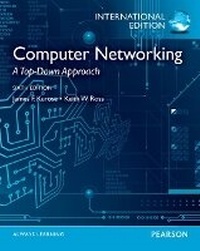
Computer Networking: A Top-Down Approach: International Edition
6th Edition
Published on 3. May 2012
Book
Mixed media product
888 pages
978-0-273-76896-8 (ISBN)
Description
Building on the successful top-down approach of previous editions, the Sixth Edition of Computer Networking continues with an early emphasis on application-layer paradigms and application programming interfaces (the top layer), encouraging a hands-on experience with protocols and networking concepts, before working down the protocol stack to more abstract layers. This book has become the dominant book for this course because of the authors' reputations, the precision of explanation, the quality of the art program, and the value of their own supplements.
More details
Edition
6th edition
Language
English
Place of publication
Harlow
United Kingdom
Target group
Adult education
Illustrations
Illustrations
Dimensions
Height: 234 mm
Width: 193 mm
Thickness: 34 mm
Weight
1320 gr
ISBN-13
978-0-273-76896-8 (9780273768968)
Copyright in bibliographic data and cover images is held by Nielsen Book Services Limited or by the publishers or by their respective licensors: all rights reserved.
Schweitzer Classification
Other editions
New editions
James Kurose | James F. Kurose | Keith Ross
Computer Networking: A Top-Down Approach, Global Edition
Book
06/2021
8th Edition
Pearson Education Limited
€94.49
Available immediately
James Kurose | Keith Ross
Computer Networking: A Top-Down Approach, Global Edition
Book
01/2021
7th Edition
Pearson Education Limited
€94.27
Shipment within 10-20 days
Previous edition
Book
06/2009
5th Edition
Pearson
€59.41
Article exhausted; check for reprint
Content
Chapter 1 Computer Networks and the Internet 1
1.1 What Is the Internet? 2
1.1.1 A Nuts-and-Bolts Description 2
1.1.2 A Services Description 5
1.1.3 What Is a Protocol? 7
1.2 The Network Edge 9
1.2.1 Access Networks 12
1.2.3 Physical Media 18
1.3 The Network Core 22
1.3.1 Packet Switching 22
1.3.2 Circuit Switching 27
1.3.3 A Network of Networks 32
1.4 Delay, Loss, and Throughput in Packet-Switched Networks 35
1.4.1 Overview of Delay in Packet-Switched Networks 35
1.4.2 Queuing Delay and Packet Loss 39
1.4.3 End-to-End Delay 42
1.4.4 Throughput in Computer Networks 44
1.5 Protocol Layers and Their Service Models 47
1.5.1 Layered Architecture 47
1.5.2 Encapsulation 53
1.6 Networks Under Attack 55
1.7 History of Computer Networking and the Internet 60
1.7.1 The Development of Packet Switching: 1961-1972 60
1.7.2 Proprietary Networks and Internetworking: 1972-1980 62
1.7.3 A Proliferation of Networks: 1980-1990 63
1.7.4 The Internet Explosion: The 1990s 64
1.7.5 The New Millennium 65
1.8 Summary 66
Homework Problems and Questions 68
Problems 70
Wireshark Lab 78
Interview: Leonard Kleinrock 80
Chapter 2 Application Layer 83
2.1 Principles of Network Applications 84
2.1.1 Network Application Architectures 86
2.1.2 Processes Communicating 88
2.1.3 Transport Services Available to Applications 91
2.1.4 Transport Services Provided by the Internet 93
2.1.5 Application-Layer Protocols 96
2.1.6 Network Applications Covered in This Book 97
2.2 The Web and HTTP 98
2.2.1 Overview of HTTP 98
2.2.2 Non-Persistent and Persistent Connections 100
2.2.3 HTTP Message Format 103
2.2.4 User-Server Interaction: Cookies 108
2.2.5 Web Caching 110
2.2.6 The Conditional GET 114
2.3 File Transfer: FTP 116
2.3.1 FTP Commands and Replies 118
2.4 Electronic Mail in the Internet 118
2.4.1 SMTP 121
2.4.2 Comparison with HTTP 124
2.4.3 Mail Message Format 125
2.4.4 Mail Access Protocols 125
2.5 DNS-The Internet's Directory Service 130
2.5.1 Services Provided by DNS 131
2.5.2 Overview of How DNS Works 133
2.5.3 DNS Records and Messages 139
2.6 Peer-to-Peer Applications 144
2.6.1 P2P File Distribution 145
2.6.2 Distributed Hash Tables (DHTs) 151
2.6.3 Case Study: P2P Internet Telephony with Skype 158
2.7 Socket Programming: Creating Network Applications 156
2.7.1 Socket Programming with UDP 157
2.7.2 Socket Programming with TCP 163
2.8 Summary 168
Homework Problems and Questions 169
Problems 171
Socket Programming Assignments 179
Wireshark Labs 181
Interview: Bram Cohen 182
Chapter 3 Transport Layer 185
3.1 Introduction and Transport-Layer Services 186
3.1.1 Relationship Between Transport and Network Layers 186
3.1.2 Overview of the Transport Layer in the Internet 189
3.2 Multiplexing and Demultiplexing 191
3.3 Connectionless Transport: UDP 198
3.3.1 UDP Segment Structure 202
3.3.2 UDP Checksum 202
3.4 Principles of Reliable Data Transfer 204
3.4.1 Building a Reliable Data Transfer Protocol 206
3.4.2 Pipelined Reliable Data Transfer Protocols 215
3.4.3 Go-Back-N (GBN) 218
3.4.4 Selective Repeat (SR) 223
3.5 Connection-Oriented Transport: TCP 230
3.5.1 The TCP Connection 231
3.5.2 TCP Segment Structure 233
3.5.3 Round-Trip Time Estimation and Timeout 238
3.5.4 Reliable Data Transfer 242
3.5.5 Flow Control 250
3.5.6 TCP Connection Management 252
3.6 Principles of Congestion Control 259
3.6.1 The Causes and the Costs of Congestion 259
3.6.2 Approaches to Congestion Control 265
3.6.3 Network-Assisted Congestion-Control Example:
ATM ABR Congestion Control 266
3.7 TCP Congestion Control 269
3.7.1 Fairness 279
3.8 Summary 283
Homework Problems and Questions 285
Problems 288
Programming Assignments 300
Wiresh
1.1 What Is the Internet? 2
1.1.1 A Nuts-and-Bolts Description 2
1.1.2 A Services Description 5
1.1.3 What Is a Protocol? 7
1.2 The Network Edge 9
1.2.1 Access Networks 12
1.2.3 Physical Media 18
1.3 The Network Core 22
1.3.1 Packet Switching 22
1.3.2 Circuit Switching 27
1.3.3 A Network of Networks 32
1.4 Delay, Loss, and Throughput in Packet-Switched Networks 35
1.4.1 Overview of Delay in Packet-Switched Networks 35
1.4.2 Queuing Delay and Packet Loss 39
1.4.3 End-to-End Delay 42
1.4.4 Throughput in Computer Networks 44
1.5 Protocol Layers and Their Service Models 47
1.5.1 Layered Architecture 47
1.5.2 Encapsulation 53
1.6 Networks Under Attack 55
1.7 History of Computer Networking and the Internet 60
1.7.1 The Development of Packet Switching: 1961-1972 60
1.7.2 Proprietary Networks and Internetworking: 1972-1980 62
1.7.3 A Proliferation of Networks: 1980-1990 63
1.7.4 The Internet Explosion: The 1990s 64
1.7.5 The New Millennium 65
1.8 Summary 66
Homework Problems and Questions 68
Problems 70
Wireshark Lab 78
Interview: Leonard Kleinrock 80
Chapter 2 Application Layer 83
2.1 Principles of Network Applications 84
2.1.1 Network Application Architectures 86
2.1.2 Processes Communicating 88
2.1.3 Transport Services Available to Applications 91
2.1.4 Transport Services Provided by the Internet 93
2.1.5 Application-Layer Protocols 96
2.1.6 Network Applications Covered in This Book 97
2.2 The Web and HTTP 98
2.2.1 Overview of HTTP 98
2.2.2 Non-Persistent and Persistent Connections 100
2.2.3 HTTP Message Format 103
2.2.4 User-Server Interaction: Cookies 108
2.2.5 Web Caching 110
2.2.6 The Conditional GET 114
2.3 File Transfer: FTP 116
2.3.1 FTP Commands and Replies 118
2.4 Electronic Mail in the Internet 118
2.4.1 SMTP 121
2.4.2 Comparison with HTTP 124
2.4.3 Mail Message Format 125
2.4.4 Mail Access Protocols 125
2.5 DNS-The Internet's Directory Service 130
2.5.1 Services Provided by DNS 131
2.5.2 Overview of How DNS Works 133
2.5.3 DNS Records and Messages 139
2.6 Peer-to-Peer Applications 144
2.6.1 P2P File Distribution 145
2.6.2 Distributed Hash Tables (DHTs) 151
2.6.3 Case Study: P2P Internet Telephony with Skype 158
2.7 Socket Programming: Creating Network Applications 156
2.7.1 Socket Programming with UDP 157
2.7.2 Socket Programming with TCP 163
2.8 Summary 168
Homework Problems and Questions 169
Problems 171
Socket Programming Assignments 179
Wireshark Labs 181
Interview: Bram Cohen 182
Chapter 3 Transport Layer 185
3.1 Introduction and Transport-Layer Services 186
3.1.1 Relationship Between Transport and Network Layers 186
3.1.2 Overview of the Transport Layer in the Internet 189
3.2 Multiplexing and Demultiplexing 191
3.3 Connectionless Transport: UDP 198
3.3.1 UDP Segment Structure 202
3.3.2 UDP Checksum 202
3.4 Principles of Reliable Data Transfer 204
3.4.1 Building a Reliable Data Transfer Protocol 206
3.4.2 Pipelined Reliable Data Transfer Protocols 215
3.4.3 Go-Back-N (GBN) 218
3.4.4 Selective Repeat (SR) 223
3.5 Connection-Oriented Transport: TCP 230
3.5.1 The TCP Connection 231
3.5.2 TCP Segment Structure 233
3.5.3 Round-Trip Time Estimation and Timeout 238
3.5.4 Reliable Data Transfer 242
3.5.5 Flow Control 250
3.5.6 TCP Connection Management 252
3.6 Principles of Congestion Control 259
3.6.1 The Causes and the Costs of Congestion 259
3.6.2 Approaches to Congestion Control 265
3.6.3 Network-Assisted Congestion-Control Example:
ATM ABR Congestion Control 266
3.7 TCP Congestion Control 269
3.7.1 Fairness 279
3.8 Summary 283
Homework Problems and Questions 285
Problems 288
Programming Assignments 300
Wiresh