

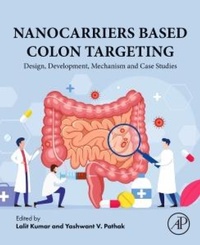
Nanocarriers Based Colon Targeting
Design, Development, Mechanism and Case Studies
Published on 30. May 2025
Book
Paperback/Softback
840 pages
978-0-443-24806-1 (ISBN)
Description
Nanocarriers Based Colon Targeting: Design, Development, Mechanism and Case Studies unveils a groundbreaking exploration of nanotechnology's potential in revolutionizing drug delivery for colon-related ailments. Today, an array of colonic diseases, including colorectal cancer, colonic polyps, ulcerative colitis, and inflammatory bowel syndrome, pose significant medical challenges. Conventional methods to deliver drugs to this system prove difficult, with limited efficacy and notable side effects. This book delves into the intricate complexities of colonic diseases, their pathophysiology, and epidemiology to support pharmaceutical scientists in designing better drug delivery systems. Providing a comprehensive overview of the area, the chapters elucidate diverse targeting strategies, from time-dependent to microbiota-based drug delivery systems, and explore receptor-based and magnetically assisted delivery mechanisms. Case studies dissected the working mechanisms behind polymeric nanoparticles, polymersomes, polymeric micelles, solid lipid nanoparticles, and other nanocarrier systems tailored for colon targeting. Additionally, this book explores cuttingedge topics such as gold nanoparticles, supra-magnetic iron oxide nanoparticles, and protein-peptide-based nanoparticles, highlighting their mechanisms, applications, and potential toxicities. Merging an overview of colonic pathophysiology with in-depth reviews of each nanomaterial used for drug delivery and practical case studies, Nanocarriers Based Colon Targeting: Design, Development, Mechanism and Case Studies is a complete reference for pharmaceutical scientists involved in elevating drug delivery precision and therapeutic efficacy in this organ system. Toxicologists, material scientists, research physicians, and regulators can also benefit from the case studies developed by expert authors.
More details
Language
English
Place of publication
San Diego
United States
Publishing group
Elsevier Science Publishing Co Inc
Target group
Professional and scholarly
Product notice
Paperback (trade)
Unsewn / adhesive bound
Dimensions
Height: 234 mm
Width: 190 mm
Thickness: 40 mm
Weight
1701 gr
ISBN-13
978-0-443-24806-1 (9780443248061)
Copyright in bibliographic data and cover images is held by Nielsen Book Services Limited or by the publishers or by their respective licensors: all rights reserved.
Schweitzer Classification
Other editions
Additional editions
Lalit Kumar | Yashwant Pathak
Nanocarriers Based Colon Targeting
Design, Development, Mechanism and Case Studies
E-Book
04/2025
Elsevier
€186.99
Available for download
Persons
Lalit Kumar is an Assistant Professor in the Department of Pharmaceutics at the National Institute of Pharmaceutical Education and Research, Hajipur, Vaishali, Bihar, India. His area of research includes the development of nanocarriers for drug-targeting tumor cells in the colon, brain, breast, and lungs. Yashwant Pathak is a Professor at Taneja College of Pharmacy at the University of South Florida, FL, United States. His area of research is nanotechnology, drug delivery systems, and nutraceuticals. He is also an Ad junct Professor at the Faculty of Pharmacy, Airlangga University, Surabaya, Indonesia.
Content
An Overview on Colonic Diseases
Colonic disease - targeting strategies
Nanocarriers for the colonic diseases
Applications of nanocarriers in colon targeting
Polymeric nanoparticles in colon targeting
Polymersomes in colon targeting
Polymeric micelles in colon targeting
Solid lipid nanoparticles in colon targeting
Nanostructured lipid carriers in colon targeting
Liposomes in colon targeting
Carbon-based nanomaterials in colon targeting
Gold nanoparticles in colon targeting
Supramagnetic iron oxide nanoparticles for colon targeting
Magnetic triblock copolymer nanoparticles in colon targeting
Dendrimer nanoparticles for colon targeting
Mesoporous silica nanoparticles in colon targeting
Redox nanoparticles in colon drug targeting
Protein and peptides-based nanoparticles in colon targeting
Hybrid nanoparticles in colon targeting
Polysaccharides Based nanocarriers in colon targeting
Nanocrystals based approach in colon targeting
Nano-based enema's for colon targeting
Exosomes in colon targeting
Nano carriers in Inflammatory Bowel Disease and Colorectal Cancer
Self-Nano Emulsifying Drug Delivery Systems in Colon Targeting
Pre-clinical and clinical status of different nanocarriers for colon targeting
Regulatory issues and toxicological concerns related to nanocarriers
Colonic disease - targeting strategies
Nanocarriers for the colonic diseases
Applications of nanocarriers in colon targeting
Polymeric nanoparticles in colon targeting
Polymersomes in colon targeting
Polymeric micelles in colon targeting
Solid lipid nanoparticles in colon targeting
Nanostructured lipid carriers in colon targeting
Liposomes in colon targeting
Carbon-based nanomaterials in colon targeting
Gold nanoparticles in colon targeting
Supramagnetic iron oxide nanoparticles for colon targeting
Magnetic triblock copolymer nanoparticles in colon targeting
Dendrimer nanoparticles for colon targeting
Mesoporous silica nanoparticles in colon targeting
Redox nanoparticles in colon drug targeting
Protein and peptides-based nanoparticles in colon targeting
Hybrid nanoparticles in colon targeting
Polysaccharides Based nanocarriers in colon targeting
Nanocrystals based approach in colon targeting
Nano-based enema's for colon targeting
Exosomes in colon targeting
Nano carriers in Inflammatory Bowel Disease and Colorectal Cancer
Self-Nano Emulsifying Drug Delivery Systems in Colon Targeting
Pre-clinical and clinical status of different nanocarriers for colon targeting
Regulatory issues and toxicological concerns related to nanocarriers