

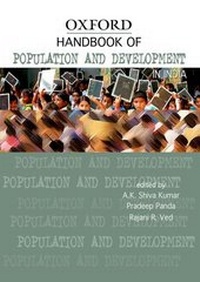
Handbook of Population and Development in India
Published in December 2013
Book
Paperback/Softback
256 pages
978-0-19-808823-3 (ISBN)
Description
The Indian demographic scenario is characterized by large regional variations in population trends, uneven human development, adverse sex ratios, growing urbanization, and internal rural-to-urban migration. This handbook provides a comprehensive understanding of the population-development linkages through an engagement with human development, human rights, and gender justice perspectives.
The linkages between population size, birth rates, economic well-being, environmental sustainability, and economic growth are complex. The volume uses the latest Census and National Family Health Survey data, this volume analyses a wide range of topical issues-food security, fertility, opportunities for the youth and the girl child, media and public health, and women's empowerment. Identifying past trends and future challenges, the volume calls for a more humane approach to population stabilization and endorses the popular tenet-'take care of people and the population will take care of itself'.
The linkages between population size, birth rates, economic well-being, environmental sustainability, and economic growth are complex. The volume uses the latest Census and National Family Health Survey data, this volume analyses a wide range of topical issues-food security, fertility, opportunities for the youth and the girl child, media and public health, and women's empowerment. Identifying past trends and future challenges, the volume calls for a more humane approach to population stabilization and endorses the popular tenet-'take care of people and the population will take care of itself'.
More details
Language
English
Place of publication
New Delhi
India
Target group
College/higher education
Dimensions
Height: 243 mm
Width: 183 mm
Thickness: 15 mm
Weight
376 gr
ISBN-13
978-0-19-808823-3 (9780198088233)
Copyright in bibliographic data and cover images is held by Nielsen Book Services Limited or by the publishers or by their respective licensors: all rights reserved.
Schweitzer Classification
Persons
A. K. Shiva Kumar is a development economist and Adviser to UNICEF India; Pradeep Panda is Deputy Director of Research, Micro Insurance Academy, New Delhi; Rajani R. Ved is Adviser, National Health Systems Resource Centre, New Delhi.
Content
LIST OF TABLES; FIGURES, AND BOXES; LIST OF CONTRIBUTORS; FOREWORD BY M.S. SWAMINATHAN; 1. POPULATION AND HUMAN DEVELOPMENT: CONTEMPORARY CONCERNS; 2. REAPING THE DEMOGRAPHIC DIVIDEND; 3. POPULATION, ENVIRONMENT AND CLIMATE CHANGE; 4. WHY PENALIZE PEOPLE?; 5. POPULATION AND FOOD SECURITY;; 6. REVISITING INDIA'S POPULATION POLICIES; 7. NATIONAL POPULATION POLICY 2000: WHAT CAN IT ACHIEVE REALISTICALLY?; 8. REDUCING MATERNAL MORTALITY; 9. FERTILITY AND EPIDEMIOLOGICAL TRANSITIONS: CRACKS IN INDIA'S HEALTH POLICY; 10. FERTILITY DECLINE IN SOUTH INDIAN STATES; 11. FERTILITY TRANSITION: LESSONS FROM SOUTH INDIA; 12. UNDERSTANDING THE YOUNG MIND; 13. THE UNWANTED GIRL CHILD; 14. AN EXPLOSION OF ASPIRATIONS; 15. REPRODUCTIVE RIGHTS AND COMMUNITY ACTION; 16. MEDIA AND PUBLIC HEALTH: NEITHER FISH NOR FOWL; 17. WOMEN IN INDIA'S NATIONAL POPULATION POLICY: IS EMPOWERMENT ENOUGH?; 18. THE CHANGING CONTEXT AND MEANING OF WOMEN'S EMPOWERMENT; APPENDIX 1: NATIONAL POPULATION POLICY OF INDIA 2000; APPENDIX 2: POPULATION STATISTICS; GLOSSARY