


Ethics and Future Generations
1st Edition
Published on 12. December 2019
Book
Paperback/Softback
278 pages
978-0-367-89143-5 (ISBN)
Description
Existing human beings stand in a unique relationship of asymmetrical influence over future generations. Our choices now can settle whether there are any human beings in the further future; how many will exist; what capacities and abilities they might have; and what the character of the natural world they inhabit is like.
This volume, with contributions from both new voices and prominent, established figures in moral and political philosophy, examines three generally underexplored themes concerning morality and our relationship to future generations. First, would it be morally wrong to allow humanity to go extinct? Or do we have moral reasons to try and ensure that humanity continues into the indefinite future? Second, if humanity is to continue into the future, how many people should there be? And is it morally important whether they have lives that are of high quality or are just barely worth living? And third, how can we best make sense of the intuitive idea that by not taking action on climate change and preserving natural resources, we are in some way wronging future generations? This book was originally published as a special issue of the Canadian Journal of Philosophy.
This volume, with contributions from both new voices and prominent, established figures in moral and political philosophy, examines three generally underexplored themes concerning morality and our relationship to future generations. First, would it be morally wrong to allow humanity to go extinct? Or do we have moral reasons to try and ensure that humanity continues into the indefinite future? Second, if humanity is to continue into the future, how many people should there be? And is it morally important whether they have lives that are of high quality or are just barely worth living? And third, how can we best make sense of the intuitive idea that by not taking action on climate change and preserving natural resources, we are in some way wronging future generations? This book was originally published as a special issue of the Canadian Journal of Philosophy.
More details
Language
English
Place of publication
London
United Kingdom
Publishing group
Taylor & Francis Ltd
Target group
College/higher education
Postgraduate and Undergraduate
Dimensions
Height: 234 mm
Width: 156 mm
Weight
530 gr
ISBN-13
978-0-367-89143-5 (9780367891435)
Copyright in bibliographic data and cover images is held by Nielsen Book Services Limited or by the publishers or by their respective licensors: all rights reserved.
Schweitzer Classification
Other editions
Additional editions
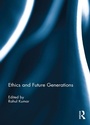
Rahul Kumar
Ethics and Future Generations
E-Book
10/2018
1st Edition
Routledge
€58.99
Available for download
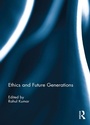
Rahul Kumar
Ethics and Future Generations
E-Book
10/2018
1st Edition
Routledge
€59.49
Available for download

Rahul Kumar
Ethics and Future Generations
Book
10/2017
1st Edition
Routledge
€215.41
Shipment within 10-20 days
Person
Rahul Kumar is Professor in the Department of Philosophy at Queen's University, Canada.
Content
1. Rethinking the Asymmetry 2. A portable defense of the Procreation Asymmetry 3. Is a person-affecting solution to the non-identity problem impossible? Axiology, accessibility and additional people 4. Our obligations to future generations: the limits of intergenerational justice and the necessity of the ethics of metaphysics 5. Citizens in appropriate numbers: evaluating five claims about justice and population size 6. The savings problem in the original position: assessing and revising a model 7. How should utilitarians think about the future? 8. The ethics of intergenerational relationships 9. What's wrong with human extinction? 10. On the survival of humanity 11. The threat of intergenerational extortion: on the temptation to become the climate mafia, masquerading as an intergenerational Robin Hood 12. Endangering humanity: an international crime? 13. Human rights, harm, and climate change mitigation