

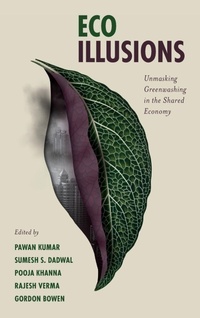
Eco Illusions
Unmasking Greenwashing in the Shared Economy
Will be published approx. on 17. March 2026
Book
Hardback
432 pages
978-1-83662-783-8 (ISBN)
Description
Some businesses engage in "greenwashing" or "shared washing," creating a misleading eco-friendly image to deceive consumers into thinking their services are environmentally friendly. As people become more aware of their environmental impact, scrutiny of these deceptive practices in the shared economy has increased. This phenomenon skews public perception, making companies seem more environmentally conscious than they actually are.
Eco Illusions: Unmasking Greenwashing in the Shared Economy explores the trends, issues, practices, and models of greenwashing within the shared economy. This edited collection examines the strategic and operational tactics that companies use to promote misleading environmental claims and create eco-friendly images that may not reflect reality. Authors analyse how shared economy businesses employ greenwashing strategies to present themselves as environmentally conscious, even when their actions contradict their claims. The collection provides recommendations for establishing credible Environmental, Social, and Governance (ESG) standards and legal regulations. It also offers practical advice to stakeholders on how to verify green claims and encourages companies to adopt ethical practices and greater transparency in their operations.
By equipping readers with knowledge and practical tools to identify misleading environmental claims, Eco Illusions empowers stakeholders to advocate for more authentic and transparent business practices in the shared economy.
Eco Illusions: Unmasking Greenwashing in the Shared Economy explores the trends, issues, practices, and models of greenwashing within the shared economy. This edited collection examines the strategic and operational tactics that companies use to promote misleading environmental claims and create eco-friendly images that may not reflect reality. Authors analyse how shared economy businesses employ greenwashing strategies to present themselves as environmentally conscious, even when their actions contradict their claims. The collection provides recommendations for establishing credible Environmental, Social, and Governance (ESG) standards and legal regulations. It also offers practical advice to stakeholders on how to verify green claims and encourages companies to adopt ethical practices and greater transparency in their operations.
By equipping readers with knowledge and practical tools to identify misleading environmental claims, Eco Illusions empowers stakeholders to advocate for more authentic and transparent business practices in the shared economy.
More details
Language
English
Place of publication
Bingley
United Kingdom
Target group
Professional and scholarly
Dimensions
Height: 235 mm
Width: 157 mm
Thickness: 24 mm
Weight
686 gr
ISBN-13
978-1-83662-783-8 (9781836627838)
Copyright in bibliographic data and cover images is held by Nielsen Book Services Limited or by the publishers or by their respective licensors: all rights reserved.
Schweitzer Classification
Persons
Pawan Kumar is Professor in the Department of Marketing at Mittal School of Business, Lovely Professional University, Punjab, India.
Sumesh S. Dadwal is Lecturer with Northumbria London Campus and Visiting Lecturer at University of West London and the University of Plymouth (London), UK.
Pooja Khanna is Associate Professor in the Department of Marketing at Mittal School of Business, Lovely Professional University, Punjab, India.
Rajesh Verma is Professor of Strategy at the Mittal School of Business, Lovely Professional University, India.
Gordon Bowen is Associate Professor at Anglia Ruskin University, UK.
Sumesh S. Dadwal is Lecturer with Northumbria London Campus and Visiting Lecturer at University of West London and the University of Plymouth (London), UK.
Pooja Khanna is Associate Professor in the Department of Marketing at Mittal School of Business, Lovely Professional University, Punjab, India.
Rajesh Verma is Professor of Strategy at the Mittal School of Business, Lovely Professional University, India.
Gordon Bowen is Associate Professor at Anglia Ruskin University, UK.
Content
Chapter 1. The Association Between Greenwashing, Green Economy, and Green Growth in Achieving the SDGs for Global Transformation; Mohd Farhan, Essa Yessuf Hussen, Rajesh Verma, Krishan Gopal, Pooja Khanna, Pritpal Singh, and Ruchika Kulshrestha
Chapter 2. Intersecting Paradigms: Reducing Greenwashing, Ensuring Sustainable Claims and Achieving Corporate Transparency; Arpit Tiwari, Shyam Sunder Agrawal, Pawan Kumar, and Seda Yildirim
Chapter 3. Leveraging Artificial Intelligence to Detect Greenwashing in Shared Economy Business Models; N. Suma Reddy and Pooja Khanna
Chapter 4. The Role of Technology and Social Media in Exposing Greenwashing in the Shared Economy; Abdillahi Mohamoud Sheikh Muse, Abubakar Sadiq Muhammad, Labaran Isiaku, and Jana Al Hajj
Chapter 5. Greenwashing in the Age of Digital Media: An Empirical Study; Mahnoor Sahrash, Soumya Nedunuri, Sumayya Fatima, and Anvita Chitrapu
Chapter 6. Eco-Stories: How Companies Interact in the Digital Age; Narinder Kaur, Dheeraj Nim, and Sanjay Bahl
Chapter 7. Moderating Role of Demographic Variables in the Link between Greenwashing Perception, Attitude, and Green Purchase Intention; Kritika Gupta
Chapter 8. Beyond the Green Facade: New Challenges in Detecting and Preventing Greenwashing in Indian Companies; Ram Singh, Vinay Pal Singh, Rohit Bansal, and Fazla Rabby
Chapter 9. Unmasking Greenwashing and Building Social Trust: Role of Social Media Influencer; Pinnika Syam Yadav, P B Narendra Kiran, M Ruben Anto, G N P V Babu, Ankitha Sharma, and Arun Kumar
Chapter 10. Unmasking Greenwashing in the Outdoor Sporting Industry: The Illusion of Sustainability in the Shift to a Circular Model; Avtar Singh, Rahul Sharma, and Dalwinder Kaur Dhillon
Chapter 11. Growth of Climate Finance Across the Nations and the Emergence of Greenwashing; Laiba Anwar and Rupesh Roshan Singh
Chapter 12. Eco-Fashion Facades: How Rebranding and Influencer Culture Fuel Greenwashing in Fast Fashion; Shamily Jaggi, Shabnam Gulati, and Arvind Kumar
Chapter 13. Green Promises and Platform Realities: Regulatory Responses to Greenwashing in the Sharing Economy; Sonal Jain
Chapter 14. The Evolution of Greenwashing Research in the Context of the Shared Economy: Insights from a Bibliometric Study; Animesh Kumar Sharma, Rahul Sharma, and Rohit Duggal
Chapter 15. Age and Gender Differences in Consumer Attitudes Toward Cruelty-Free Cosmetics: Integrating Social Identity Theory within the Stimulus-Organism-Response Framework; Jyoti Malik, Jyoti Grover, Deepak Bisht, and Pawan Kumar
Chapter 2. Intersecting Paradigms: Reducing Greenwashing, Ensuring Sustainable Claims and Achieving Corporate Transparency; Arpit Tiwari, Shyam Sunder Agrawal, Pawan Kumar, and Seda Yildirim
Chapter 3. Leveraging Artificial Intelligence to Detect Greenwashing in Shared Economy Business Models; N. Suma Reddy and Pooja Khanna
Chapter 4. The Role of Technology and Social Media in Exposing Greenwashing in the Shared Economy; Abdillahi Mohamoud Sheikh Muse, Abubakar Sadiq Muhammad, Labaran Isiaku, and Jana Al Hajj
Chapter 5. Greenwashing in the Age of Digital Media: An Empirical Study; Mahnoor Sahrash, Soumya Nedunuri, Sumayya Fatima, and Anvita Chitrapu
Chapter 6. Eco-Stories: How Companies Interact in the Digital Age; Narinder Kaur, Dheeraj Nim, and Sanjay Bahl
Chapter 7. Moderating Role of Demographic Variables in the Link between Greenwashing Perception, Attitude, and Green Purchase Intention; Kritika Gupta
Chapter 8. Beyond the Green Facade: New Challenges in Detecting and Preventing Greenwashing in Indian Companies; Ram Singh, Vinay Pal Singh, Rohit Bansal, and Fazla Rabby
Chapter 9. Unmasking Greenwashing and Building Social Trust: Role of Social Media Influencer; Pinnika Syam Yadav, P B Narendra Kiran, M Ruben Anto, G N P V Babu, Ankitha Sharma, and Arun Kumar
Chapter 10. Unmasking Greenwashing in the Outdoor Sporting Industry: The Illusion of Sustainability in the Shift to a Circular Model; Avtar Singh, Rahul Sharma, and Dalwinder Kaur Dhillon
Chapter 11. Growth of Climate Finance Across the Nations and the Emergence of Greenwashing; Laiba Anwar and Rupesh Roshan Singh
Chapter 12. Eco-Fashion Facades: How Rebranding and Influencer Culture Fuel Greenwashing in Fast Fashion; Shamily Jaggi, Shabnam Gulati, and Arvind Kumar
Chapter 13. Green Promises and Platform Realities: Regulatory Responses to Greenwashing in the Sharing Economy; Sonal Jain
Chapter 14. The Evolution of Greenwashing Research in the Context of the Shared Economy: Insights from a Bibliometric Study; Animesh Kumar Sharma, Rahul Sharma, and Rohit Duggal
Chapter 15. Age and Gender Differences in Consumer Attitudes Toward Cruelty-Free Cosmetics: Integrating Social Identity Theory within the Stimulus-Organism-Response Framework; Jyoti Malik, Jyoti Grover, Deepak Bisht, and Pawan Kumar