

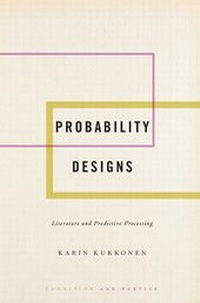
Probability Designs
Literature and Predictive Processing
Published on 20. February 2020
Book
Hardback
240 pages
978-0-19-005095-5 (ISBN)
Description
In Probability Designs, Karin Kukkonen proposes a new perspective on the complex role of predictions and probabilities in the dynamics of literary narrative. Predictive processing, an emerging account of cognition in neuroscience, psychology, and philosophy, provides the theoretical backdrop for an investigation of how literary texts shape readers' expectations and experience. Through deft analysis of the literary canon in a variety of cultures and languages, she constructs a comprehensive model of probability in a novel's plots, immersive appeal, and potential for reflection. Linking predictive processing to the idea that culture and cognition always develop in tandem, Kukkonen then sketches a place for literature and literary form in this exchange - a mode of exploratory thinking that takes language and writing to the next level.
Chance encounters, last-minute rescues, and coincidences launch Kukkonen's investigation of the literary manipulation of predictions. Through an enlightening blend of cognitive sciences and literary theory, Probability Designs enriches scholarly debates in literary studies and sheds light on how vital literature is for human thought.
Chance encounters, last-minute rescues, and coincidences launch Kukkonen's investigation of the literary manipulation of predictions. Through an enlightening blend of cognitive sciences and literary theory, Probability Designs enriches scholarly debates in literary studies and sheds light on how vital literature is for human thought.
Reviews / Votes
How can words on the page of a good novel create such exciting and immersive experiences? In Probability Designs Karin Kukkonen makes brilliant use of the latest developments in cognitive science to show how this is achieved. Through the management of our expectations, novels become extensions of our minds where we can watch ourselves think. With the help of Cinderella, she promises to turn us from detectives into princes. Who could resist?"-Chris Frith, Emeritus Professor of Neuropsychology, Wellcome Centre for Human NeuroImaging, University College London Probability Designs is a brilliant examination of the multiple levels of embodied reading through the lens of predictive processing. Kukkonen not only deftly integrates her close analyses of specific literary texts into the predictive model, she brings a rich historical and philosophical perspective to her argument that is often missing in cognitive science. This is an important book for anyone who cares deeply about literature and how we read it."-Siri Hustvedt, Lecturer in Psychiatry, Weill Cornell Medical College What is a book? Using a ground-breaking mixture of literary theory, philosophy, and cognitive science, Karin Kukonnen argues that literary constructions and even intertextual references are best understood as probability designs - artificial structures that push, pull, and tweak our webs of probabilistic expectation. The result is a new and compelling way of looking at how minds like ours are affected by some of our most familiar, yet truly deeply strange, creations."-Andy Clark, author of Surfing Uncertainty: Prediction, Action, and the Embodied MindMore details
Series
Language
English
Place of publication
New York
United States
Target group
College/higher education
Dimensions
Height: 249 mm
Width: 163 mm
Thickness: 28 mm
Weight
544 gr
ISBN-13
978-0-19-005095-5 (9780190050955)
Copyright in bibliographic data and cover images is held by Nielsen Book Services Limited or by the publishers or by their respective licensors: all rights reserved.
Schweitzer Classification
Other editions
Additional editions
E-Book
12/2019
OUP eBook
€66.49
Available for download
E-Book
12/2019
OUP eBook
€66.49
Available for download
Person
Karin Kukkonen is Professor in Comparative Literature at the University of Oslo. Her work investigates how the novel emerged as a genre designed for particular cognitive and emotional engagements and how the poetics of earlier periods and cognitive poetics today can speak to each other. At the University of Oslo, Kukkonen heads the interdisciplinary research and teaching initiative "Literature, Cognition and Emotions" (2019-2023).
Content
Acknowledgements Introduction: Literature and Predictive Processing I: Narrative Design 1. Plots and Probability Transformations 2. Probability Designs 3. The Height of Drop II: The Embodied Reader III. Into the Mental Library
1. Intertextual Precision Expectations 2. Things That Did Not Happen
3. Reading by Proxy 4. Artificial, In the Best Sense of the Word IV: An Argument From Design 1.Otto's Novel 2. Literature as a Designer Environment 3. The Cognitive Work of Form Endnotes Bibliography
1. Intertextual Precision Expectations 2. Things That Did Not Happen
3. Reading by Proxy 4. Artificial, In the Best Sense of the Word IV: An Argument From Design 1.Otto's Novel 2. Literature as a Designer Environment 3. The Cognitive Work of Form Endnotes Bibliography