

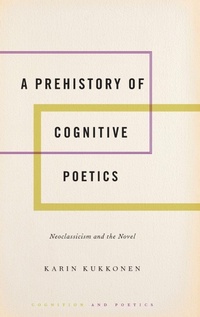
A Prehistory of Cognitive Poetics
Neoclassicism and the Novel
Published on 27. April 2017
Book
Hardback
288 pages
978-0-19-063476-6 (ISBN)
Description
This study provides an introduction to the neoclassical debates around how literature is shaped in concert with the thinking and feeling human mind. Three key rules of neoclassicism, namely, poetic justice (the rewards and punishments of characters in the plot), the unities (the coherence of the fictional world and its extensions through the imagination) and decorum (the inferential connections between characters and their likely actions), are reconsidered in light of social cognition, embodied cognition and probabilistic, predictive cognition. The meeting between neoclassical criticism and today's research psychology, neurology and philosophy of mind yields a new perspective for cognitive literary study.
Neoclassicism has a crucial contribution to make to current debates around the role of literature in cultural and cognition. Literary critics writing at the time of the scientific revolution developed a perspective on literature the question of how literature engages minds and bodies as its central concern. A Prehistory of Cognitive Poetics traces the cognitive dimension of these critical debates in seventeenth- and eighteenth-century Britain and puts them into conversation with today's cognitive approaches to literature.
Neoclassical theory is then connected to the praxis of eighteenth-century writers in a series of case studies that trace how these principles shaped the emerging narrative form of the novel. The continuing relevance of neoclassicism also shows itself in the rise of the novel, as A Prehistory of Cognitive Poetics illustrates through examples including Pamela, Tom Jones and the Gothic novel.
Neoclassicism has a crucial contribution to make to current debates around the role of literature in cultural and cognition. Literary critics writing at the time of the scientific revolution developed a perspective on literature the question of how literature engages minds and bodies as its central concern. A Prehistory of Cognitive Poetics traces the cognitive dimension of these critical debates in seventeenth- and eighteenth-century Britain and puts them into conversation with today's cognitive approaches to literature.
Neoclassical theory is then connected to the praxis of eighteenth-century writers in a series of case studies that trace how these principles shaped the emerging narrative form of the novel. The continuing relevance of neoclassicism also shows itself in the rise of the novel, as A Prehistory of Cognitive Poetics illustrates through examples including Pamela, Tom Jones and the Gothic novel.
Reviews / Votes
Karin Kukkonen's important book proposes several innovative theses. It argues that European neoclassicist literary theory was an early incarnation of present-day cognitive poetics, that the rules governing a given literary genre during a definite historical period, in this case seventeenthand eighteenth-century neoclassicist poetics of drama, were equally applied to other genres, and that, consequently, the eighteenth-century English literary wave called "the rise of the novel" was deeply indebted to the neoclassicist views on literature ... To conclude, Kukkonen's book represents the promising debut of a very talented young scholar and will certainly enjoy the success it deserves. * Thomas Pavel, Modern Philology * The book radiates from a vigorous hypothesis, that of a kinship between eighteenth-century neoclassical poetics and present-day cognitive poetics. Karin Kukkonen, whose solid background in contemporary literary theory and textual criticism is indisputable, substantiates her persuasive argument with a wealth of case studies from eighteenth-century English and French novels. The bringing together of neoclassical poetics, the emergent novel and modern cognitive poetics proves to be a winning strategy for extending our knowledge of eighteenth century literature and culture. * Rosamaria Loretelli, Universita di Napoli Federico II, Vice-President of the International Society for Eighteenth-Century Studies * The author terms her synthesis of neoclassical criticism and brain-body science a "cognitive poetics", but this is too modest; it is also a literary history, a theory of reception, and a demonstration of how heuristics such as situational logic, comeuppance clockworks, and Bayesian cognition can benefit literaty studies. Highlights include chapters on cheater detection in Richarson's Clarissa, cognitive estrangement in Utopian fiction, and free indirect perception in Walpole's The Castle of Otranto. This is a meticulously edited, generously documented, and profoundly erudite book. * P.D. Collington, Niagara University, CHOICE *More details
Series
Language
English
Place of publication
New York
United States
Target group
College/higher education
Dimensions
Height: 240 mm
Width: 161 mm
Thickness: 20 mm
Weight
593 gr
ISBN-13
978-0-19-063476-6 (9780190634766)
Copyright in bibliographic data and cover images is held by Nielsen Book Services Limited or by the publishers or by their respective licensors: all rights reserved.
Schweitzer Classification
Other editions
Additional editions
E-Book
03/2017
1st Edition
OUP eBook
€50.49
Available for download
E-Book
03/2017
1st Edition
OUP eBook
€39.49
Available for download
Person
Karin Kukkonen is Professor in Comparative Literature at the University of Oslo. She is a specialist in cognitive approaches to literature and narratology. She has published on comics and graphic novels (Contemporary Comics Storytelling, 2013), embodied and probabilistic cognitive approaches to literary narrative, as well as on the eighteenth-century novel. From 2010-2013, she was a Balzan Postdoctoral Research Fellow at St John's College, University of Oxford.
Content
Acknowledgements
Preface
Chapter 1: Neoclassical Poetics and the Rise of the Novel
1.1 Beating the Bounds of the Rules in Incognita
1.2 Manners, Passions, Unities
1.3 Neoclassicism and the Sciences
Chapter 2. The Situational Logic of Vraisemblance
2.1. Cognitive Moves
2.2. Successful Solutions
2.3. Vraisemblance Now
I: Poetic Justice
Chapter 3: Samuel Richardson and the Project of Poetic Justice
3.1. Virtue Rewarded
3.2. Altruistic Punishers in B-Hall
3.3 Pamela - Shamela - Anti-Pamela
Chapter 4: The Trials of Clarissa
4.1 Editing the Social Contract
4.2 Lovelace's Happy Endings
4.3. Poetic Justice at the Limits
Chapter 5: Ann Radcliffe and the Abdication of the Superpunisher
5.1 Comeuppance Clockworks
5.2 Enter the Uncanny
5.3 The Supernatural and Superpunishers
II: The Unities
Chapter 6: The Best Possible Storyworld: Johnson's Rasselas
6.1 Rasselas, the Imagination and the Unities
6.2 Event Cognition, Spatialization and the Conceptual Shape of the Storyworld
6.3 Closure in Abissinia
Chapter 7: Utopian Reasoning in Mercier's L'An 2440 and Madden's Memoirs of the Twentieth Century
7.1 Poetics and Politics
7.2 The Cognitive Estrangements of Utopia
7.3 The Idea of Progress and Intertemporal Bargaining in Utopian Fiction
7.4 A Unified Utopia
Chapter 8: The Dramatic Passages of The Castle of Otranto
8.1. Where the Bodies Are
8.2 The Return of Racine
8.3 Embodied Experience in the Novel
III: Decorum
Chapter 9. Henry Fielding's Probability Design
9.1 9.2 Decorum and Surprise
9.3 A Hero
Chapter 10. The Female Quixote and the Probability of Romance
10.1. The Querelle de Miss Groves
10.2 Educating Readers
10.3 Arabella's Wager
Chapter 11. John Cleland vs. the Novel
11.1. Building a Social World in Mrs Mercier's Academy
11.2. The Predictable Novel
11.3. Love, Duty and the End of Curiosity
Conclusion: Explorations in the Prehistory of Cognitive Poetics
Bibliography
Preface
Chapter 1: Neoclassical Poetics and the Rise of the Novel
1.1 Beating the Bounds of the Rules in Incognita
1.2 Manners, Passions, Unities
1.3 Neoclassicism and the Sciences
Chapter 2. The Situational Logic of Vraisemblance
2.1. Cognitive Moves
2.2. Successful Solutions
2.3. Vraisemblance Now
I: Poetic Justice
Chapter 3: Samuel Richardson and the Project of Poetic Justice
3.1. Virtue Rewarded
3.2. Altruistic Punishers in B-Hall
3.3 Pamela - Shamela - Anti-Pamela
Chapter 4: The Trials of Clarissa
4.1 Editing the Social Contract
4.2 Lovelace's Happy Endings
4.3. Poetic Justice at the Limits
Chapter 5: Ann Radcliffe and the Abdication of the Superpunisher
5.1 Comeuppance Clockworks
5.2 Enter the Uncanny
5.3 The Supernatural and Superpunishers
II: The Unities
Chapter 6: The Best Possible Storyworld: Johnson's Rasselas
6.1 Rasselas, the Imagination and the Unities
6.2 Event Cognition, Spatialization and the Conceptual Shape of the Storyworld
6.3 Closure in Abissinia
Chapter 7: Utopian Reasoning in Mercier's L'An 2440 and Madden's Memoirs of the Twentieth Century
7.1 Poetics and Politics
7.2 The Cognitive Estrangements of Utopia
7.3 The Idea of Progress and Intertemporal Bargaining in Utopian Fiction
7.4 A Unified Utopia
Chapter 8: The Dramatic Passages of The Castle of Otranto
8.1. Where the Bodies Are
8.2 The Return of Racine
8.3 Embodied Experience in the Novel
III: Decorum
Chapter 9. Henry Fielding's Probability Design
9.1 9.2 Decorum and Surprise
9.3 A Hero
Chapter 10. The Female Quixote and the Probability of Romance
10.1. The Querelle de Miss Groves
10.2 Educating Readers
10.3 Arabella's Wager
Chapter 11. John Cleland vs. the Novel
11.1. Building a Social World in Mrs Mercier's Academy
11.2. The Predictable Novel
11.3. Love, Duty and the End of Curiosity
Conclusion: Explorations in the Prehistory of Cognitive Poetics
Bibliography