

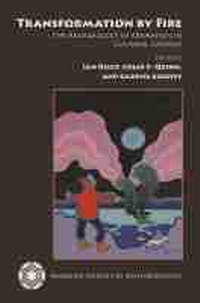
Transformation by Fire
The Archaeology of Cremation in Cultural Context
Will be published approx. on 27. November 2014
Book
Hardback
352 pages
978-0-8165-3114-1 (ISBN)
Description
Ash, bone, and memories are all that remains after cremation. Yet for societies and communities, the act of cremation after death is highly symbolic, rich with complex meaning, touching on what it means to be human. In the process of transforming the dead, the family, the community, and society as a whole create and partake in cultural symbolism. Cremation is a key area of archaeological research, but its complexity has been underappreciated and undertheorized.Transformation by Fire offers a fresh assessment of archaeological research on this widespread social practice.
Editors Ian Kuijt, Colin P. Quinn, and Gabriel Cooney's volume examines cremation by documenting the material signatures of cremation events and processes, as well as its transformative impact on social relations and concepts of the body. Indeed, examining why and how people chose to cremate their dead serves as an important means of understanding how people in the past dealt with death, the body, and the social world.
The contributors develop new perspectives on cremation as important mortuary practices and social transformations. Varying attitudes and beliefs on cremation and other forms of burial within the same cultural paradigm help us understand what constitutes the body and what occurs during its fiery transformation. In addition, they explore issues and interpretive perspectives in the archaeological study of cremation within and between different cultural contexts.
The global and comparative perspectives on cremation render the book a unique contribution to the literature of anthropological and mortuary archaeology.
Editors Ian Kuijt, Colin P. Quinn, and Gabriel Cooney's volume examines cremation by documenting the material signatures of cremation events and processes, as well as its transformative impact on social relations and concepts of the body. Indeed, examining why and how people chose to cremate their dead serves as an important means of understanding how people in the past dealt with death, the body, and the social world.
The contributors develop new perspectives on cremation as important mortuary practices and social transformations. Varying attitudes and beliefs on cremation and other forms of burial within the same cultural paradigm help us understand what constitutes the body and what occurs during its fiery transformation. In addition, they explore issues and interpretive perspectives in the archaeological study of cremation within and between different cultural contexts.
The global and comparative perspectives on cremation render the book a unique contribution to the literature of anthropological and mortuary archaeology.
More details
Series
Language
English
Place of publication
Tucson
United States
Target group
College/higher education
Illustrations
18 figures, 10 tables
Dimensions
Height: 229 mm
Width: 152 mm
Thickness: 25 mm
Weight
600 gr
ISBN-13
978-0-8165-3114-1 (9780816531141)
Copyright in bibliographic data and cover images is held by Nielsen Book Services Limited or by the publishers or by their respective licensors: all rights reserved.
Schweitzer Classification
Persons
Ian Kuijt is a professor of anthropology at the University of Notre Dame in Indiana. His interests include mortuary analysis, the forager-farmer transition, the ancient Near East, and Irish historical archaeology.
Colin P. Quinn is a PhD candidate in anthropology at the University of Michigan, where he works at the Museum of Anthropology. His research interests include a global perspective on increasing social complexity and material culture use; his current research focuses on monitoring long-term dynamics in the interaction of mortuary practices, settlement patterns, and metal procurement in Bronze Age Transylvania.
Gabriel Cooney is the professor of Celtic archaeology in the School of Archaeology, University College Dublin, Ireland. His research interests focus on Ireland in the wider European context and include early farming societies, particularly prehistoric use of stone and mortuary practices.
Colin P. Quinn is a PhD candidate in anthropology at the University of Michigan, where he works at the Museum of Anthropology. His research interests include a global perspective on increasing social complexity and material culture use; his current research focuses on monitoring long-term dynamics in the interaction of mortuary practices, settlement patterns, and metal procurement in Bronze Age Transylvania.
Gabriel Cooney is the professor of Celtic archaeology in the School of Archaeology, University College Dublin, Ireland. His research interests focus on Ireland in the wider European context and include early farming societies, particularly prehistoric use of stone and mortuary practices.