


Solutions Manual for Principles of Physical Chemistry, 3rd Edition
3rd Edition
Published on 14. November 2024
Book
Paperback/Softback
736 pages
978-1-119-85290-2 (ISBN)
Description
This is a Solutions Manual to Accompany with solutions to the exercises in the main volume of Principles of Physical Chemistry, Third Edition.
This book provides a unique approach to introduce undergraduate students to the concepts and methods of physical chemistry, which are the foundational principles of Chemistry. The book introduces the student to the principles underlying the essential sub-fields of quantum mechanics, atomic and molecular structure, atomic and molecular spectroscopy, statistical thermodynamics, classical thermodynamics, solutions and equilibria, electrochemistry, kinetics and reaction dynamics, macromolecules, and organized molecular assemblies. Importantly, the book develops and applies these principles to supramolecular assemblies and supramolecular machines, with many examples from biology and nanoscience. In this way, the book helps the student to see the frontier of modern physical chemistry developments.
The book begins with a discussion of wave-particle duality and proceeds systematically to more complex chemical systems in order to relate the story of physical chemistry in an intellectually coherent manner. The topics are organized to correspond with those typically given in each of a two course semester sequence. The first 13 chapters present quantum mechanics and spectroscopy to describe and predict the structure of matter: atoms, molecules, and solids. Chapters 14 to 29 present statistical thermodynamics and kinetics and applies their principles to understanding equilibria, chemical transformations, macromolecular properties and supramolecular machines. Each chapter of the book begins with a simplified view of a topic and evolves to more rigorous description, in order to provide the student (and instructor) flexibility to choose the level of rigor and detail that suits them best. The textbook treats important new directions in physical chemistry research, including chapters on macromolecules, principles of interfaces and films for organizing matter, and supramolecular machines -- as well as including discussions of modern nanoscience, spectroscopy, and reaction dynamics throughout the text.
This book provides a unique approach to introduce undergraduate students to the concepts and methods of physical chemistry, which are the foundational principles of Chemistry. The book introduces the student to the principles underlying the essential sub-fields of quantum mechanics, atomic and molecular structure, atomic and molecular spectroscopy, statistical thermodynamics, classical thermodynamics, solutions and equilibria, electrochemistry, kinetics and reaction dynamics, macromolecules, and organized molecular assemblies. Importantly, the book develops and applies these principles to supramolecular assemblies and supramolecular machines, with many examples from biology and nanoscience. In this way, the book helps the student to see the frontier of modern physical chemistry developments.
The book begins with a discussion of wave-particle duality and proceeds systematically to more complex chemical systems in order to relate the story of physical chemistry in an intellectually coherent manner. The topics are organized to correspond with those typically given in each of a two course semester sequence. The first 13 chapters present quantum mechanics and spectroscopy to describe and predict the structure of matter: atoms, molecules, and solids. Chapters 14 to 29 present statistical thermodynamics and kinetics and applies their principles to understanding equilibria, chemical transformations, macromolecular properties and supramolecular machines. Each chapter of the book begins with a simplified view of a topic and evolves to more rigorous description, in order to provide the student (and instructor) flexibility to choose the level of rigor and detail that suits them best. The textbook treats important new directions in physical chemistry research, including chapters on macromolecules, principles of interfaces and films for organizing matter, and supramolecular machines -- as well as including discussions of modern nanoscience, spectroscopy, and reaction dynamics throughout the text.
More details
Edition
3rd edition
Language
English
Place of publication
New York
United States
Target group
College/higher education
Dimensions
Height: 277 mm
Width: 224 mm
Thickness: 53 mm
Weight
1361 gr
ISBN-13
978-1-119-85290-2 (9781119852902)
Copyright in bibliographic data and cover images is held by Nielsen Book Services Limited or by the publishers or by their respective licensors: all rights reserved.
Schweitzer Classification
Other editions
Additional editions
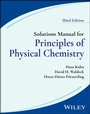
Hans Kuhn | David H. Waldeck | Horst-Dieter Försterling
Solutions Manual for Principles of Physical Chemistry, 3rd Edition, Solutions Manual
E-Book
10/2024
3rd Edition
Wiley
€63.99
Available for download
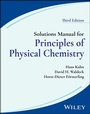
Hans Kuhn | David H. Waldeck | Horst-Dieter Försterling
Solutions Manual for Principles of Physical Chemistry, 3rd Edition
E-Book
09/2024
3rd Edition
Wiley
€61.99
Available for download
Previous edition

Hans Kuhn | H.D. Foersterling | David H. Waldeck
Solutions Manual for Principles of Physical Chemistry
Book
07/2010
2nd Edition
Wiley
€48.50
Shipment within 10-20 days
Persons
Content
1 Wave-Particle Duality 1 2 Essential Aspects of Structure and Bonding 13
3 Schroedinger Equation 28
4 Hydrogen Atom 58
5 Atoms and Variational Principle 90
6 A Quantitative View of Chemical Bonding 124
7 Bonding Described by Electron Pairs and Molecular Orbitals 144
8 Molecules with PI-Electron Systems 168
9 Absorption of Light 200
10 Emission of Light 239
11 Nuclei: Particle and Wave Properties 250
12 Nuclear Spin 289
13 Solids and Intermolecular Forces 295
14 Thermal Motion of Molecules 324
15 Energy Distribution in Molecular Assemblies 342
16 Work ??, Heat q, and Internal Energy U 381
17 Reversible Work ??rev, Reversible Heat qrev, and Entropy S 404
18 General Conditions for Spontaneity and its Application to Equilibria of Ideal Gases and Dilute Solutions 435
19 Formal Thermodynamics and Its Application to Phase Equilibria 469
20 Real Gases 497
21 Real Solutions 527
22 Reaction Equilibria in Aqueous Solutions and Biosystems 550
23 Chemical Reactions in Electrochemical Cells 575
24 Chemical Kinetics 598
25 Transition States and Chemical Reactions 626
26 Macromolecules 655
27 Organized Molecular Assemblies 680
28 Supramolecular Machines 700
29 Origin of Life. Matter Carrying Information 717
3 Schroedinger Equation 28
4 Hydrogen Atom 58
5 Atoms and Variational Principle 90
6 A Quantitative View of Chemical Bonding 124
7 Bonding Described by Electron Pairs and Molecular Orbitals 144
8 Molecules with PI-Electron Systems 168
9 Absorption of Light 200
10 Emission of Light 239
11 Nuclei: Particle and Wave Properties 250
12 Nuclear Spin 289
13 Solids and Intermolecular Forces 295
14 Thermal Motion of Molecules 324
15 Energy Distribution in Molecular Assemblies 342
16 Work ??, Heat q, and Internal Energy U 381
17 Reversible Work ??rev, Reversible Heat qrev, and Entropy S 404
18 General Conditions for Spontaneity and its Application to Equilibria of Ideal Gases and Dilute Solutions 435
19 Formal Thermodynamics and Its Application to Phase Equilibria 469
20 Real Gases 497
21 Real Solutions 527
22 Reaction Equilibria in Aqueous Solutions and Biosystems 550
23 Chemical Reactions in Electrochemical Cells 575
24 Chemical Kinetics 598
25 Transition States and Chemical Reactions 626
26 Macromolecules 655
27 Organized Molecular Assemblies 680
28 Supramolecular Machines 700
29 Origin of Life. Matter Carrying Information 717