

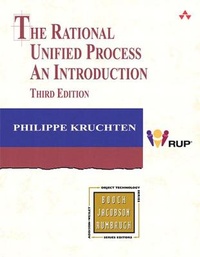
Rational Unified Process, The
An Introduction
3rd Edition
Published on 18. December 2003
Book
Paperback/Softback
336 pages
978-0-321-19770-2 (ISBN)
Description
The Rational Unified Process (RUP) is a saleable product from Rational/IBM.The RUP unifes the entire software development team and seeks to optimizethe productivity of each and every team member by putting the collectiveexperience derived from thousands of development projects and many industryleaders at the user's fingertips. It is a very popular product, and this bookrepresents the most thorough documentation for the latest version of theproduct (RUP v2003), which was released in May of 2003.
More details
Series
Edition
3rd edition
Language
English
Place of publication
New Jersey
United States
Publishing group
Pearson Education (US)
Target group
College/higher education
Dimensions
Height: 229 mm
Width: 178 mm
Thickness: 19 mm
Weight
550 gr
ISBN-13
978-0-321-19770-2 (9780321197702)
Copyright in bibliographic data and cover images is held by Nielsen Book Services Limited or by the publishers or by their respective licensors: all rights reserved.
Schweitzer Classification
Other editions
Previous edition
Book
04/2000
2nd Edition
Addison Wesley
€30.94
Article exhausted; check for reprint
Person
Philippe Kruchten is the lead architect of the Rational Unified Process. He has more than thirty years of experience in the development of large software-intensive systems for the telecommunications, defense, aerospace, and transportation industries. His book The Rational Unified Process: An Introduction (Addison-Wesley) has been translated into eight languages and has sold more than 160,000 copies in its two previous editions.
0321197704AB11072003
0321197704AB11072003
Content
(NOTE: Each chapter concludes with a summary.)
Preface.
I. THE PROCESS.
1. Software Development Best Practices.
The Value of Software.
Symptoms and Root Causes of Software Development Problems.
Software Best Practices.
Develop Software Iteratively.
Manage Requirements.
Use Component-Based Architectures.
Visually Model Software.
Continuously Verify Software Quality.
Control Changes to Software.
The Rational Unified Process.
2. The Rational Unified Process.
What Is the Rational Unified Process?
The Rational Unified Process as a Product.
Software Best Practices in the Rational Unified Process.
Other Key Features of the Rational Unified Process.
A Brief History of the Rational Unified Process.
3. Static Structure: Process Description.
A Model of the Rational Unified Process.
Roles.
Activities.
Artifacts.
Disciplines.
Workflows.
Additional Process Elements.
A Process Framework.
4. Dynamic Structure: Iterative Development.
The Sequential Process.
Overcoming Difficulties: Iterate!
Gaining Control: Phases and Milestones.
A Shifting Focus across the Cycle.
Phases Revisited.
Benefits of an Iterative Approach.
5. An Architecture-Centric Process.
The Importance of Models.
Architecture.
The Importance of Architecture.
A Definition of Architecture.
Architecture Representation.
An Architecture-Centric Process.
The Purpose of Architecture.
Component-Based Development.
Other Architectural Concepts.
6. A Use-Case-Driven Process.
Definitions.
Identifying Use Cases.
Evolving Use Cases.
Organizing Use Cases.
Use Cases in the Process.
II. PROCESS DISCIPLINES.
7. The Project Management Discipline.
Purpose.
Planning an Iterative Project.
The Concept of Risk.
The Concept of Measurement.
Roles and Artifacts.
Workflow.
Building an Iteration Plan.
8. The Business Modeling Discipline.
Purpose.
Why Business Modeling?
Using Software Engineering Techniques for Business Modeling.
Business Modeling Scenarios.
Roles and Artifacts.
Workflow.
From the Business Models to the Systems.
Modeling the Software Development Business.
Tool Support.
9. The Requirements Discipline.
Purpose.
What Is a Requirement?
Types of Requirements.
Capturing and Managing Requirements.
Requirements Workflow.
Roles in Requirements.
Artifacts Used in Requirements.
Tool Support.
10. The Analysis and Design Discipline.
Purpose.
Analysis versus Design.
How Far Must Design Go?
Roles and Artifacts.
Designing a User-Centered Interface.
The Design Model.
The Analysis Model.
The Role of Interfaces.
Artifacts for Real-Time Systems.
Component-Based Design.
Workflow.
Tool Support.
11. The Implementation Discipline.
Purpose.
Builds.
Integration.
Prototypes.
Roles and Artifacts.
Workflow.
Tool Support.
12. The Test Discipline.
Purpose.
Testing in the Iterative Lifecycle.
Dimensions of Testing.
Roles and Artifacts.
Workflow.
Tool Support.
13. The Configuration and Change Management Discipline.
Purpose.
The CCM Cube.
Roles and Artifacts.
Workflow.
Tool Support.
14. The Environment Discipline.
Purpose.
Process Engineering Process.
Roles and Artifacts.
Workflow.
Tool Support.
15. The Deployment Discipline.
Purpose.
Roles and Artifacts.
Workflow.
16. Typical Iteration Plans.
Defining the Product Vision and the Business Case.
Building an Architectural Prototype.
Implementing the System.
17. Implementing the Rational Unified Process.
Introduction.
The Effect of Implementing a Process.
Implementing the Rational Unified Process Step by Step.
Implementing a Process Is a Project.
Appendix A: Summary of Roles.
Appendix B: Summary of Artifacts.
Appendix C: Acronyms.
Glossary.
Bibliography.
Index. 0321197704T11172003
Preface.
I. THE PROCESS.
1. Software Development Best Practices.
The Value of Software.
Symptoms and Root Causes of Software Development Problems.
Software Best Practices.
Develop Software Iteratively.
Manage Requirements.
Use Component-Based Architectures.
Visually Model Software.
Continuously Verify Software Quality.
Control Changes to Software.
The Rational Unified Process.
2. The Rational Unified Process.
What Is the Rational Unified Process?
The Rational Unified Process as a Product.
Software Best Practices in the Rational Unified Process.
Other Key Features of the Rational Unified Process.
A Brief History of the Rational Unified Process.
3. Static Structure: Process Description.
A Model of the Rational Unified Process.
Roles.
Activities.
Artifacts.
Disciplines.
Workflows.
Additional Process Elements.
A Process Framework.
4. Dynamic Structure: Iterative Development.
The Sequential Process.
Overcoming Difficulties: Iterate!
Gaining Control: Phases and Milestones.
A Shifting Focus across the Cycle.
Phases Revisited.
Benefits of an Iterative Approach.
5. An Architecture-Centric Process.
The Importance of Models.
Architecture.
The Importance of Architecture.
A Definition of Architecture.
Architecture Representation.
An Architecture-Centric Process.
The Purpose of Architecture.
Component-Based Development.
Other Architectural Concepts.
6. A Use-Case-Driven Process.
Definitions.
Identifying Use Cases.
Evolving Use Cases.
Organizing Use Cases.
Use Cases in the Process.
II. PROCESS DISCIPLINES.
7. The Project Management Discipline.
Purpose.
Planning an Iterative Project.
The Concept of Risk.
The Concept of Measurement.
Roles and Artifacts.
Workflow.
Building an Iteration Plan.
8. The Business Modeling Discipline.
Purpose.
Why Business Modeling?
Using Software Engineering Techniques for Business Modeling.
Business Modeling Scenarios.
Roles and Artifacts.
Workflow.
From the Business Models to the Systems.
Modeling the Software Development Business.
Tool Support.
9. The Requirements Discipline.
Purpose.
What Is a Requirement?
Types of Requirements.
Capturing and Managing Requirements.
Requirements Workflow.
Roles in Requirements.
Artifacts Used in Requirements.
Tool Support.
10. The Analysis and Design Discipline.
Purpose.
Analysis versus Design.
How Far Must Design Go?
Roles and Artifacts.
Designing a User-Centered Interface.
The Design Model.
The Analysis Model.
The Role of Interfaces.
Artifacts for Real-Time Systems.
Component-Based Design.
Workflow.
Tool Support.
11. The Implementation Discipline.
Purpose.
Builds.
Integration.
Prototypes.
Roles and Artifacts.
Workflow.
Tool Support.
12. The Test Discipline.
Purpose.
Testing in the Iterative Lifecycle.
Dimensions of Testing.
Roles and Artifacts.
Workflow.
Tool Support.
13. The Configuration and Change Management Discipline.
Purpose.
The CCM Cube.
Roles and Artifacts.
Workflow.
Tool Support.
14. The Environment Discipline.
Purpose.
Process Engineering Process.
Roles and Artifacts.
Workflow.
Tool Support.
15. The Deployment Discipline.
Purpose.
Roles and Artifacts.
Workflow.
16. Typical Iteration Plans.
Defining the Product Vision and the Business Case.
Building an Architectural Prototype.
Implementing the System.
17. Implementing the Rational Unified Process.
Introduction.
The Effect of Implementing a Process.
Implementing the Rational Unified Process Step by Step.
Implementing a Process Is a Project.
Appendix A: Summary of Roles.
Appendix B: Summary of Artifacts.
Appendix C: Acronyms.
Glossary.
Bibliography.
Index. 0321197704T11172003