

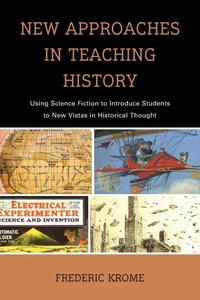
New Approaches in Teaching History
Using Science Fiction to Introduce Students to New Vistas in Historical Thought
Published on 8. March 2024
Book
Paperback/Softback
120 pages
978-1-4758-6952-1 (ISBN)
Description
Science fiction literature and film are an underappreciated source for the teaching of history. Finding material that can excite a student's curiosity can be a key towards greater student engagement, especially among students who are taking history as a requirement, rather than from interest. The discovery that they can read or watch science fiction as part of their classwork often comes as a pleasant surprise. Beyond its popularity, however, utilizing science fiction for class assignments has certain pedagogical advantages: it introduces students to new vistas in historical thought, helps them learn how literature and film can be applied as a primary source, and can encourage participation in projects that are enjoyable.
Each chapter provides case studies focusing on a different subject in the modern history curriculum and in addition to providing an analysis of specific texts and/or cinematic sources, gives suggestions on assignments for the students.
Each chapter provides case studies focusing on a different subject in the modern history curriculum and in addition to providing an analysis of specific texts and/or cinematic sources, gives suggestions on assignments for the students.
Reviews / Votes
New Approaches in Teaching History: Using Science Fiction to Introduce Students to New Vistas in Historical Thought is an enormously creative book. Krome uses his rich background in the genre to show how science fiction stories, novels, and films can enrich and enliven the study of history. As he deals with Cold War anxieties, the possibility of future wars, and a host of other issues, he offers detailed and compelling advice about how to present these topics in the classroom. -- Allan M. Winkler, Miami University emeritus and OAH distinguished lecturer Good college educators constantly seek ways to connect important scholarship with popular culture, and to do so in ways that enlighten and entertain our students without pandering to them. Using iconic pieces from literature, film, and television, Krome's New Approaches in Teaching History: Using Science Fiction to Introduce Students to New Vistas in Historical Thought not only provides uniquely effective tools for examining and teaching crucial themes; it also encourages instructor and student alike to approach the sci-fi canon from a fresh and enriching perspective--and does it all in an enjoyable and engaging tone. -- John Brolley, undergraduate director, Interdisciplinary Studies and Liberal Arts, University of CincinnatiMore details
Series
Language
English
Place of publication
United States
Publishing group
Bloomsbury Publishing Plc
Target group
Professional and scholarly
Illustrations
8 BW Illustrations
Dimensions
Height: 229 mm
Width: 152 mm
Thickness: 8 mm
Weight
217 gr
ISBN-13
978-1-4758-6952-1 (9781475869521)
Copyright in bibliographic data and cover images is held by Nielsen Book Services Limited or by the publishers or by their respective licensors: all rights reserved.
Schweitzer Classification
Other editions
Additional editions
Frederic Krome
New Approaches in Teaching History
Using Science Fiction to Introduce Students to New Vistas in Historical Thought
E-Book
02/2024
1st Edition
Rowman & Littlefield Publishers
€26.99
Available for download
Person
Frederic Krome is a professor of history at the University of Cincinnati Clermont College. In addition to using science fiction films and texts extensively in his teaching, he is the editor of Fighting the Future War: An Anthology of Science Fiction War Stories, 1914-45 (2011), which provides an introduction on how to use science fiction as a primary source in historical research.
Content
Preface
Acknowledgments
Chapter One: Using Science Fiction Stories and Film in the History Classroom
Chapter Two: Nationalism, Racism, and Imperialism in the Science Fiction of Jules Verne
Chapter Three: Invaders from the Red Planet to We're the Martians Now: War of the Worlds in a
Variety of Incarnations.
Chapter Four: Things to Come: The Fall and Rise of Civilization in the Future War
Primary Source Analysis of a Future War Tale
Chapter Five: Science Fiction and the Holocaust
Chapter Six: Mutations and Monsters: Cold War Anxiety in the 1950s and 60s
Chapter Seven: From Starship Troopers to the Forever War
Primary Source Analysis: A Photo Essay on the Atomic Battlefield
Chapter Eight: From Dune (1965) to The Ministry for the Future (2020): Environmentalism in
Science Fiction
Chapter Nine: Confronting the Color Line: Afrofuturism, Science Fiction, and Dissent
Conclusion: A Brief How-To Guide
Bibliography
About the Author
Acknowledgments
Chapter One: Using Science Fiction Stories and Film in the History Classroom
Chapter Two: Nationalism, Racism, and Imperialism in the Science Fiction of Jules Verne
Chapter Three: Invaders from the Red Planet to We're the Martians Now: War of the Worlds in a
Variety of Incarnations.
Chapter Four: Things to Come: The Fall and Rise of Civilization in the Future War
Primary Source Analysis of a Future War Tale
Chapter Five: Science Fiction and the Holocaust
Chapter Six: Mutations and Monsters: Cold War Anxiety in the 1950s and 60s
Chapter Seven: From Starship Troopers to the Forever War
Primary Source Analysis: A Photo Essay on the Atomic Battlefield
Chapter Eight: From Dune (1965) to The Ministry for the Future (2020): Environmentalism in
Science Fiction
Chapter Nine: Confronting the Color Line: Afrofuturism, Science Fiction, and Dissent
Conclusion: A Brief How-To Guide
Bibliography
About the Author