

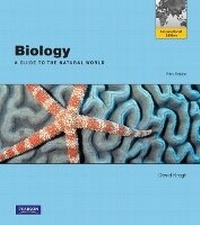
Biology
A Guide to the Natural World: International Edition
5th Edition
Published on 29. October 2010
Book
Paperback/Softback
880 pages
978-0-321-68989-4 (ISBN)
Description
David Krogh's Biology: A Guide to the Natural World leads readers on a memorable journey through the world of biology, using relevant examples, clearly-developed illustrations, and helpful insights that resonate with today's students.
Widely-recognized as a book that students enjoy reading, the Fifth Edition has been thoroughly updated with new discussions on social concerns and health applications, along with streamlined chapter summaries and expanded review questions.
Widely-recognized as a book that students enjoy reading, the Fifth Edition has been thoroughly updated with new discussions on social concerns and health applications, along with streamlined chapter summaries and expanded review questions.
More details
Edition
5th edition
Language
English
Place of publication
United States
Publishing group
Pearson Education (US)
Target group
College/higher education
Dimensions
Height: 274 mm
Width: 243 mm
Thickness: 25 mm
Weight
1640 gr
ISBN-13
978-0-321-68989-4 (9780321689894)
Copyright in bibliographic data is held by Nielsen Book Services Limited or its licensors: all rights reserved.
Schweitzer Classification
Other editions
New editions
Book
11/2013
5th Edition
Pearson Education Limited
€120.52
Shipment within 10-20 days
Previous edition
Book
09/2008
4th Edition
Pearson
€68.09
Article exhausted; check for reprint
Person
David Krogh has been writing about science for 27 years in newspapers, magazines, books, and for educational institutions. He is the author of Smoking: The Artificial Passion, an account of the pharmacological and cultural motivations behind the use of tobacco, which was nominated for the Los AngelesTimes Book Prize in Science and Technology. In 1994, he began work on what would become Biology: A Guide to the Natural World, and in 1999 he completed its first edition. Since then, he has produced three more editions of A Guide to the Natural World along with a second textbook, A Brief Guide to Biology. He holds bachelor's degrees in journalism and history from the University of Missouri.
Content
1. Science as a Way of Learning: A Guide to the Natural World
2. Fundamental Building Blocks: Chemistry, Water, and pH
3. Life's Components: Biological Molecules
4. Life's Home: The Cell
5. Life's Border: The Plasma Membrane
6. Life's Mainspring: An Introduction to Energy
7. Vital Harvest: Deriving Energy from Food
8. The Green World's Gift: Photosynthesis
9. The Links in Life's Chain: Genetics and Cell Division
10. Preparing for Sexual Reproduction: Meiosis
11. The First Geneticist: Mendel and His Discoveries
12. Units of Heredity: Chromosomes and Inheritance
13. Passing On Life's Information: DNA Structure and Replication
14. How Proteins Are Made: Genetic Transcription, Translation, and Regulation
15. The Future Isn't What It Used to Be: Biotechnology
16. An Introduction to Evolution: Charles Darwin, Evolutionary Thought, and the Evidence for Evolution
17. The Means of Evolution: Microevolution
18. The Outcomes of Evolution: Macroevolution
19. A Slow Unfolding: The History of Life on Earth
20. Arriving Late, Traveling Far: The Evolution of Human Beings
21. Viruses, Bacteria, Archaea, and Protists: The Diversity of Life 1
22. Fungi: The Diversity of Life 2
23. Animals: The Diversity of Life 3
24. Plants: The Diversity of Life 4
25. The Angiosperms: Form and Function in Flowering Plants
26: Body Support and Movement: The Integumentary, Skeletal, and Muscular Systems
27. Communication and Control 1: The Nervous System
28 Communication and Control 2: The Endocrine System
29. Defending the Body: The Immune System
30. Transport and Exchange 1: Blood and Breath
31. Transport and Exchange 2: Digestion, Nutrition, and Elimination
32. An Amazingly Detailed Script: Animal Development
33. How the Baby Came to Be: Human Reproduction
34. An Interactive Living World 1: Populations in Ecology
35. An Interactive Living World 2: Communities in Ecology
36. An Interactive Living World 3: Ecosystems and Biomes
2. Fundamental Building Blocks: Chemistry, Water, and pH
3. Life's Components: Biological Molecules
4. Life's Home: The Cell
5. Life's Border: The Plasma Membrane
6. Life's Mainspring: An Introduction to Energy
7. Vital Harvest: Deriving Energy from Food
8. The Green World's Gift: Photosynthesis
9. The Links in Life's Chain: Genetics and Cell Division
10. Preparing for Sexual Reproduction: Meiosis
11. The First Geneticist: Mendel and His Discoveries
12. Units of Heredity: Chromosomes and Inheritance
13. Passing On Life's Information: DNA Structure and Replication
14. How Proteins Are Made: Genetic Transcription, Translation, and Regulation
15. The Future Isn't What It Used to Be: Biotechnology
16. An Introduction to Evolution: Charles Darwin, Evolutionary Thought, and the Evidence for Evolution
17. The Means of Evolution: Microevolution
18. The Outcomes of Evolution: Macroevolution
19. A Slow Unfolding: The History of Life on Earth
20. Arriving Late, Traveling Far: The Evolution of Human Beings
21. Viruses, Bacteria, Archaea, and Protists: The Diversity of Life 1
22. Fungi: The Diversity of Life 2
23. Animals: The Diversity of Life 3
24. Plants: The Diversity of Life 4
25. The Angiosperms: Form and Function in Flowering Plants
26: Body Support and Movement: The Integumentary, Skeletal, and Muscular Systems
27. Communication and Control 1: The Nervous System
28 Communication and Control 2: The Endocrine System
29. Defending the Body: The Immune System
30. Transport and Exchange 1: Blood and Breath
31. Transport and Exchange 2: Digestion, Nutrition, and Elimination
32. An Amazingly Detailed Script: Animal Development
33. How the Baby Came to Be: Human Reproduction
34. An Interactive Living World 1: Populations in Ecology
35. An Interactive Living World 2: Communities in Ecology
36. An Interactive Living World 3: Ecosystems and Biomes