

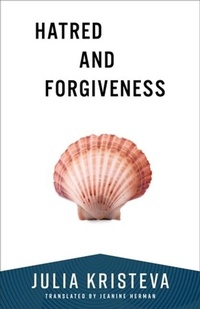
Hatred and Forgiveness
Published on 4. March 2025
Book
Paperback/Softback
412 pages
978-0-231-21898-6 (ISBN)
Description
Julia Kristeva refracts the impulse to hate (and our attempts to subvert, sublimate, and otherwise process it) through psychoanalysis and text, exploring worlds, women, religion, portraits, and the act of writing. Her inquiry spans themes, topics, and figures central to her writing, and her paths of discovery advance the theoretical innovations that are so characteristic of her thought.
Kristeva rearticulates and extends her analysis of language, abjection, idealization, female sexuality, love, and forgiveness. She examines the "maladies of the soul," utilizing examples from her practice and the ailments of her patients, such as fatigue, irritability, and general malaise. She sources the Bible and texts by Marguerite Duras, St. Teresa of Avila, Roland Barthes, Simone de Beauvoir, and Georgia O'Keefe. Balancing political calamity and individual pathology, she addresses internal and external catastrophes and global and personal injuries, confronting the nature of depression, obliviousness, fear, and the agony of being and nothingness.
Throughout Kristeva develops the notion that psychoanalysis is the key to serenity, with its processes of turning back, looking back, investigating the self, and refashioning psychical damage into something useful and beautiful. Constant questioning, Kristeva contends, is essential to achieving the coming to terms we all seek at the core of forgiveness.
Kristeva rearticulates and extends her analysis of language, abjection, idealization, female sexuality, love, and forgiveness. She examines the "maladies of the soul," utilizing examples from her practice and the ailments of her patients, such as fatigue, irritability, and general malaise. She sources the Bible and texts by Marguerite Duras, St. Teresa of Avila, Roland Barthes, Simone de Beauvoir, and Georgia O'Keefe. Balancing political calamity and individual pathology, she addresses internal and external catastrophes and global and personal injuries, confronting the nature of depression, obliviousness, fear, and the agony of being and nothingness.
Throughout Kristeva develops the notion that psychoanalysis is the key to serenity, with its processes of turning back, looking back, investigating the self, and refashioning psychical damage into something useful and beautiful. Constant questioning, Kristeva contends, is essential to achieving the coming to terms we all seek at the core of forgiveness.
Reviews / Votes
A memorable source of reflections on the temptation and quest of being. * Metapsychology * Successful in carrying over to the English-speaking public the contemporary tonalities of Kristeva's voice. * Year's Work in Critical and Cultural Theory * A mobilizing reflection on the human condition. * Tulsa Studies in Women's Literature *More details
Series
Language
English
Place of publication
New York
United States
Target group
Professional and scholarly
Product notice
Paperback (trade)
Dimensions
Height: 215 mm
Width: 139 mm
Thickness: 26 mm
Weight
530 gr
ISBN-13
978-0-231-21898-6 (9780231218986)
Copyright in bibliographic data and cover images is held by Nielsen Book Services Limited or by the publishers or by their respective licensors: all rights reserved.
Schweitzer Classification
Other editions
Additional editions
Julia Kristeva
Hatred and Forgiveness
E-Book
03/2025
1st Edition
Columbia University Press
€19.49
Available for download
Persons
Julia Kristeva is professor emerita of linguistics at the Universite de Paris VII. A renowned psychoanalyst, philosopher, and linguist, she has written dozens of books spanning semiotics, political theory, literary criticism, gender and sex, and cultural critique, as well as several novels and autobiographical works, published in English translation by Columbia University Press. Kristeva was the inaugural recipient of the Holberg International Memorial Prize in 2004 "for innovative explorations of questions on the intersection of language, culture, and literature."
Jeanine Herman is the translator of volumes 1 and 2 of Julia Kristeva's The Powers and Limits of Psychoanalysis. Her translation of Julien Gracq's Reading Writing was a finalist for the French American Foundation Translation Prize.
Jeanine Herman is the translator of volumes 1 and 2 of Julia Kristeva's The Powers and Limits of Psychoanalysis. Her translation of Julien Gracq's Reading Writing was a finalist for the French American Foundation Translation Prize.
Content
Foreword, by Pierre-Louis Fort
Translator's Acknowledgments
Part I. World(s)
1. Thinking About Liberty in Dark Times
2. Secularism: "Values" at the Limits of Life
3. Liberty, Equality, Fraternity, and . . . Vulnerability
Part II. Women
4. On Parity, Again; or, Women and the Sacred
5. From Madonnas to Nudes: A Representation of Female Beauty
6. The Passion According to Motherhood
7. The War of the Sexes Since Antiquity
8. Beauvoir, Presently
9. Fatigue in the Feminine
Part III. Psychoanalizing
10. The Sobbing Girl; or, On Hysterical Time
11. Healing, a Psychical Rebirth
12. From Object Love to Objectless Love
13. Desire for Law
14. Language, Sublimation, Women
15. Hatred and Forgiveness; or, From Abjection to Paranoia
16. Three Essays; or, the Victory of Polymorphous Perversion
Part IV. Religion
17. Atheism
18. The Triple Uprooting of Israel: Exodus, Exile, Return
19. What Is Left of Our Loves?
Part V. Portraits
20. The Inevitable Form
21. A Stranger
22. Writing as Strangeness and Jouissance
Part VI. Writing
23. The "True-Lie," Our Unassailable Contemporary
24. Murder in Byzantium; or, Why I "Ship Myself on a Voyage" in a Novel
Notes
Notes on the Origins of the Texts
Bibliography
Index
Translator's Acknowledgments
Part I. World(s)
1. Thinking About Liberty in Dark Times
2. Secularism: "Values" at the Limits of Life
3. Liberty, Equality, Fraternity, and . . . Vulnerability
Part II. Women
4. On Parity, Again; or, Women and the Sacred
5. From Madonnas to Nudes: A Representation of Female Beauty
6. The Passion According to Motherhood
7. The War of the Sexes Since Antiquity
8. Beauvoir, Presently
9. Fatigue in the Feminine
Part III. Psychoanalizing
10. The Sobbing Girl; or, On Hysterical Time
11. Healing, a Psychical Rebirth
12. From Object Love to Objectless Love
13. Desire for Law
14. Language, Sublimation, Women
15. Hatred and Forgiveness; or, From Abjection to Paranoia
16. Three Essays; or, the Victory of Polymorphous Perversion
Part IV. Religion
17. Atheism
18. The Triple Uprooting of Israel: Exodus, Exile, Return
19. What Is Left of Our Loves?
Part V. Portraits
20. The Inevitable Form
21. A Stranger
22. Writing as Strangeness and Jouissance
Part VI. Writing
23. The "True-Lie," Our Unassailable Contemporary
24. Murder in Byzantium; or, Why I "Ship Myself on a Voyage" in a Novel
Notes
Notes on the Origins of the Texts
Bibliography
Index