


Building Successful Online Communities
Evidence-Based Social Design
Published on 23. March 2012
Book
Hardback
328 pages
978-0-262-01657-5 (ISBN)
Description
How insights from the social sciences, including social psychology and economics, can improve the design of online communities.Online communities are among the most popular destinations on the Internet, but not all online communities are equally successful. For every flourishing Facebook, there is a moribund Friendster-not to mention the scores of smaller social networking sites that never attracted enough members to be viable. This book offers lessons from theory and empirical research in the social sciences that can help improve the design of online communities.The authors draw on the literature in psychology, economics, and other social sciences, as well as their own research, translating general findings into useful design claims. They explain, for example, how to encourage information contributions based on the theory of public goods, and how to build members' commitment based on theories of interpersonal bond formation. For each design claim, they offer supporting evidence from theory, experiments, or observational studies.
More details
Series
Language
English
Place of publication
Cambridge, Mass.
United States
Publishing group
MIT Press Ltd
Target group
College/higher education
Interest Age: From 18 years
Product notice
Cloth over boards
Illustrations
62 s/w Abbildungen
62 b&w illus.
Dimensions
Height: 229 mm
Width: 178 mm
Thickness: 21 mm
Weight
680 gr
ISBN-13
978-0-262-01657-5 (9780262016575)
Copyright in bibliographic data and cover images is held by Nielsen Book Services Limited or by the publishers or by their respective licensors: all rights reserved.
Schweitzer Classification
Other editions
Additional editions
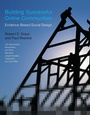
Robert E. Kraut | Paul Resnick | Sara Kiesler
Building Successful Online Communities
Evidence-Based Social Design
Book
02/2016
MIT Press
€31.70
Article exhausted; check different version
E-Book
03/2012
MIT Press
€33.99
Available for download
Persons
Robert E. Kraut is Herbert A. Simon Professor of Human-Computer Interaction at Carnegie Mellon University. Paul Resnick is Professor at the University of Michigan's School of Information.