

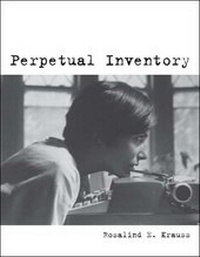
Perpetual Inventory
Published on 31. March 2010
Book
Hardback
320 pages
978-0-262-01380-2 (ISBN)
Description
The job of an art critic is to take perpetual inventory, constantly revising her
ideas about the direction of contemporary art and the significance of the work she writes about. In
these essays, which span three decades of assessment and reassessment, Rosalind Krauss considers
what she has come to call the "post-medium condition" -- the abandonment by contemporary
art of the modernist emphasis on the medium as the source of artistic significance. Jean-François
Lyotard argued that the postmodern condition is characterized by the end of a
"master narrative," and Krauss sees in the post-medium condition of
contemporary art a similar farewell to coherence. The master narrative of contemporary art ended
when conceptual art and other contemporary practices jettisoned the specific medium in order to
juxtapose image and written text in the same work. For Krauss, this spells the end of serious art,
and she devotes much of Perpetual Inventory to "wrest[ling] new media to the
mat of specificity." Krauss also writes about artists who are reinventing the medium, artists
who persevere in the service of a nontraditional medium ("strange new apparatuses" often
adopted from commercial culture), among them Ed Ruscha, Christian Marclay, William Kentridge, and
James Coleman.
ideas about the direction of contemporary art and the significance of the work she writes about. In
these essays, which span three decades of assessment and reassessment, Rosalind Krauss considers
what she has come to call the "post-medium condition" -- the abandonment by contemporary
art of the modernist emphasis on the medium as the source of artistic significance. Jean-François
Lyotard argued that the postmodern condition is characterized by the end of a
"master narrative," and Krauss sees in the post-medium condition of
contemporary art a similar farewell to coherence. The master narrative of contemporary art ended
when conceptual art and other contemporary practices jettisoned the specific medium in order to
juxtapose image and written text in the same work. For Krauss, this spells the end of serious art,
and she devotes much of Perpetual Inventory to "wrest[ling] new media to the
mat of specificity." Krauss also writes about artists who are reinventing the medium, artists
who persevere in the service of a nontraditional medium ("strange new apparatuses" often
adopted from commercial culture), among them Ed Ruscha, Christian Marclay, William Kentridge, and
James Coleman.
More details
Series
Language
English
Place of publication
Cambridge, Mass.
United States
Publishing group
MIT Press Ltd
Target group
US School Grade: College Graduate Student and over
Illustrations
47 s/w Abbildungen
47 b&w illus.
Dimensions
Height: 229 mm
Width: 178 mm
Thickness: 0 mm
Weight
454 gr
ISBN-13
978-0-262-01380-2 (9780262013802)
Copyright in bibliographic data and cover images is held by Nielsen Book Services Limited or by the publishers or by their respective licensors: all rights reserved.
Schweitzer Classification
Other editions
New editions
Rosalind E. Krauss
Perpetual Inventory
Book
02/2013
MIT Press
€37.00
Article exhausted; check different version
Additional editions
Rosalind E. Krauss
Perpetual Inventory
Book
02/2013
MIT Press
€37.00
Article exhausted; check different version
Person
Rosalind E. Krauss, University Professor at Columbia University and an editor and cofounder of October magazine, is the author of The Originality of the Avant-Garde and Other Modernist Myths (1985), The Optical Unconscious (1993), The Picasso Papers (1999), and Bachelors (1999), all published by the MIT Press, and coauthor (with Yve-Alain Bois) of Formless: A User's Guide (Zone Books, 1997).