


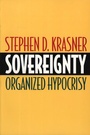
Sovereignty
Organized Hypocrisy
Published on 29. August 1999
Book
Hardback
248 pages
978-0-691-00702-1 (ISBN)
Description
The acceptance of human rights and minority rights, the increasing role of international financial institutions, and globalization have led many observers to question the continued viability of the sovereign state. Here a leading expert challenges this conclusion. Stephen Krasner contends that states have never been as sovereign as some have supposed. Throughout history, rulers have been motivated by a desire to stay in power, not by some abstract adherence to international principles. Organized hypocrisy--the presence of longstanding norms that are frequently violated--has been an enduring attribute of international relations.
Political leaders have usually but not always honored international legal sovereignty, the principle that international recognition should be accorded only to juridically independent sovereign states, while treating Westphalian sovereignty, the principle that states have the right to exclude external authority from their own territory, in a much more provisional way. In some instances violations of the principles of sovereignty have been coercive, as in the imposition of minority rights on newly created states after the First World War or the successor states of Yugoslavia after 1990; at other times cooperative, as in the European Human Rights regime or conditionality agreements with the International Monetary Fund.
The author looks at various issues areas to make his argument: minority rights, human rights, sovereign lending, and state creation in the nineteenth and twentieth centuries. Differences in national power and interests, he concludes, not international norms, continue to be the most powerful explanation for the behavior of states.
Political leaders have usually but not always honored international legal sovereignty, the principle that international recognition should be accorded only to juridically independent sovereign states, while treating Westphalian sovereignty, the principle that states have the right to exclude external authority from their own territory, in a much more provisional way. In some instances violations of the principles of sovereignty have been coercive, as in the imposition of minority rights on newly created states after the First World War or the successor states of Yugoslavia after 1990; at other times cooperative, as in the European Human Rights regime or conditionality agreements with the International Monetary Fund.
The author looks at various issues areas to make his argument: minority rights, human rights, sovereign lending, and state creation in the nineteenth and twentieth centuries. Differences in national power and interests, he concludes, not international norms, continue to be the most powerful explanation for the behavior of states.
Reviews / Votes
"One of Choice's Outstanding Academic Titles for 2000" "Stephen Krasner played a key role in transforming state sovereignty from a neorealist presumption into an object of sustained inquiry. Thus his new book is particularly noteworthy. . . . Keeping different kinds of sovereignty straight is crucial to the study of international relations, whether at the hands of neorealists or constructivists, nonliberal institutionalists, or postmodernists."---Fred H. Lawson, The Annals of the American Academy of Political and Social Science "Krasner stakes out a rigorous and important position. This book is one that must be read by those who have the slightest interest in the history of international relations." * Virginia Quarterly Review * "Sovereignty is a powerful and important book, destined to become a standard realist position in the current contexts of globalization and security theory." * Choice *More details
Language
English
Place of publication
New Jersey
United States
Target group
College/higher education
Professional and scholarly
Product notice
Trade binding
Illustrations
2 tables
Dimensions
Height: 254 mm
Width: 197 mm
Weight
539 gr
ISBN-13
978-0-691-00702-1 (9780691007021)
Copyright in bibliographic data is held by Nielsen Book Services Limited or its licensors: all rights reserved.
Schweitzer Classification
Other editions
Additional editions
E-Book
06/2015
1st Edition
Princeton University Press
€161.95
Available for download
Person
Stephen D. Krasner is the Graham H. Stuart Professor of International Relations and a Senior Fellow in the Institute for International Studies at Stanford University. He is the author of Defending the National Interest: Raw Material Investments and U.S. Foreign Policy (Princeton) and Structural Conflict: The Third World Against Global Liberalism, and is the editor of International Regimes.