

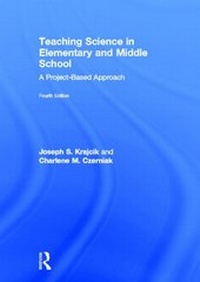
Teaching Science in Elementary and Middle School
A Project-Based Approach
4th Edition
Published on 2. September 2013
Book
Hardback
404 pages
978-0-415-53404-8 (ISBN)
Description
Teaching Science in Elementary and Middle School offers in-depth information about the fundamental features of project-based science and strategies for implementing the approach. In project-based science classrooms students investigate, use technology, develop artifacts, collaborate, and make products to show what they have learned. Paralleling what scientists do, project-based science represents the essence of inquiry and the nature of science. Because project-based science is a method aligned with what is known about how to help all children learn science, it not only helps students learn science more thoroughly and deeply, it also helps them experience the joy of doing science. Project-based science embodies the principles in A Framework for K-12 Science Education and the Next Generation Science Standards. Blending principles of learning and motivation with practical teaching ideas, this text shows how project-based learning is related to ideas in the Framework and provides concrete strategies for meeting its goals. Features include long-term, interdisciplinary, student-centered lessons; scenarios; learning activities, and "Connecting to Framework for K-12 Science Education" textboxes. More concise than previous editions, the Fourth Edition offers a wealth of supplementary material on a new Companion Website, including many videos showing a teacher and class in a project environment.
Reviews / Votes
NSTA Recommends (R) National Science Teachers Association"If teachers could find the time to read and reflect on this book, it could potentially transform their science classes. And for elementary teachers who teach most or all the academic subjects, many of this book's ideas would also be effective in those other subjects."
- Richard Lord, High School Biology Teacher, NSTA
More details
Edition
4th New edition
Language
English
Place of publication
London
United Kingdom
Publishing group
Taylor & Francis Ltd
Target group
College/higher education
Professional and scholarly
Edition type
New edition
Illustrations
68 s/w Tabellen
Following Teaching Science to Every Child; 68 Tables, black and white
Dimensions
Height: 254 mm
Width: 178 mm
Weight
907 gr
ISBN-13
978-0-415-53404-8 (9780415534048)
Copyright in bibliographic data and cover images is held by Nielsen Book Services Limited or by the publishers or by their respective licensors: all rights reserved.
Schweitzer Classification
Other editions
New editions
Joseph S. Krajcik | Charlene M. Czerniak
Teaching Science in Elementary and Middle School
A Project-Based Learning Approach
Book
06/2018
5th Edition
Routledge
€202.50
Article exhausted; check for reprint
Additional editions
Joseph S. Krajcik | Charlene M. Czerniak
Teaching Science in Elementary and Middle School
A Project-Based Approach
Book
09/2013
4th Edition
Routledge
€104.17
Article exhausted; check for reprint
Persons
Joseph S. Krajcik is Professor of Science Education and Director of the Institute for Collaborative Research in Education, Assessment and Teaching Environments for Science, Technology, Engineering and Mathematics (CREATE for STEM) at Michigan State University, USA.
Charlene M. Czerniak is Professor of Science Education and Distinguished University Professor at the University of Toledo, USA.
Charlene M. Czerniak is Professor of Science Education and Distinguished University Professor at the University of Toledo, USA.
Content
Chapter 1 Teaching Science to Children
Chapter 2 How Children Construct Understanding of Science
Chapter 3 Establishing Relevance to Students' Lives
Chapter 4 Developing Scientific Investigations
Chapter 5 Making Sense of Data and Sharing Findings
Chapter 6 Collaboration in the Science Classroom
Chapter 7 Instructional Strategies that Support Inquiry
Chapter 8 Assessing Student Understanding
Chapter 9 Managing the Science Classroom
Chapter 10 Planning a Project-Based Curriculum
Chapter 11 Next Steps
Chapter 2 How Children Construct Understanding of Science
Chapter 3 Establishing Relevance to Students' Lives
Chapter 4 Developing Scientific Investigations
Chapter 5 Making Sense of Data and Sharing Findings
Chapter 6 Collaboration in the Science Classroom
Chapter 7 Instructional Strategies that Support Inquiry
Chapter 8 Assessing Student Understanding
Chapter 9 Managing the Science Classroom
Chapter 10 Planning a Project-Based Curriculum
Chapter 11 Next Steps