

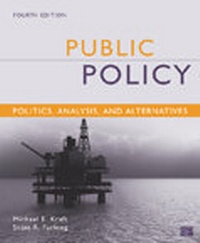
Public Policy
Politics, Analysis, and Alternatives
4th Edition
Published on 5. September 2012
Book
Paperback/Softback
592 pages
978-1-4522-0274-7 (ISBN)
Description
All too often, public policy textbooks offer a basic grounding in the policy process without the benefit of integrating the use of policy analysis. Kraft and Furlong, since their first edition, take a different tack. They want students to understand how and why policy analysis is used to assess policy alternatives-not only to question the assumptions of policy analysts, but to recognize how analysis is used in support of political arguments. To encourage critical and creative thinking on issues ranging from the financial bailout to rising gas prices to natural disasters, the authors introduce and fully integrate an evaluative approach to policy.
Public Policy starts with a concise review of institutions, policy actors, and major theoretical models. The authors then discuss the nature of policy analysis and its practice, and show students how to employ evaluative criteria in six substantive policy areas. Public Policy arms students with analytic tools they need to understand the motivations of policy actors-both within and outside of government-influence a complex, yet comprehensible, policy agenda.
Enhancements to the 4th edition:
- All chapters have been comprehensively updated to include recent events, issues, and policy debates including the conduct of the wars in Afghanistan and Iraq, the use of private contractors for military support and operations, the rising cost of gasoline and disputes over energy policy and climate change, the controversy over immigration policy, requirements for financial regulation, heightened concerns over economic and social inequality, and the clash over reforming taxes and entitlement programs, as well as dealing with the federal deficit and national debt.
- New and updated "working with sources" and "steps to analysis" features help students investigate sources of information and apply evaluative criteria.
- New and updated end-of chapter discussion questions, suggested readings, and web sites.
Public Policy starts with a concise review of institutions, policy actors, and major theoretical models. The authors then discuss the nature of policy analysis and its practice, and show students how to employ evaluative criteria in six substantive policy areas. Public Policy arms students with analytic tools they need to understand the motivations of policy actors-both within and outside of government-influence a complex, yet comprehensible, policy agenda.
Enhancements to the 4th edition:
- All chapters have been comprehensively updated to include recent events, issues, and policy debates including the conduct of the wars in Afghanistan and Iraq, the use of private contractors for military support and operations, the rising cost of gasoline and disputes over energy policy and climate change, the controversy over immigration policy, requirements for financial regulation, heightened concerns over economic and social inequality, and the clash over reforming taxes and entitlement programs, as well as dealing with the federal deficit and national debt.
- New and updated "working with sources" and "steps to analysis" features help students investigate sources of information and apply evaluative criteria.
- New and updated end-of chapter discussion questions, suggested readings, and web sites.
More details
Edition
4th Revised edition
Language
English
Place of publication
Washington
United States
Publishing group
SAGE Publications Inc
Target group
College/higher education
Edition type
Revised edition
Dimensions
Height: 232 mm
Width: 191 mm
Weight
805 gr
ISBN-13
978-1-4522-0274-7 (9781452202747)
Copyright in bibliographic data and cover images is held by Nielsen Book Services Limited or by the publishers or by their respective licensors: all rights reserved.
Schweitzer Classification
Other editions
New editions
Book
12/2014
5th Edition
SAGE Publications Inc
€133.92
Article exhausted; check for reprint
Previous edition
Book
07/2009
3rd Edition
CQ Press
€69.59
Article exhausted; check for reprint
Persons
Michael E. Kraft is professor emeritus of political science
and public affairs at the University of Wisconsin-Green
Bay. He is the author of, among other works, Environmental
Policy and Politics, 8th ed. (2022), and coauthor of
Coming Clean: Information Disclosure and Environmental
Performance (2011), with Mark Stephan and Troy D. Abel.
In addition, he is the coeditor of Environmental Policy:
New Directions in the 21st Century, 12th ed. (2025), with
Barry G. Rabe and Norman J. Vig; Toward Sustainable
Communities: Transition and Transformations in Environmental Policy, 2nd ed. (2009), with
Daniel A. Mazmanian; and Business and Environmental Policy: Corporate Interests in the
American Political System (2007) and The Oxford Handbook of U.S. Environmental Policy (2013),
with Sheldon Kamieniecki. For over forty years, he taught courses in environmental policy and
politics, American government, Congress, and public policy analysis.
Scott R. Furlong is provost/vice president for academic
affairs at the State University of New York at Oswego as
of July 2017, after serving ten years as dean of the College
of Arts, Humanities and Social Sciences and professor
of political science and public affairs at the University of
Wisconsin-Green Bay. His areas of expertise are regulatory
policy and interest group participation in the executive
branch, and he has taught public policy for over twenty
years. He is the author or coauthor of many book chapters
and coauthor of Rulemaking: How Government Agencies
Write Laws and Make Policy, 5th ed. (2019), with Cornelius
M. Kerwin. His articles have appeared in such journals as Public Administration Review, Journal
of Public Administration Research and Theory, Administration and Society, American Review of
Public Administration, and Policy Studies Journal.
and public affairs at the University of Wisconsin-Green
Bay. He is the author of, among other works, Environmental
Policy and Politics, 8th ed. (2022), and coauthor of
Coming Clean: Information Disclosure and Environmental
Performance (2011), with Mark Stephan and Troy D. Abel.
In addition, he is the coeditor of Environmental Policy:
New Directions in the 21st Century, 12th ed. (2025), with
Barry G. Rabe and Norman J. Vig; Toward Sustainable
Communities: Transition and Transformations in Environmental Policy, 2nd ed. (2009), with
Daniel A. Mazmanian; and Business and Environmental Policy: Corporate Interests in the
American Political System (2007) and The Oxford Handbook of U.S. Environmental Policy (2013),
with Sheldon Kamieniecki. For over forty years, he taught courses in environmental policy and
politics, American government, Congress, and public policy analysis.
Scott R. Furlong is provost/vice president for academic
affairs at the State University of New York at Oswego as
of July 2017, after serving ten years as dean of the College
of Arts, Humanities and Social Sciences and professor
of political science and public affairs at the University of
Wisconsin-Green Bay. His areas of expertise are regulatory
policy and interest group participation in the executive
branch, and he has taught public policy for over twenty
years. He is the author or coauthor of many book chapters
and coauthor of Rulemaking: How Government Agencies
Write Laws and Make Policy, 5th ed. (2019), with Cornelius
M. Kerwin. His articles have appeared in such journals as Public Administration Review, Journal
of Public Administration Research and Theory, Administration and Society, American Review of
Public Administration, and Policy Studies Journal.
Content
PART ONE: THE STUDY OF PUBLIC POLICY
Public Policy and Politics
What Is Public Policy?
Defining Basic Concepts
The Contexts of Public Policy
The Reasons for Government Involvement
Why Study Public Policy?
The Practice of Policy Analysis
Government Institutions and Policy Actors
Growth of Government
Government Institutions and Policy Capacity
Federalism
Separation of Powers
Informal Policy Actors and Policy Capacity
Improving Policy Capacity
Understanding the Politics of Public Policy
Theories of Politics and Public Policy
The Policy Process Model
Instruments of Public Policy
Policy Typologies
PART TWO: ANALYZING PUBLIC POLICY
Policy Analysis: An Introduction
The Nature of Policy Analysis
Steps in the Policy Analysis Process
Types of Policy Analysis
What Kind of Analysis Is Needed?
Public Problems and Policy Alternatives
Problem Analysis
How to Find Information
Constructing Alternatives
Creative Thinking about Policy Action
Assessing Policy Alternatives
Evaluative Criteria for Judging Policy Proposals
Using the Methods of Policy Analysis
Economic Approaches
Decision Making and Impacts
Political and Institutional Approaches
Ethical Analysis
PART THREE: ISSUES AND CONTROVERSIES IN PUBLIC POLICY
Economic and Budgetary Policy
Background
Goals of Economic Policy
Tools of Economic Policy
The Budget Process and Its Effect on Economic Policy
Economic Policy: Successes and Failures
Future Economic Issues and Challenges
Focused Discussion: How to Address the Budgetary Shortfall
Health Care Policy
Background
Major Government Health Care Programs
Rising Health Care Costs
Managed Care Organizations
Reducing Health Care Costs: Beyond HMOs
Quality of Care
Focused Discussion: Should There Be Greater Emphasis on Preventative Health Care?
Welfare and Social Security Policy
Background
Social Security
Welfare
Focused Discussion: Addressing the Elephant in the Room - Social Security
Education Policy
Background
Problems Facing Education
Higher Education Issues
Education Policy Reforms
Focused Discussion: Higher Education Affordability, Cost, and Values
Environmental and Energy Policy
Background
The Evolution of Environmental and Energy Policy
From Consensus to Conflict in Environmental Policy
Major Federal Environmental Policies
Energy Policies
Focused Discussion: Climate Change and Energy Policy Alternatives
Foreign Policy and Homeland Security
Background and Policy Evaluation
Selected Issues in Homeland Security
Focused Discussion: Civil Liberties in an Age of Terrorism
PART FOUR: CONCLUSIONS
Politics, Analysis, and Policy Choice
Public Policies and Their Impacts
Policy Analysis and Policy Choices
Citizen Participation in Decision Making
Conclusions
Public Policy and Politics
What Is Public Policy?
Defining Basic Concepts
The Contexts of Public Policy
The Reasons for Government Involvement
Why Study Public Policy?
The Practice of Policy Analysis
Government Institutions and Policy Actors
Growth of Government
Government Institutions and Policy Capacity
Federalism
Separation of Powers
Informal Policy Actors and Policy Capacity
Improving Policy Capacity
Understanding the Politics of Public Policy
Theories of Politics and Public Policy
The Policy Process Model
Instruments of Public Policy
Policy Typologies
PART TWO: ANALYZING PUBLIC POLICY
Policy Analysis: An Introduction
The Nature of Policy Analysis
Steps in the Policy Analysis Process
Types of Policy Analysis
What Kind of Analysis Is Needed?
Public Problems and Policy Alternatives
Problem Analysis
How to Find Information
Constructing Alternatives
Creative Thinking about Policy Action
Assessing Policy Alternatives
Evaluative Criteria for Judging Policy Proposals
Using the Methods of Policy Analysis
Economic Approaches
Decision Making and Impacts
Political and Institutional Approaches
Ethical Analysis
PART THREE: ISSUES AND CONTROVERSIES IN PUBLIC POLICY
Economic and Budgetary Policy
Background
Goals of Economic Policy
Tools of Economic Policy
The Budget Process and Its Effect on Economic Policy
Economic Policy: Successes and Failures
Future Economic Issues and Challenges
Focused Discussion: How to Address the Budgetary Shortfall
Health Care Policy
Background
Major Government Health Care Programs
Rising Health Care Costs
Managed Care Organizations
Reducing Health Care Costs: Beyond HMOs
Quality of Care
Focused Discussion: Should There Be Greater Emphasis on Preventative Health Care?
Welfare and Social Security Policy
Background
Social Security
Welfare
Focused Discussion: Addressing the Elephant in the Room - Social Security
Education Policy
Background
Problems Facing Education
Higher Education Issues
Education Policy Reforms
Focused Discussion: Higher Education Affordability, Cost, and Values
Environmental and Energy Policy
Background
The Evolution of Environmental and Energy Policy
From Consensus to Conflict in Environmental Policy
Major Federal Environmental Policies
Energy Policies
Focused Discussion: Climate Change and Energy Policy Alternatives
Foreign Policy and Homeland Security
Background and Policy Evaluation
Selected Issues in Homeland Security
Focused Discussion: Civil Liberties in an Age of Terrorism
PART FOUR: CONCLUSIONS
Politics, Analysis, and Policy Choice
Public Policies and Their Impacts
Policy Analysis and Policy Choices
Citizen Participation in Decision Making
Conclusions