

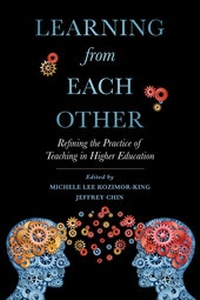
Learning from Each Other
Refining the Practice of Teaching in Higher Education
1st Edition
Published on 21. August 2018
Book
Paperback/Softback
336 pages
978-0-520-29658-9 (ISBN)
Description
Learning from Each Other includes 20 original chapters written by well-known experts in the field of teaching and learning. Conceived for both new and experienced faculty at community colleges, four-year institutions, and research-intensive universities, the volume also addresses the interests of faculty and graduate students in programs designed to prepare future faculty and campus individuals responsible for faculty professional development. With the aim of cultivating engagement amongst students and deepening their understanding of the content, topics covered in this edited volume include:
employing the science of learning in a social science context
understanding the effects of a flipped classroom on student success
pedagogical techniques to create a community of inquiry in online learning environments
the risks and rewards of co-teaching
reaching and teaching "non-traditional" students
facilitating learning and leadership in student team projects
connecting students with the community through research
issues of assessment, including backward design, developing and using rubrics, and defining and implementing the scholarship of teaching and learning
Through Learning from Each Other, all faculty who care about their teaching, but especially faculty in the social sciences, can successfully employ curricular innovations, classroom techniques, and advances in assessment to create better learning environments for their students.
employing the science of learning in a social science context
understanding the effects of a flipped classroom on student success
pedagogical techniques to create a community of inquiry in online learning environments
the risks and rewards of co-teaching
reaching and teaching "non-traditional" students
facilitating learning and leadership in student team projects
connecting students with the community through research
issues of assessment, including backward design, developing and using rubrics, and defining and implementing the scholarship of teaching and learning
Through Learning from Each Other, all faculty who care about their teaching, but especially faculty in the social sciences, can successfully employ curricular innovations, classroom techniques, and advances in assessment to create better learning environments for their students.
Reviews / Votes
"Learning from Each Other provides an overview of both the latest research and resources and tips for improving time-honored teaching strategies and incorporating cutting-edge, innovative teaching techniques. The variety of topics ensures that even the most experienced faculty member or faculty developer will find something of use. . . . Readers will find that while the authors all teach in the United States, the broad focus makes the techniques and issues addressed applicable to a global audience." * International Journal for Academic Development *More details
Edition
First Edition
Language
English
Place of publication
Berkerley
United States
Target group
Professional and scholarly
Product notice
Paperback (trade)
Illustrations
7 tables
Dimensions
Height: 229 mm
Width: 152 mm
Thickness: 23 mm
Weight
454 gr
ISBN-13
978-0-520-29658-9 (9780520296589)
Copyright in bibliographic data and cover images is held by Nielsen Book Services Limited or by the publishers or by their respective licensors: all rights reserved.
Schweitzer Classification
Other editions
Additional editions
Michele Lee Kozimor-King | Jeffrey Chin
Learning from Each Other
Refining the Practice of Teaching in Higher Education
E-Book
08/2018
1st Edition
University of California Press
€38.99
Available for download
Persons
Michele Lee Kozimor-King is Professor of Sociology and Past Director of the Center for Excellence in Teaching and Learning at Elizabethtown College. She is a past President of Alpha Kappa Delta, the International Sociology Honor Society and is currently the Editor-in-Chief of Teaching Sociology, an official journal of the American Sociological Association.
Jeffrey Chin is Professor of Sociology at Le Moyne College and Secretary-Treasurer of Alpha Kappa Delta. He is a former editor of Teaching Sociology and a Carnegie National Scholar, a program of the Carnegie Foundation for the Advancement of Teaching.
Jeffrey Chin is Professor of Sociology at Le Moyne College and Secretary-Treasurer of Alpha Kappa Delta. He is a former editor of Teaching Sociology and a Carnegie National Scholar, a program of the Carnegie Foundation for the Advancement of Teaching.
Content
Acknowledgments
Foreword by Michael Reder
Introduction
Michele Lee Kozimor-King and Jeffrey Chin
Part I. Curricular Innovations
1. The Science of Learning in a Social Science Context
Melinda Messineo
2. Pedagogical Techniques for Creating a Community of Inquiry in Online Learning Environments
Andrea N. Hunt
3. Co-Teaching: Risks and Rewards
Renee Monson and Kristy Kenyon
4. A Collaborative Aff air: Connecting Students with the Community through Research
Michele Lee Kozimor-King and Barbara Prince
5. Strategies and Resources for Internationalizing the Curriculum
Christine K. Oakley
6. Flipping Out: Understanding the Effects of a General Education Flipped Classroom on Student Success
Craig Douglas Albert, Stacie K. Pettit, and Christopher Terry
7. Reaching and Teaching "Nontraditional" Students in Community Colleges and Beyond
Sara Parker
8. Addressing Learner Variability on Campus through Universal Design for Learning
Shannon Haley-Mize
Part II. Classroom Techniques
9. Without Apology: Reclaiming the Lecture
Diane L. Pike
10. Scribes in the Classroom: Effectively Using PowerPoint to Enhance the Classroom Experience
Monica R. Sylvia and Brenda J. Kirby
11. Discussion in the Social Science Classroom
Jay R. Howard
12. Facilitating Learning and Leadership in Student Team Projects
Dennis O'Connor
13. Courting Controversy and Allowing for Awkward: Strategies for Teaching Difficult Topics
Mari Plikuhn
14. Becoming a Culturally Inclusive Educator
Dena R. Samuels
15. The Value of Games and Simulations in the Social Sciences
Amanda M. Rosen
16. Putting the Student at the Center: Contemplative Practices as Classroom Pedagogy
Tracey Wenger Sadd
Part III. Out-of-class Situations
17. Student Reading Compliance and Learning in the Social Sciences
Jay R. Howard
18. Cultivating Engagement and Deepening Understanding While Leaving the Textbook Behind
Robin G. Isserles
Part IV. Assessment
19. (Re-)Creating Your Course: Backward Design and Assessment
Melinda Messineo
20. "Am I Grading Consistently and Effectively?": Developing and Using Rubrics
Shirley A. Jackson
21. Defining and Implementing the Scholarship of Teaching and Learning
Jeffrey Chin
Contributors
Index
Foreword by Michael Reder
Introduction
Michele Lee Kozimor-King and Jeffrey Chin
Part I. Curricular Innovations
1. The Science of Learning in a Social Science Context
Melinda Messineo
2. Pedagogical Techniques for Creating a Community of Inquiry in Online Learning Environments
Andrea N. Hunt
3. Co-Teaching: Risks and Rewards
Renee Monson and Kristy Kenyon
4. A Collaborative Aff air: Connecting Students with the Community through Research
Michele Lee Kozimor-King and Barbara Prince
5. Strategies and Resources for Internationalizing the Curriculum
Christine K. Oakley
6. Flipping Out: Understanding the Effects of a General Education Flipped Classroom on Student Success
Craig Douglas Albert, Stacie K. Pettit, and Christopher Terry
7. Reaching and Teaching "Nontraditional" Students in Community Colleges and Beyond
Sara Parker
8. Addressing Learner Variability on Campus through Universal Design for Learning
Shannon Haley-Mize
Part II. Classroom Techniques
9. Without Apology: Reclaiming the Lecture
Diane L. Pike
10. Scribes in the Classroom: Effectively Using PowerPoint to Enhance the Classroom Experience
Monica R. Sylvia and Brenda J. Kirby
11. Discussion in the Social Science Classroom
Jay R. Howard
12. Facilitating Learning and Leadership in Student Team Projects
Dennis O'Connor
13. Courting Controversy and Allowing for Awkward: Strategies for Teaching Difficult Topics
Mari Plikuhn
14. Becoming a Culturally Inclusive Educator
Dena R. Samuels
15. The Value of Games and Simulations in the Social Sciences
Amanda M. Rosen
16. Putting the Student at the Center: Contemplative Practices as Classroom Pedagogy
Tracey Wenger Sadd
Part III. Out-of-class Situations
17. Student Reading Compliance and Learning in the Social Sciences
Jay R. Howard
18. Cultivating Engagement and Deepening Understanding While Leaving the Textbook Behind
Robin G. Isserles
Part IV. Assessment
19. (Re-)Creating Your Course: Backward Design and Assessment
Melinda Messineo
20. "Am I Grading Consistently and Effectively?": Developing and Using Rubrics
Shirley A. Jackson
21. Defining and Implementing the Scholarship of Teaching and Learning
Jeffrey Chin
Contributors
Index