

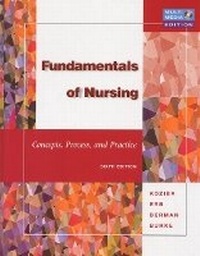
Fundamentals of Nursing
Concepts, Process and Practice (includes Student Tutorial and Clinical Companion)
6th Edition
Published on 6. October 1999
Book
Mixed media product
1479 pages
978-0-8053-3184-4 (ISBN)
Description
For Fundamentals of Nursing Courses in the Nursing Curriculum
Fundamentals of Nursing, 6/E presents the fundamentals of nursing care within the framework of the nursing process. Hallmark features are a clear and accessible writing style, a focus on practical application with real-world examples and case studies, and an appropriate level of detail for beginning students. The text is supported by a state-of-the art technology package to enhance the learning process.
Fundamentals of Nursing, 6/E presents the fundamentals of nursing care within the framework of the nursing process. Hallmark features are a clear and accessible writing style, a focus on practical application with real-world examples and case studies, and an appropriate level of detail for beginning students. The text is supported by a state-of-the art technology package to enhance the learning process.
More details
Edition
6th edition
Language
English
Place of publication
San Francisco
United States
Publishing group
Pearson Education (US)
Target group
Professional and scholarly
Dimensions
Height: 280 mm
Width: 222 mm
Thickness: 63 mm
Weight
3437 gr
ISBN-13
978-0-8053-3184-4 (9780805331844)
Copyright in bibliographic data and cover images is held by Nielsen Book Services Limited or by the publishers or by their respective licensors: all rights reserved.
Schweitzer Classification
Other editions
New editions
Barbara J. Kozier | Glenora Erb | Audrey T. Berman
Fundamentals of Nursing
Concepts, Process, and Practice: United States Edition
Book
09/2003
7th Edition
Pearson
€74.39
Article exhausted; check for reprint
Previous edition

Book
10/2000
6th Edition
Prentice Hall
€43.39
Article exhausted; check for reprint
Content
I. THE NATURE OF NURSING.
1. Historical and Contemporary Nursing Practice.
2. Nursing Education and Research.
3. Nursing Theories and Conceptual Frameworks.
4. Legal Aspects of Nursing.
5. Ethics, Values and Advocacy.
II: CONTEMPORARY HEALTH CARE.
6. Health Care Delivery Systems.
7. Community-Based Nursing and Care Continuity.
8. Health Promotion.
9. Home Care.
10. Nursing Informatics.
III: HEALTH BELIEFS AND PRACTICES.
11. Health, Wellness, and Illness.
12. Individual, Family, and Community Health.
13. Culture and Ethnicity.
14. Spirituality.
15. Holistic Health Modalities.
IV: THE NURSING PROCESS.
16. Critical Thinking and the Nursing Process.
17. Assessing.
18. Diagnosing.
19. Planning.
20. Implementing and Evaluating.
21. Documenting and Reporting.
V: LIFESPAN DEVELOPMENT.
22. Concepts of Growth and Development.
23. Development from Conception through Adolescence.
24. Development from Young through Older Adulthood.
VI: INTEGRAL ASPECTS OF NURSING.
25. Caring, Comforting and Communicating.
26. Teaching.
27. Leading, Managing and Influencing Change.
VII: ASSESSING HEALTH.
28. Vital Signs.
29. Health Assessment.
VIII: INTEGRAL COMPONENTS OF CLIENT CARE.
30. Asepsis.
31. Safety.
32. Hygiene.
33. Medications.
34. Skin Integrity and Wound Care.
35. Perioperative Nursing.
IX: PROMOTING PSYCHOSOCIAL HEALTH.
36. Sensory Perception.
37. Self-Concept.
38. Sexuality.
39. Stress and Coping.
40. Loss, Grieving and Death.
X: PROMOTING PHYSIOLOGIC HEALTH.
41. Activity and Exercise.
42. Rest and Sleep.
43. Pain Management.
44. Nutrition.
45. Fecal Elimination.
46. Urinary Elimination.
47. Oxygenation.
48. Fluid, Electrolyte, Acid-Base Balance.
Appendix A: Critical Thinking Possibilities.
Glossary.
Index.
1. Historical and Contemporary Nursing Practice.
2. Nursing Education and Research.
3. Nursing Theories and Conceptual Frameworks.
4. Legal Aspects of Nursing.
5. Ethics, Values and Advocacy.
II: CONTEMPORARY HEALTH CARE.
6. Health Care Delivery Systems.
7. Community-Based Nursing and Care Continuity.
8. Health Promotion.
9. Home Care.
10. Nursing Informatics.
III: HEALTH BELIEFS AND PRACTICES.
11. Health, Wellness, and Illness.
12. Individual, Family, and Community Health.
13. Culture and Ethnicity.
14. Spirituality.
15. Holistic Health Modalities.
IV: THE NURSING PROCESS.
16. Critical Thinking and the Nursing Process.
17. Assessing.
18. Diagnosing.
19. Planning.
20. Implementing and Evaluating.
21. Documenting and Reporting.
V: LIFESPAN DEVELOPMENT.
22. Concepts of Growth and Development.
23. Development from Conception through Adolescence.
24. Development from Young through Older Adulthood.
VI: INTEGRAL ASPECTS OF NURSING.
25. Caring, Comforting and Communicating.
26. Teaching.
27. Leading, Managing and Influencing Change.
VII: ASSESSING HEALTH.
28. Vital Signs.
29. Health Assessment.
VIII: INTEGRAL COMPONENTS OF CLIENT CARE.
30. Asepsis.
31. Safety.
32. Hygiene.
33. Medications.
34. Skin Integrity and Wound Care.
35. Perioperative Nursing.
IX: PROMOTING PSYCHOSOCIAL HEALTH.
36. Sensory Perception.
37. Self-Concept.
38. Sexuality.
39. Stress and Coping.
40. Loss, Grieving and Death.
X: PROMOTING PHYSIOLOGIC HEALTH.
41. Activity and Exercise.
42. Rest and Sleep.
43. Pain Management.
44. Nutrition.
45. Fecal Elimination.
46. Urinary Elimination.
47. Oxygenation.
48. Fluid, Electrolyte, Acid-Base Balance.
Appendix A: Critical Thinking Possibilities.
Glossary.
Index.