

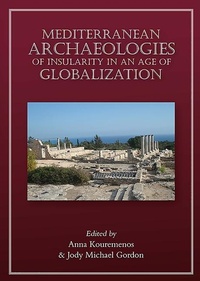
Mediterranean Archaeologies of Insularity in the Age of Globalization
Published on 5. June 2020
Book
Paperback/Softback
304 pages
978-1-78925-344-3 (ISBN)
Description
Recently, complex interpretations of socio-cultural change in the ancient Mediterranean world have emerged that challenge earlier models. Influenced by today's hyper-connected age, scholars no longer perceive the Mediterranean as a static place where "Greco-Roman" culture was dominant, but rather see it as adynamic and connected sea where fragmentation and uncertainty, along with mobility and networking, were the norm. Hence, a current theoretical approach to studying ancient culture has been that of globalization. Certain eras of Mediterranean history (e.g., the Roman empire) known for their increased connectivity have thus been analyzed from a globalized perspective that examines rhizomal networking, cultural diversity, and multiple processes of social change. Archaeology has proven a useful discipline for investigating ancient "globalization" because of its recent focus on how identity is expressed through material culture negotiated between both local and global influences when levels of connectivity are altered. One form of identity that has been inadequately explored in relation to globalization theory is insularity. Insularity, or the socially recognized differences expressed by people living on islands, is a form of self-identification created within a particular space and time. Insularity, as a unique social identity affected by "global" forces, should be viewed as an important research paradigm for archaeologies concerned with re-examining cultural change.
The purpose of this volume is to explore how comparative archaeologies of insularity can contribute to discourse on ancient Mediterranean "globalization." The volume's theme stems from a colloquium session that was chaired by the volume's co-editors at the Annual Meeting of the Archaeological Institute of America in January 2017. Given the current state of the field for globalization studies in Mediterranean archaeology, this volume aims to bring together for the first time archaeologists working ondifferent islands and a range of material culture types to examine diachronically how Mediterranean insularities changed during eras when connectivity increased, such as the Late Bronze Age, the era of Greek and Phoenician colonization, the Classical period, and during the High and Late Roman imperial eras. Each chapter aims to situate a specific island or island group within the context of the globalizing forces and networks that conditioned a particular period, and utilizes archaeological material toreveal how islanders shaped their insular identities, or notions of insularity, at the nexus of local and global influences.
The purpose of this volume is to explore how comparative archaeologies of insularity can contribute to discourse on ancient Mediterranean "globalization." The volume's theme stems from a colloquium session that was chaired by the volume's co-editors at the Annual Meeting of the Archaeological Institute of America in January 2017. Given the current state of the field for globalization studies in Mediterranean archaeology, this volume aims to bring together for the first time archaeologists working ondifferent islands and a range of material culture types to examine diachronically how Mediterranean insularities changed during eras when connectivity increased, such as the Late Bronze Age, the era of Greek and Phoenician colonization, the Classical period, and during the High and Late Roman imperial eras. Each chapter aims to situate a specific island or island group within the context of the globalizing forces and networks that conditioned a particular period, and utilizes archaeological material toreveal how islanders shaped their insular identities, or notions of insularity, at the nexus of local and global influences.
More details
Language
English
Place of publication
Oxford
United Kingdom
Target group
Professional and scholarly
Product notice
Paperback (trade)
Unsewn / adhesive bound
Illustrations
b/w
Dimensions
Height: 239 mm
Width: 168 mm
Thickness: 18 mm
Weight
717 gr
ISBN-13
978-1-78925-344-3 (9781789253443)
Copyright in bibliographic data and cover images is held by Nielsen Book Services Limited or by the publishers or by their respective licensors: all rights reserved.
Schweitzer Classification
Other editions
Additional editions
Kouremenos Anna Kouremenos | Michael Gordon Jody Michael Gordon
Mediterranean Archaeologies of Insularity in an Age of Globalization
E-Book
06/2020
Oxbow Books
€28.49
Available for download
Kouremenos Anna Kouremenos | Michael Gordon Jody Michael Gordon
Mediterranean Archaeologies of Insularity in an Age of Globalization
E-Book
06/2020
Oxbow Books
€28.49
Available for download
Persons
Anna Kouremenos is a Senior Associate member of the American School of Classical Studies at Athens specialising in the study of identity and material culture in the Greco-Roman world. Her research explores aspects of social, cultural, and island identities and focuses on bringing interdisciplinary perspectives to the fi eld of archaeology. Associate Professor in Dept. of Humanities and Social Sciences at Wentworth Institute of Technology, Boston
Content
Preface
About the Authors
Abstracts
1. Introduction
Jody Michael Gordon and Anna Kouremenos
2. Nuragic Networking? Assessing Globalization and Glocalization
in a Late Bronze Age Sardinian Context
Anthony Russell
3. Mobility and Globalization: The View from the Bronze Age Cyclades
Evi Gorogianni
4. Globalization Processes and Insularity on the Dalmatian Islands
in the Late Iron Age
Charles Barnett and Marina Ugarkovic
5. Apollo Archegetes as a Globalizing Divinity: Numismatic Iconography
and the Memory of Sicilian Naxos
Leigh Anne Lieberman
6. Balearic Indigeneity in a Global Mediterranean: Considering Circular
Domestic Structures of Late Iron Age Menorca
Alexander Smith
7. Fashioning a Global Goddess: The Representation of Isis across
Hellenistic Seascapes
Lindsey A. Mazurek
8. Globalization and Insularity in (Dis)Connected Crete
Jane E. Francis
9. From the Land of the Paphian Aphrodite to the Busy Christian Countryside: Globalization, Empire, and Insularity in Early and Late Roman Cyprus
Jody Michael Gordon and William R. Caraher
Afterword
P. Nick Kardulias
Index
About the Authors
Abstracts
1. Introduction
Jody Michael Gordon and Anna Kouremenos
2. Nuragic Networking? Assessing Globalization and Glocalization
in a Late Bronze Age Sardinian Context
Anthony Russell
3. Mobility and Globalization: The View from the Bronze Age Cyclades
Evi Gorogianni
4. Globalization Processes and Insularity on the Dalmatian Islands
in the Late Iron Age
Charles Barnett and Marina Ugarkovic
5. Apollo Archegetes as a Globalizing Divinity: Numismatic Iconography
and the Memory of Sicilian Naxos
Leigh Anne Lieberman
6. Balearic Indigeneity in a Global Mediterranean: Considering Circular
Domestic Structures of Late Iron Age Menorca
Alexander Smith
7. Fashioning a Global Goddess: The Representation of Isis across
Hellenistic Seascapes
Lindsey A. Mazurek
8. Globalization and Insularity in (Dis)Connected Crete
Jane E. Francis
9. From the Land of the Paphian Aphrodite to the Busy Christian Countryside: Globalization, Empire, and Insularity in Early and Late Roman Cyprus
Jody Michael Gordon and William R. Caraher
Afterword
P. Nick Kardulias
Index