

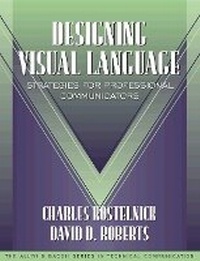
Designing Visual Language
Strategies for Professional Communicators (Part of the Allyn & Bacon Series in Technical Communication)
Published on 28. February 1998
Book
Paperback/Softback
455 pages
978-0-205-20022-1 (ISBN)
Description
Written by two highly experienced teachers in the field of document design, Designing Visual Language offers useful strategies and tools for document design of all types. A chief goal is to enable students to extend to visual design the rhetorical approach they assimilate in writing and editing courses. The text focuses on the kinds of situations and practical documents that occur in the workplace and blends this focus with a rhetorical approach that ties design to the audience, purpose, and context of messages.
More details
Language
English
Place of publication
United States
Publishing group
Pearson Education (US)
Target group
Professional and scholarly
Dimensions
Height: 233 mm
Width: 177 mm
Thickness: 20 mm
Weight
667 gr
ISBN-13
978-0-205-20022-1 (9780205200221)
Copyright in bibliographic data and cover images is held by Nielsen Book Services Limited or by the publishers or by their respective licensors: all rights reserved.
Schweitzer Classification
Other editions
New editions
Charles Kostelnick | David Roberts
Designing Visual Language
Strategies for Professional Communicators (Part of the Allyn & Bacon Series in Technical Communication)
Book
04/2010
2nd Edition
Pearson
€140.36
Article not available for order
Content
Chapters conclude with "Conclusion," "Notes," "References," and "Exercises." I.INTEGRATED COMMUNICATION.
1.Rhetorical Background.
Introduction to Visual Rhetoric.
Visual/Verbal Cognates
Process Example-Mapleton Center.
Conventions-What Readers Expect.
2.Perception and Design.
Gestalt Principles of Design.
Empirical Research as a Design Tool.
3.Visual Analysis.
Introduction to Visual Analysis.
A Taxonomy for Visual Vocabulary.
Analyzing Visual Vocabulary Rhetorically.
II.TEXT DESIGN.
4. Linear Components.
Introduction to Linear Components.
Process Example-Linear Components.
Vocabulary of Linear Components.
Applying the Cognate Strategies to Linear Components.
Interdependence of the Cognate Strategies.
5.Text Fields.
Introduction to Text Fields.
Process Example-Fields.
Vocabulary of Text Fields.
Applying The Cognate Strategies.
Interdependence of Cognate Strategies.
6.Nonlinear Components.
Introduction to Nonlinear Components.
Process Example-Nonlinear Components.
Vocabulary of Nonlinear Components.
Applying the Cognate Strategies.
Interdependence of the Cognate Strategies.
III.EXTRA-LEVEL DESIGN.
7.Data Displays.
Process Example-Data Displays.
Vocabulary of Data Displays.
Applying the Cognate Strategies to Data Displays.
Interdependence of the Cognate Strategies.
8.Pictures.
Introduction to Designing Pictures.
Process Example-Pictures.
Vocabulary of Pictures.
Applying the Cognate Strategies.
Interdependence of the Cognate Strategies.
9.Icons, Logos, Symbols.
Introduction to Icons, Logos, and Symbols.
Process Example-Icons, Logos, Symbols.
Vocabulary of Icons, Logos, Symbols.
Applying the Cognate Strategies to Icons, Logos, Symbols.
Interdependence of Cognate Strategies.
IV.DOCUMENT DESIGN.
10.Supra-Level Elements: Designing for Usability.
Introduction for Designing for Usability.
Process Example-Supra-Level Elements.
Vocabulary of Supra-Level Elements.
Applying the Cognate Strategies.
Appendixes.
1.Rhetorical Background.
Introduction to Visual Rhetoric.
Visual/Verbal Cognates
Process Example-Mapleton Center.
Conventions-What Readers Expect.
2.Perception and Design.
Gestalt Principles of Design.
Empirical Research as a Design Tool.
3.Visual Analysis.
Introduction to Visual Analysis.
A Taxonomy for Visual Vocabulary.
Analyzing Visual Vocabulary Rhetorically.
II.TEXT DESIGN.
4. Linear Components.
Introduction to Linear Components.
Process Example-Linear Components.
Vocabulary of Linear Components.
Applying the Cognate Strategies to Linear Components.
Interdependence of the Cognate Strategies.
5.Text Fields.
Introduction to Text Fields.
Process Example-Fields.
Vocabulary of Text Fields.
Applying The Cognate Strategies.
Interdependence of Cognate Strategies.
6.Nonlinear Components.
Introduction to Nonlinear Components.
Process Example-Nonlinear Components.
Vocabulary of Nonlinear Components.
Applying the Cognate Strategies.
Interdependence of the Cognate Strategies.
III.EXTRA-LEVEL DESIGN.
7.Data Displays.
Process Example-Data Displays.
Vocabulary of Data Displays.
Applying the Cognate Strategies to Data Displays.
Interdependence of the Cognate Strategies.
8.Pictures.
Introduction to Designing Pictures.
Process Example-Pictures.
Vocabulary of Pictures.
Applying the Cognate Strategies.
Interdependence of the Cognate Strategies.
9.Icons, Logos, Symbols.
Introduction to Icons, Logos, and Symbols.
Process Example-Icons, Logos, Symbols.
Vocabulary of Icons, Logos, Symbols.
Applying the Cognate Strategies to Icons, Logos, Symbols.
Interdependence of Cognate Strategies.
IV.DOCUMENT DESIGN.
10.Supra-Level Elements: Designing for Usability.
Introduction for Designing for Usability.
Process Example-Supra-Level Elements.
Vocabulary of Supra-Level Elements.
Applying the Cognate Strategies.
Appendixes.