

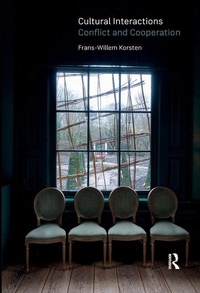
Cultural Interactions
Conflict and Cooperation
Published on 28. April 2022
Book
Paperback/Softback
192 pages
978-94-6372-038-0 (ISBN)
Description
The common saying is that people have a culture. This book argues that people live a culture - which may explain why they are so affectively attached to it. By considering cultural interactions on a global scale, this book investigates how cultures can be understood in terms of conflict and cooperation, in relation to the nation-state, a multiplicity of worlds, society, civilization and community. It considers how culture is at the basis of the construction of individual and collective selves; how they can come to be alienated; are defined in relation to others; are perhaps in-comparable; when they are considered to be dis-abled; and whether we can speak of animal cultural selves and mechanical cultural selves. Its twelve chapters consists of two parts each that both start with a piece of music. The pieces are taken from different cultures and all connote that getting to understand cultures depends on listening, first and foremost.
More details
Language
English
Place of publication
Oxford
Netherlands
Target group
Professional and scholarly
Undergraduate Advanced
Product notice
Paperback (trade)
Unsewn / adhesive bound
Dimensions
Height: 234 mm
Width: 155 mm
Thickness: 12 mm
Weight
336 gr
ISBN-13
978-94-6372-038-0 (9789463720380)
Copyright in bibliographic data and cover images is held by Nielsen Book Services Limited or by the publishers or by their respective licensors: all rights reserved.
Schweitzer Classification
Other editions
Additional editions
E-Book
10/2025
Routledge
€27.49
Available for download
E-Book
10/2025
Routledge
€27.49
Available for download
Person
Frans-Willem Korsten holds the chair by special appointment in Literature and Society at the Erasmus School of Philosophy and is associate professor at the Leiden University Centre for the Arts in Society (LUCAS). At AUP he published 'A Dutch Republican Baroque: Theatricality, Dramatization, Moment and Event' (2017) and his latest publication is 'Art as an Interface of Law and Justice: Affirmation, Disturbance, Disruption' (Bloomsbury, 2021).
Content
Acknowledgments
Preamble: On a Musical Note
Part 1 Cultural Realms
1. Culture in Terms of Representation and as Form-of-life
1.1. In what senses is culture a matter of life and death?
1.2. What is the definition of culture?
2. Culture and Politics: The Paradox of Self-Determination and the Nation-state
2.1. Self-determination: Self-evident or a paradox?
2.2. Why is the nation-state culturally determined?
3. Culture and the Political: A Multiplicity of Worlds
3.1. What is the connection between culture and world?
3.2. How does culture connote a multiplicity of worlds?
4. Culture and Economies: Society
4.1. Society: How is value determined economically and culturally?
4.2. How are economies determined by culture and can culture be used economically?
5. Culture and Affective Economies: Civilization
5.1. Civilization: How are cultural hierarchies always affectively charged?
5.2. How are the interests of people defined by affects and emotions?
6. Culture and Religion: Community
6.1. What is the relation between culture, religion, and com?munities?
6.2. How can separate domains of life infiltrate one another?
Part 2 Cultural Selves
7. Culture and Self: Individuality
7.1. Why do people want to lose their selves, or sacrifice them?selves?
7.2. How can people become alienated from their culture?
8. Culture and 'Other': Affiliation
8.1. Why do cultures construct an 'other' and what are the consequences?
8.2. How are selves defined in intensified urban situations of cultural interactis?
9. Self and Other: In-comparability
9.1. Translation: What is needed to understand other cultures?
9.2. Does cross-cultural understanding have its limits?
10. Culture and Dis-abled Selves: Normality
10.1. How is disability historically and culturally determined?
10.2. What are the cultural affordances in disabilities?
11. Culture and Animal Selves: Relationality
11.1. How do tropes anthropomorphize animals, and animalize humans?
11.2. Do people have sufficient understanding of animal culture?
12. Culture and Machinic Selves: Artificiality
12.1. Mixtures of being: Have humans always been artificial?
12.2. What are the multiple relations between culture and technology?
Postscript: On a Note of Justice
Bibliography
Index of terms
Index of names
Preamble: On a Musical Note
Part 1 Cultural Realms
1. Culture in Terms of Representation and as Form-of-life
1.1. In what senses is culture a matter of life and death?
1.2. What is the definition of culture?
2. Culture and Politics: The Paradox of Self-Determination and the Nation-state
2.1. Self-determination: Self-evident or a paradox?
2.2. Why is the nation-state culturally determined?
3. Culture and the Political: A Multiplicity of Worlds
3.1. What is the connection between culture and world?
3.2. How does culture connote a multiplicity of worlds?
4. Culture and Economies: Society
4.1. Society: How is value determined economically and culturally?
4.2. How are economies determined by culture and can culture be used economically?
5. Culture and Affective Economies: Civilization
5.1. Civilization: How are cultural hierarchies always affectively charged?
5.2. How are the interests of people defined by affects and emotions?
6. Culture and Religion: Community
6.1. What is the relation between culture, religion, and com?munities?
6.2. How can separate domains of life infiltrate one another?
Part 2 Cultural Selves
7. Culture and Self: Individuality
7.1. Why do people want to lose their selves, or sacrifice them?selves?
7.2. How can people become alienated from their culture?
8. Culture and 'Other': Affiliation
8.1. Why do cultures construct an 'other' and what are the consequences?
8.2. How are selves defined in intensified urban situations of cultural interactis?
9. Self and Other: In-comparability
9.1. Translation: What is needed to understand other cultures?
9.2. Does cross-cultural understanding have its limits?
10. Culture and Dis-abled Selves: Normality
10.1. How is disability historically and culturally determined?
10.2. What are the cultural affordances in disabilities?
11. Culture and Animal Selves: Relationality
11.1. How do tropes anthropomorphize animals, and animalize humans?
11.2. Do people have sufficient understanding of animal culture?
12. Culture and Machinic Selves: Artificiality
12.1. Mixtures of being: Have humans always been artificial?
12.2. What are the multiple relations between culture and technology?
Postscript: On a Note of Justice
Bibliography
Index of terms
Index of names