

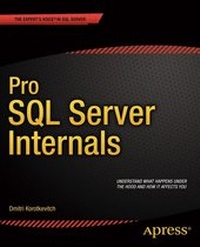
Pro SQL Server Internals
Description
Pro SQL Server Internals explains how different SQL Server components work "under the hood" and how they communicate with each other. This is the practical book with a large number of examples that will show you how various design and implementation decisions affect the behavior and performance of your systems.
Pro SQL Server Internals covers a multiple SQL Server versions starting with SQL Server 2005 all the way up to the recently released SQL Server 2014. You'll learn about new SQL Server 2014 features including the new Cardinality Estimator, In-Memory OLTP Engine (codename Hekaton), and Clustered Columnstore Indexes. With Pro SQL Server Internals , you have a solid roadmap for understanding the depth and power of the SQL Server database backend, regardless of the version and edition of SQL Server you use.
Pro SQL Server Internals does the following:
- Explains how to design efficient database schema, indexing, and transaction strategies.
- Shows how various database objects and technologies are implemented internally and when they should or should not be used.
- Demonstrates how SQL Server executes queries and works with data and transaction logs.
More details
Other editions
New editions
Additional editions
Person
Dmitri regularly speaks at various Microsoft and SQL PASS events, and he provides SQL Server training to clients around the world. He blogs at: http://aboutsqlserver.com.
Content
Part 1 - Tables and Indexes
Chapter 1: Data storage internals
Chapter 2: Tables and Indexes - Internal Structure and Access Methods
Chapter 3: Statistics
Chapter 4: Special Indexing and Storage Features
Chapter 5: Index fragmentation
Chapter 6: Designing and tuning the indexes
Part 2: Other things that matter
Chapter 7: Constraints
Chapter 8: Triggers
Chapter 9: Views
Chapter 10: Functions
Chapter 11: XML
Chapter 12: Temporary Tables
Chapter 13: CLR
Chapter 14: CLR types
Chapter 15: Data partitioning
Chapter 16: System design considerations
Part 3: Locking, Blocking and Concurrency
Chapter 17: Lock types
Chapter 18: Troubleshooting Blocking issues
Chapter 19: Deadlocks
Chapter 20: Lock Escalations
Chapter 21: Optimistic isolation levels
Chapter 22: Application locks
Chapter 23: Schema locks
Chapter 24: Designing transaction strategies
Part 4: Query Life Cycle
Chapter 25: Query Optimization and Execution
Chapter 26: Plan Caching
Part 5: Practical Troubleshooting
Chapter 27: System Troubleshooting
Chapter 28: Extended events
Part 6: Inside the transaction log
Chapter 29: Transaction Log Internals
Chapter 30: Designing a Backup Strategy
Chapter 31: Designing aHigh Availability Strategy
Part 7: In-Memory OLTP Engine
Chapter 32: Hekaton (In Memory OLTP Engine)
Part 8: Columnstore Indexes
Chapter 33: In-Memory OLTP Programmability
Chapter 34: Introduction to Columnstore indexes
Chapter 35: Clustered Columnstore indexes