

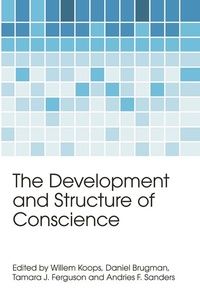
The Development and Structure of Conscience
1st Edition
Published on 22. October 2012
Book
Paperback/Softback
376 pages
978-0-415-65443-2 (ISBN)
Description
This book focuses on the structure and development of conscience, a subject that has been dominant in developmental psychology since the 18th century. International experts in the field contribute to this broad overview of the relevant research on the development of moral emotions and on the Kohlbergian-originated cognitive aspects of moral development.
The first section of the book focuses on the cultural conditions that create the context for the development of conscience, such as moral philosophy, religion, and media violence. Building on the theory and research on emotion, other chapters cover issues including the development of shame, self regulation and moral conduct, social cognition, and models of guilt. The book also covers moral reasoning, moral identity, moral atmosphere, moral behavior, and discusses subjects such as lying, how to measure moral development, the impact of parenting, the dysfunctions of conscience evident in narcissism, psychopathy, issues surrounding gender, and aggression.
The Development and Structure of Conscience
will be ideal reading for researchers and students of developmental and educational psychology.
The first section of the book focuses on the cultural conditions that create the context for the development of conscience, such as moral philosophy, religion, and media violence. Building on the theory and research on emotion, other chapters cover issues including the development of shame, self regulation and moral conduct, social cognition, and models of guilt. The book also covers moral reasoning, moral identity, moral atmosphere, moral behavior, and discusses subjects such as lying, how to measure moral development, the impact of parenting, the dysfunctions of conscience evident in narcissism, psychopathy, issues surrounding gender, and aggression.
The Development and Structure of Conscience
will be ideal reading for researchers and students of developmental and educational psychology.
Reviews / Votes
"Any prospective student of conscience will need this comprehensive and cutting-edge volume. Its important contributions address all facets of this complex phenomenon." - John C Gibbs, Department of Psychology, The Ohio State University. "Any prospective student of conscience will need this comprehensive and cutting-edge volume. Its important contributions address all facets of this complex phenomenon." - John C Gibbs, Department of Psychology, The Ohio State University USAMore details
Language
English
Place of publication
Hove
United Kingdom
Publishing group
Taylor & Francis Ltd
Target group
College/higher education
Postgraduate and Undergraduate
Illustrations
15 s/w Abbildungen, 15 s/w Zeichnungen, 9 s/w Tabellen
9 Tables, black and white; 15 Line drawings, black and white; 15 Illustrations, black and white
Dimensions
Height: 234 mm
Width: 156 mm
Weight
700 gr
ISBN-13
978-0-415-65443-2 (9780415654432)
Copyright in bibliographic data and cover images is held by Nielsen Book Services Limited or by the publishers or by their respective licensors: all rights reserved.
Schweitzer Classification
Other editions
Additional editions

Carla Mazzio | Douglas Trevor
The Development and Structure of Conscience
E-Book
10/2009
Psychology Press Ltd
€72.49
Available for download

Carla Mazzio | Douglas Trevor
The Development and Structure of Conscience
E-Book
10/2009
1st Edition
Psychology Press Ltd
€72.49
Available for download
Willem Koops | Daniel Brugman | Tamara J. Ferguson
The Development and Structure of Conscience
Book
09/2009
1st Edition
Psychology Press Ltd
€215.41
Shipment within 3-4 weeks
Persons
Willem Koops is Distinguished Professor of Developmental Psychology at Utrecht University. He has taught at the VU University Amsterdam, the University of Michigan and several other universities in the USA, Japan and Indonesia.
Daniel Brugman is Professor of Developmental Psychology: Aspects of Intervention in Youth Care at Utrecht University. His research interests include the effectiveness of programs to stimulate moral development in children and adolescents and on the relations between moral cognitions and antisocial behaviour.
Tamara Ferguson is Professor of Psychology in the Department of Developmental Psychology at Utah State University. Her research interests include the role of emotion in managing one's identity and these emotions' impact on social relationships and behaviours.
Andries F. Sanders is Emeritus Professor of Experimental Psychology and Ergonomics at the VU University Amsterdam and at the RWTH in Aachen, Germany. He was Managing Editor in Chief of Acta Psychologica from 1976 until 1990 and is a member of the Royal Netherlands Academy of Arts and Sciences.
Daniel Brugman is Professor of Developmental Psychology: Aspects of Intervention in Youth Care at Utrecht University. His research interests include the effectiveness of programs to stimulate moral development in children and adolescents and on the relations between moral cognitions and antisocial behaviour.
Tamara Ferguson is Professor of Psychology in the Department of Developmental Psychology at Utah State University. Her research interests include the role of emotion in managing one's identity and these emotions' impact on social relationships and behaviours.
Andries F. Sanders is Emeritus Professor of Experimental Psychology and Ergonomics at the VU University Amsterdam and at the RWTH in Aachen, Germany. He was Managing Editor in Chief of Acta Psychologica from 1976 until 1990 and is a member of the Royal Netherlands Academy of Arts and Sciences.
Content
W. Koops, D. Brugman, T.J. Ferguson, A.F. Sanders, Preface. W. Koops, D. Brugman, T.J. Ferguson, The Development of Conscience: Concepts, Theoretical and Empirical Approaches: An Introduction. Part 1. Theoretical and Cultural Historical Notions on Conscience. B. Musschenga, Moral Violations and the Ordinary Moral Person. J.M. Day, Conscience: Does Religion Matter? Empirical Studies of Religious Elements in Pro-Social Behaviour, Prejudice, Empathy Development and Moral Decision-Making. T.J. Ferguson, Like Snowflakes and Memories: Affective, Cognitive and Conative Facets of Conscience in the Middle and Later Childhood. Part 2. Moral Reasoning. D. Brugman, Moral Reasoning Competence and the Moral Judgement-Action Discrepancy in Young Adolescents. M.S. de Wolff, D. Brugman, Moral Atmosphere and Moral Behaviour: A Study into the Role of Adolescents' Perception of Moral Atmosphere for Antisocial Behaviour. J. Boom, Measuring Moral Development: Stages as Markers Along a Latent Developmental Dimension. Part 3. Social Emotions. T.J. Ferguson, H.L. Eyre, Reconciling Interpersonal Versus Responsibility Based Models of Guilt. M. Meerum Terwogt, T. Olthof, C. Rieffe, Children's Feelings and Evaluations about Altruistic and Self-Serving Lies. S. Thomaes, H. Stegge, T. Olthof, Does Shame Bring Out the Worst in Narcissists? On Moral Emotions and Immoral Behaviours. B.J. Bushman, J. Chandler, L.R. Huesmann, Do Violent Media Numb our Consciences? M. Keller, A. Brandt, G. Sigurdardottir, "Happy" and "Unhappy" Victimizers: The Development of Moral Emotions from Childhood to Adolescence. Part 4. Conscience and Antisocial Behaviour. A. Karreman, C. van Tuijl, M.A.G. van Aken, M. Dekovic, Young Children's Self-Regulation and the Development of Moral Conduct. S.M. Cote, Sex differences in Types of Aggressive Behaviours: Do Women Have a Higher Level of Conscience than Men? J.E. Lochman, Social Cognition and Self-Regulation: Change in Outcome Expectations and Aggressive Behaviour Over Time. T. Olthof, Conscience in the Classroom: Early Adolescents' Moral Emotions, Moral Judgments and Moral Identity as Predictors of Their Interpersonal Behaviour.