

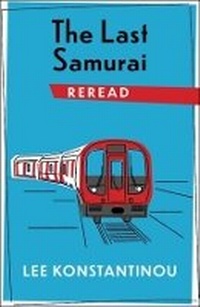
The Last Samurai Reread
Published on 22. November 2022
Book
Paperback/Softback
144 pages
978-0-231-18583-7 (ISBN)
Description
Considered by some to be the greatest novel of the twenty-first century, Helen DeWitt's brilliant The Last Samurai tells the story of Sibylla, an Oxford-educated single mother raising a possible child prodigy, Ludo. Disappointed when he meets his biological father, the boy decides that he can do better. Inspired by Akira Kurosawa's Seven Samurai, he embarks on a quixotic, moving quest to find a suitable father. The novel's cult-classic status did not come easy: it underwent a notoriously tortuous publication process and briefly went out of print.
Lee Konstantinou combines a riveting reading of The Last Samurai with a behind-the-scenes look at DeWitt's fraught experiences with corporate publishing. He shows how interpreting the ambition and richness of DeWitt's work in light of her struggles with literary institutions provides a potent social critique. The novel helps us think about our capacity for learning and creativity, revealing the constraints that capitalism and material deprivation impose on intellectual flourishing. Drawing on interviews with DeWitt and other key figures, Konstantinou explores the book's composition and its history with Talk Miramax Books, the publishing arm of Bob and Harvey Weinstein's media empire. He argues that The Last Samurai allegorizes its troubled relationship with the institutions and middlemen that ferried it into the world. What's ultimately at stake in Ludo's quest is not only who might make a good father but also how we might fulfill our potential in a world that often seems cruelly designed to thwart that very possibility.
Lee Konstantinou combines a riveting reading of The Last Samurai with a behind-the-scenes look at DeWitt's fraught experiences with corporate publishing. He shows how interpreting the ambition and richness of DeWitt's work in light of her struggles with literary institutions provides a potent social critique. The novel helps us think about our capacity for learning and creativity, revealing the constraints that capitalism and material deprivation impose on intellectual flourishing. Drawing on interviews with DeWitt and other key figures, Konstantinou explores the book's composition and its history with Talk Miramax Books, the publishing arm of Bob and Harvey Weinstein's media empire. He argues that The Last Samurai allegorizes its troubled relationship with the institutions and middlemen that ferried it into the world. What's ultimately at stake in Ludo's quest is not only who might make a good father but also how we might fulfill our potential in a world that often seems cruelly designed to thwart that very possibility.
Reviews / Votes
Finally! I have been waiting for years for someone to give The Last Samurai, the most inventive and delightful novel of the twenty-first century, the critical attention it deserves. Lee Konstantinou has done it, and he has done it with amazing insight, clarity, and humor. His book will remain close at hand every time I reread and teach The Last Samurai. -- Merve Emre, University of Oxford and contributing writer at the <i>New Yorker</i> Konstantinou brings an entirely fresh perspective to this challenging novel. His rereading of The Last Samurai draws powerful insights from sociological field theory while tempering the rigidities of that model with dazzling displays of interpretive finesse and a book historian's nose for the quirky particulars of the case-the vivid, surprising details that may be found at the heart of every great literary-production story. -- James English, University of Pennsylvania The Last Samurai Reread is a fascinating study of a novel whose remarkable origin story Lee Konstantinou brilliantly approaches as a story of our time. From his inspired decision to regard the book's center of interest as less its Precocious Child than its Precarious Mother, to the way in which this ramifies outward into a meditation on aesthetic education in a late-capitalist era of crumbling infrastructure and increasing income inequality, Konstantinou's compelling reading of DeWitt's novel does something that the latter does explicitly: revive our imagination of a world in which nonalienated intellectual production might be a possibility for everyone. -- Sianne Ngai, author of <i>Theory of the Gimmick: Aesthetic Judgment and Capitalist Form</i> Fans of the novel shouldn't miss this. * Publishers Weekly * [An] accessible and thought-provoking study . . . [Konstantinou's] nimble reporting and analysis enrich our understanding of DeWitt's achievement while sketching a fascinating and cautionary portrait of the US publishing world. -- Heather Cass White * Times Literary Supplement * Helen DeWitt's great novel has received a much-needed strong and comprehensive reading. If you are a fan of DeWitt's novel, as I am, you should read this book. -- Jay Innis Murray * Talking Big * The Last Samurai Reread is an enjoyable -- and often eye-opening -- companion volume to the novel. -- M.A. Orthofer * The Complete Review * Astute and sympathetic. -- David Trotter * London Review of Books * Konstantinou's nuanced account of [The Last Samurai's] path to publication, and its attempt to challenge the unquestioned standards of contemporary fiction, is compelling and consistently enlightening. -- Jonathan Foltz * American Literary History *More details
Series
Language
English
Place of publication
New York
United States
Target group
Professional and scholarly
Product notice
Paperback (trade)
Dimensions
Height: 216 mm
Width: 140 mm
ISBN-13
978-0-231-18583-7 (9780231185837)
Copyright in bibliographic data and cover images is held by Nielsen Book Services Limited or by the publishers or by their respective licensors: all rights reserved.
Schweitzer Classification
Other editions
Additional editions

Lee Konstantinou
The Last Samurai Reread
E-Book
11/2022
1st Edition
Columbia University Press
€19.49
Available for download
Person
Lee Konstantinou is associate professor of English at the University of Maryland. His books include the novel Pop Apocalypse (2009) and the literary history Cool Characters: Irony and American Fiction (2016).
Content
Preface: The Last Samurai, Unread
1. A Little Potboiler
2. Helen DeWitt's Aesthetic Education
3. Synergy Is Crap
4. Fuck The Chicago Manual of Style
5. The Best Book of the Forty-Fifth Century
Coda: Through a Hole in the Wall
Acknowledgments
Notes
Index
1. A Little Potboiler
2. Helen DeWitt's Aesthetic Education
3. Synergy Is Crap
4. Fuck The Chicago Manual of Style
5. The Best Book of the Forty-Fifth Century
Coda: Through a Hole in the Wall
Acknowledgments
Notes
Index