

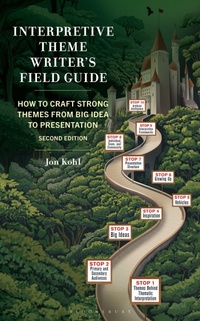
Interpretive Theme Writer's Field Guide
How to Craft Strong Themes from Big Idea to Presentation
2nd Edition
Published on 30. April 2026
Book
Paperback/Softback
272 pages
979-8-8818-0750-4 (ISBN)
Description
The interpretive theme is the most important sentence an interpreter inks on paper. Despite its centrality to thematic interpretation, no single work has dedicated itself entirely to the art and craft of strong theme writing until now. The Interpretive Theme Writer's Field Guide builds on Sam Ham's 30-year thematic interpretation research legacy. While leaving communication theory to his books, this companion offers writers strong theme examples, updated theme writer?s worksheet, inspirational quotes, technique highlights, and exercises, including the use of AI generators to craft themes. The second edition also includes new chapters on development psychology, presentation structures, a glossary, an essay on ChatGPT and theme writing, and much more. With contributions from Ham, Ted Cable, Shelton Johnson, Thorsten Ludwig, Don Enright, Judy Fort Brenneman, Kylie Christian, Michael Glen, and other voices from around the English-speaking world, this Field Guide serves at the desk, in the museum exhibit hall, on the park trail, or at an archeological site. It recognizes that teams, even communities, create natural-cultural heritage themes, and introduces the Interpretive Framework methodology to facilitate consensus community-based theme writing.
Reviews / Votes
With this impressive volume, Jon Kohl has extended thirty years of my research and practice to new and promising places... he has illuminated the potential of thematic interpretation, if delivered at a high level of competency, to achieve its most fundamental outcome-to provoke audience thinking and to make a purposeful difference in support of heritage preservation. I could not be more pleased. May heritage interpreters across the world magnify their impact by following his sound advice. -- Sam Ham * PhD, Professor Emeritus, University of Idaho, recipient of the William Everhart Lifetime Achievement Award as well as the National Association for Interpretation Fellow Award, and author of Environmental Interpretation and Interpretation: Making a Difference on Purpose * This book is for devotees of thematic writing. Grounded in progressivism and traditional principles of interpretation, it is most useful for people who practise forms of interpretation in environmental and community settings. Jon Kohl and a range of prominent interpreters skillfully outline a number of theories relating to thematic writing and heritage interpretation in general, together with providing a wide range of exercises and practical tips. It is a great addition to any library and anyone involved in thematic writing can benefit from its insights. -- Sue Hodges * PhD, Managing Director of SHP and Former President of the IOCMOS International Committee for the Interpretation and Presentation of Cultural Heritage Sites (2015-2024) *More details
Series
Edition
2nd edition
Language
English
Place of publication
London
United Kingdom
Publishing group
Bloomsbury Publishing PLC
Target group
Professional and scholarly
Illustrations
37 b/w photos; 20 tables
Dimensions
Height: 229 mm
Width: 152 mm
Thickness: 15 mm
Weight
393 gr
ISBN-13
979-8-8818-0750-4 (9798881807504)
Copyright in bibliographic data and cover images is held by Nielsen Book Services Limited or by the publishers or by their respective licensors: all rights reserved.
Schweitzer Classification
Other editions
Additional editions
Jon Kohl
Interpretive Theme Writer's Field Guide
How to Craft Strong Themes from Big Idea to Presentation
E-Book
02/2026
2nd Edition
Bloomsbury Academic
€38.49
Available for download
Jon Kohl
Interpretive Theme Writer's Field Guide
How to Craft Strong Themes from Big Idea to Presentation
E-Book
02/2026
2nd Edition
Bloomsbury Academic
€38.49
Available for download
Person
Jon Kohl has worked as an interpretive trainer, professor, writer, planner, and theorist. He has taught interpretation at the University of Costa Rica and founded the PUP Collaboratory. His publications include a Spanish university textbook with Dr. Marisol Mayorga, a book on holistic heritage planning with Dr. Stephen McCool, and nearly 300 articles. He's done editorial work for NAI's Legacy, Journal of Interpretation Research, and Interpreting World Heritage. He lives in Costa Rica and has degrees from Yale and Dartmouth.
Content
Contents
Foreword by Sam Ham: "Why I agreed to support this Field Guide"
Pre-Tour Warmup: This Field Guide Originates in the 1990s
Natural-Cultural History of the Second Edition
Acknowledgments
Trailhead: This Is How You Use This Field Guide
Stop 1: The Theme that Lurks Behind Thematic Interpretation
Stop 2: We Write Themes for Primary and Secondary Audiences
Stop 3: Strong Interpretive Themes Embody Big Ideas and Vehicles to Deliver Them
Stop 4: Interpreters Must Ignite Their Inspiration for the Big Idea, Not Just Write It
Stop 5: The Big Idea Develops within the Audience's Mind via a Vehicle
Stop 6: Themes Are Written for and by People Growing Up
Stop 7: Construction of a Presentation Structure Begins with a Theme
Stop 8: Theme Writing Can be Individual, Team-, or Community-Based
Stop 9: Interpretive Frameworks Leverage the Power of Community for Interpretation
Stop 10: To Be with or Not to Be with AI Theme Writing Generators, That Is the Question
Field Notes
Suggested Answers to Exercises
Verbs for Stronger Themes and More Engaging Commentaries
Field Inventory of Strong Themes in this Field Guide
Themes of Best-selling Novels of All Time
Interpretive Theme Writer's Worksheet
Critique of Themes from Real Webinar Participants
Oh, My Box!
Field Guidelines for Interpretive Theme Writing
References
Quote Sources
Glossary
Index
Voices from the Field
1 Floating the Tigris: Harnessing the Light of Thematic Interpretation by Shelton Johnson
2 Crafting Themes Guided by Indigenous and Traditional Culturales by Kylie Christian and Leanne Redpath
3 Voices from the Field by Thorsten Ludwig
4 I Want to Create Brilliant Big Ideas and Compelling Themes but... by Judy Fort Brenneman
5 A Grand Theme Doesn't Ensure a Great Program-or Even a Good One by Don Enright
6 Themes Contribute to Traveler Transformation atop Maslow's Hierarchy of Needs by Colby Brokvist
7 Thematic Zone of Tolerance in a Theater Setting by Angela Pfenniger
8 Tablets of Stone or Statements of Accord by Michael Hamish Glen
9 Colombia Is the First Country to Adopt the Interpretive Framework by Clara Osorio and Carlos Rosero
10 Theme Writing: A Trail that Never Ends by Ted Cable
Theme Spotlights
Theme Spotlight Pre-Tour Warmup. Message vs. Theme
Theme Spotlight Natural-Cultural History of the Second Edition: Why Evolution Permeates this Field Guide
Theme Spotlight Trailhead: Themes of Themes
Theme Spotlight 2.1: Secondary Themes vs. Sub-Themes
Theme Spotlight 3.1. Theme = Object + Big Idea
Theme Spotlight 3.2. Big Idea vs. Interpretive Theme
Theme Spotlight 4.1. Connecting Unlike Points to Cast New Light
Theme Spotlight 4.2. Themes Should Present an Argument
Theme Spotlight 5.1. Can a Theme Have More than One Sentence?
Theme Spotlight 5.2. Transformative Themes Tap Deep Truths
Theme Spotlight 5.3. Adding Humanity to Non-Human Phenomena
Theme Spotlight 8.1. All Three Levels Can Interact
Theme Spotlight 9.1. Historical Scan Supports Theme Identification
Foreword by Sam Ham: "Why I agreed to support this Field Guide"
Pre-Tour Warmup: This Field Guide Originates in the 1990s
Natural-Cultural History of the Second Edition
Acknowledgments
Trailhead: This Is How You Use This Field Guide
Stop 1: The Theme that Lurks Behind Thematic Interpretation
Stop 2: We Write Themes for Primary and Secondary Audiences
Stop 3: Strong Interpretive Themes Embody Big Ideas and Vehicles to Deliver Them
Stop 4: Interpreters Must Ignite Their Inspiration for the Big Idea, Not Just Write It
Stop 5: The Big Idea Develops within the Audience's Mind via a Vehicle
Stop 6: Themes Are Written for and by People Growing Up
Stop 7: Construction of a Presentation Structure Begins with a Theme
Stop 8: Theme Writing Can be Individual, Team-, or Community-Based
Stop 9: Interpretive Frameworks Leverage the Power of Community for Interpretation
Stop 10: To Be with or Not to Be with AI Theme Writing Generators, That Is the Question
Field Notes
Suggested Answers to Exercises
Verbs for Stronger Themes and More Engaging Commentaries
Field Inventory of Strong Themes in this Field Guide
Themes of Best-selling Novels of All Time
Interpretive Theme Writer's Worksheet
Critique of Themes from Real Webinar Participants
Oh, My Box!
Field Guidelines for Interpretive Theme Writing
References
Quote Sources
Glossary
Index
Voices from the Field
1 Floating the Tigris: Harnessing the Light of Thematic Interpretation by Shelton Johnson
2 Crafting Themes Guided by Indigenous and Traditional Culturales by Kylie Christian and Leanne Redpath
3 Voices from the Field by Thorsten Ludwig
4 I Want to Create Brilliant Big Ideas and Compelling Themes but... by Judy Fort Brenneman
5 A Grand Theme Doesn't Ensure a Great Program-or Even a Good One by Don Enright
6 Themes Contribute to Traveler Transformation atop Maslow's Hierarchy of Needs by Colby Brokvist
7 Thematic Zone of Tolerance in a Theater Setting by Angela Pfenniger
8 Tablets of Stone or Statements of Accord by Michael Hamish Glen
9 Colombia Is the First Country to Adopt the Interpretive Framework by Clara Osorio and Carlos Rosero
10 Theme Writing: A Trail that Never Ends by Ted Cable
Theme Spotlights
Theme Spotlight Pre-Tour Warmup. Message vs. Theme
Theme Spotlight Natural-Cultural History of the Second Edition: Why Evolution Permeates this Field Guide
Theme Spotlight Trailhead: Themes of Themes
Theme Spotlight 2.1: Secondary Themes vs. Sub-Themes
Theme Spotlight 3.1. Theme = Object + Big Idea
Theme Spotlight 3.2. Big Idea vs. Interpretive Theme
Theme Spotlight 4.1. Connecting Unlike Points to Cast New Light
Theme Spotlight 4.2. Themes Should Present an Argument
Theme Spotlight 5.1. Can a Theme Have More than One Sentence?
Theme Spotlight 5.2. Transformative Themes Tap Deep Truths
Theme Spotlight 5.3. Adding Humanity to Non-Human Phenomena
Theme Spotlight 8.1. All Three Levels Can Interact
Theme Spotlight 9.1. Historical Scan Supports Theme Identification