

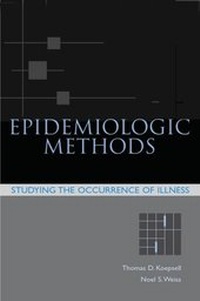
Epidemiologic Methods
Studying the Occurrence of Illness
Published on 5. June 2003
Book
Hardback
528 pages
978-0-19-515078-0 (ISBN)
Description
This is a rigorous, systematic introduction to the basic concepts and practical tools of epidemiologic research. Besides offering clear descriptions of key concepts, the book is rich with examples illustrating how these concepts are applied. Some examples are drawn from classic studies in the field, while many others concern modern-day epidemiologic studies of problems of current public health importance. Almost every chapter includes a set of exercises (with answers) to help students gain practice in applying new ideas and techniques. The book's chapters are organized around three main themes: general concepts and methods of epidemiology; major study designs; and evaluating policies and programs. Both authors are experienced epidemiologic researchers and have won multiple awards for effective teaching.
More details
Language
English
Place of publication
New York
United States
Target group
Professional and scholarly
Epidemiologists and Biostatisticians
Illustrations
numerous figures and tables
Dimensions
Height: 246 mm
Width: 165 mm
Thickness: 33 mm
Weight
882 gr
ISBN-13
978-0-19-515078-0 (9780195150780)
Copyright in bibliographic data and cover images is held by Nielsen Book Services Limited or by the publishers or by their respective licensors: all rights reserved.
Schweitzer Classification
Other editions
Additional editions
WEISS THOMAS D. KOE
Epidemiologic Methods Studying the Occurrence of Illness
Studying the Occurrence of Illness
E-Book
01/2004
1st Edition
Oxford University Press
€99.39
Available for download
Noel S. Weiss Thomas D Koepsell
Epidemiologic Methods Studying the Occurrence of Illness
E-Book
01/2004
1st Edition
OXFORD
€99.39
Available for download
Persons
THOMAS D. KOEPSELL, Professor of Epidemiology and NOEL S. WEISS, both at the University of Washington School of Public Health and Community Medicine, Washington, USA
Content
1. Introduction: An Epidemic of Blindness in Young Children ; 2. Diseases and Populations ; 3. Disease Frequency: Basics ; 4. Disease Frequency: Advanced ; 5. Overview of Study Designs ; 6. Sources of Data on Disease Occurrence ; 7. Person, Place, and Time ; 8. Inferring a Causal Relation Between Exposure and Disease ; 9. Measures of Excess Risk ; 10. Measurement Error ; 11. Confounding and Its Control ; 12. Ecologic Studies ; 13. Randomized Trials ; 14. Cohort Studies ; 15. Case-Control Studies ; 16. Induction Periods and Latent Periods ; 17. Improving the Sensitivity of Epidemiologic Studies ; 18. Screening ; 19. Outbreak Investigation ; 20. Evaluating the Effects of Policies on Health