

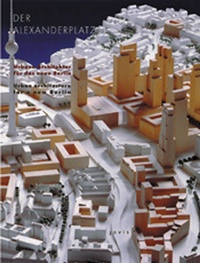
Der Alexanderplatz
Urbane Architektur für das neue Berlin /Urban architecture for a new Berlin. Engl. /Dt.
1st Edition
Published on 15. June 2002
Book
Hardback
96 pages
978-3-931321-48-2 (ISBN)
Description
Der Mythos des Alexanderplatzes, dem nicht zuletzt durch Alfred Döblins Roman 'Berlin - Alexanderplatz' auch ein literarisches Denkmal gesetzt wurde, ist ungebrochen. Noch zeigen sich mit den Behrens-Häusern Spuren aus den 20er Jahren, noch weist ihn sein gegenwärtiges Erscheinungsbild als Aushängeschild der DDR-Architektur aus. Doch umfangreiche neue Bauvorhaben - nach einem städtebaulichen Entwurf aus dem Jahr 1993 von Hans Kollhoff - nehmen für diesen Platz allmählich Gestalt an. Und eines ist sicher: Die 'Baustelle Alexanderplatz' wird sich - ähnlich wie der Potsdamer Platz in den 90er Jahren - zum Zentrum aller baulichen Aktivitäten des kommenden Jahrzehnts in Berlin entwickeln. Die vorliegende Publikation soll sich ebenso mit der Geschichte des Alexanderplatzes wie mit den Architektur-Wettbewerben von 1930, 1964 und 1993 beschäftigen. Im Vordergrund aber steht die Dokumentation aller bekannten neuen Investitionsprojekte durch Entwürfe, Computersimulationen, Fotos von Modellen und Grundrissen. Denn mutiger noch als der Potsdamer Platz symbolisiert der neue Alexanderplatz die architektonische Zukunft des 'Neuen Berlins'. Das Buch wagt schon heute einen Vorgriff und lädt zu einer Reise in eines der architektonisch herausragenden Zentren des zukünftigen Berlins ein.
Berlin's Alexanderplatz has attained a mythological status in Germany thanks in no small part to Alfred Döblin's novel Berlin - Alexanderplatz of 1929. This myth remains unbroken. Traces of the 1920's can in fact still be found here with the buildings from Peter Behrens. Its present appearance, however, indicates it to be the flagship of East German architecture. Nevertheless, gradually, extensive new construction plans for this square are taking shape based on Hans Kollhoff's architectural plan from 1993. One thing is certain, though: the Alexanderplatz building site will develop into the centre of all construction activities in the forthcoming decade in Berlin, in a similar way to Potsdamer Platz in the nineties. This publication will deal with both the history of Alexanderplatz and the architecture competitions from 1930, 1964 and 1993. In the forefront, though, will be the documentation of all known new investment projects through designs, computer simulations, photos of models and ground plans. Even more courageously than Potsdamer Platz the new Alexanderplatz symbolizes the architectonic future of the "new Berlin". The book already dares to take a glimpse today at what will be, inviting the reader on a journey to one of the most architecturally exciting centres of the future Berlin.
Berlin's Alexanderplatz has attained a mythological status in Germany thanks in no small part to Alfred Döblin's novel Berlin - Alexanderplatz of 1929. This myth remains unbroken. Traces of the 1920's can in fact still be found here with the buildings from Peter Behrens. Its present appearance, however, indicates it to be the flagship of East German architecture. Nevertheless, gradually, extensive new construction plans for this square are taking shape based on Hans Kollhoff's architectural plan from 1993. One thing is certain, though: the Alexanderplatz building site will develop into the centre of all construction activities in the forthcoming decade in Berlin, in a similar way to Potsdamer Platz in the nineties. This publication will deal with both the history of Alexanderplatz and the architecture competitions from 1930, 1964 and 1993. In the forefront, though, will be the documentation of all known new investment projects through designs, computer simulations, photos of models and ground plans. Even more courageously than Potsdamer Platz the new Alexanderplatz symbolizes the architectonic future of the "new Berlin". The book already dares to take a glimpse today at what will be, inviting the reader on a journey to one of the most architecturally exciting centres of the future Berlin.