

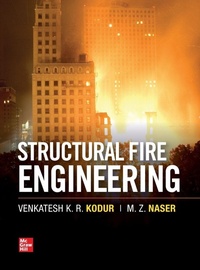
Structural Fire Engineering
Published on 22. July 2020
Book
Hardback
480 pages
978-1-260-12858-1 (ISBN)
Description
Publisher's Note: Products purchased from Third Party sellers are not guaranteed by the publisher for quality, authenticity, or access to any online entitlements included with the product.
Actionable strategies for the design and construction of fire-resistant structures
This hands-on guide clearly explains the complex building codes and standards that relate to fire design and presents hands-on techniques engineers can apply to prevent or mitigate the effects of fire in structures. Dedicated chapters discuss specific procedures for steel, concrete, and timber buildings. You will get step-by-step guidance on how to evaluate fire resistance using both testing and calculation methods.
Structural Fire Engineering begins with an introduction to the behavioral aspects of fire and explains how structural materials react when exposed to elevated temperatures. From there, the book discusses the fire design aspects of key codes and standards, such as the International Building Code, the International Fire Code, and the NFPA Fire Code. Advanced topics are covered in complete detail, including residual capacity evaluation of fire damaged structures and fire design for bridges and tunnels.
* Explains the fire design requirements of the IBC, IFC, the NFPA Fire Code, and National Building Code of Canada
* Presents design strategies for steel, concrete, and timber structures as well as for bridges and tunnels
* Contains downloadable spreadsheets and problems along with solutions for instructors
Actionable strategies for the design and construction of fire-resistant structures
This hands-on guide clearly explains the complex building codes and standards that relate to fire design and presents hands-on techniques engineers can apply to prevent or mitigate the effects of fire in structures. Dedicated chapters discuss specific procedures for steel, concrete, and timber buildings. You will get step-by-step guidance on how to evaluate fire resistance using both testing and calculation methods.
Structural Fire Engineering begins with an introduction to the behavioral aspects of fire and explains how structural materials react when exposed to elevated temperatures. From there, the book discusses the fire design aspects of key codes and standards, such as the International Building Code, the International Fire Code, and the NFPA Fire Code. Advanced topics are covered in complete detail, including residual capacity evaluation of fire damaged structures and fire design for bridges and tunnels.
* Explains the fire design requirements of the IBC, IFC, the NFPA Fire Code, and National Building Code of Canada
* Presents design strategies for steel, concrete, and timber structures as well as for bridges and tunnels
* Contains downloadable spreadsheets and problems along with solutions for instructors
More details
Language
English
Place of publication
OH
United States
Target group
Professional and scholarly
Illustrations
150 Illustrations
Dimensions
Height: 286 mm
Width: 221 mm
Thickness: 30 mm
Weight
1461 gr
ISBN-13
978-1-260-12858-1 (9781260128581)
Copyright in bibliographic data and cover images is held by Nielsen Book Services Limited or by the publishers or by their respective licensors: all rights reserved.
Schweitzer Classification
Persons
Venkatesh Kodur, Ph.D., P.E., F.ASCE, F.SEI is Chair of the Department of Civil and Environmental Engineering at Michigan State University and Director of their Center on Structural Fire Engineering and Diagnostics. Widely recognized as an international expert on fire engineering, he was part of the FEMA/ASCE Assessment Team that studied the collapse of the World Trade Center after 9/11.
Mohannad Naser, Ph.D. is a post-doctoral research associate at Michigan State University. Specializing in fire engineering research, he has contributed to over 40 publications and is active in the American Concrete Institute and the American Society of Civil Engineers.
Mohannad Naser, Ph.D. is a post-doctoral research associate at Michigan State University. Specializing in fire engineering research, he has contributed to over 40 publications and is active in the American Concrete Institute and the American Society of Civil Engineers.