

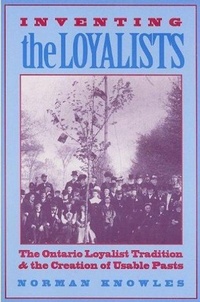
Inventing the Loyalists
The Ontario Loyalist Tradition and the Creation of Usable Pasts
Published on 11. October 1997
Book
Paperback/Softback
256 pages
978-0-8020-7913-8 (ISBN)
Description
The Loyalists have often been credited with planting a coherent and unified tradition that has been passed on virtually unchanged to subsequent generations and that continues to define Ontario's political culture. Challenging past scholarship, Norman Knowles argues that there never has been consensus on the defining characteristics of the Loyalist tradition. He suggests that, in fact, the very concept of tradition has constantly been subject to appropriation by various constituencies who wish to legitimize their point of view and their claim to status by creating a usable past. The picture of the Loyalist tradition that emerges from this study is not of an inherited artefact but of a contested and dynamic phenomenon that has undergone continuous change.
Inventing the Loyalists traces the evolution of the Loyalist tradition from the Loyalists' arrival in Upper Canada in 1784 until the present. It explores how the Loyalist tradition was produced, established, and maintained, delineates the roles particular social groups and localities played in constructing differing versions of the Loyalist past, and examines the reception of these efforts by the larger community. Rejecting both consensual and hegemonic models, Knowles presents a pluralistic understanding of the invention of tradition as a complex process of social and cultural negotiation by which different groups, interests, and generations compete with each other over the content, meaning, and uses of the past. He demonstrates that in Ontario, many groups, including filiopietistic descendants, political propagandists, status-conscious professionals, reform-minded women, and Native peoples, invested in the creation of the Loyalist tradition.
By exploring the ways in which the Loyalist past was, and still is, being negotiated, Inventing the Loyalists revises our understanding of the Loyalist tradition and provides insight into the politics of commemoration.
Inventing the Loyalists traces the evolution of the Loyalist tradition from the Loyalists' arrival in Upper Canada in 1784 until the present. It explores how the Loyalist tradition was produced, established, and maintained, delineates the roles particular social groups and localities played in constructing differing versions of the Loyalist past, and examines the reception of these efforts by the larger community. Rejecting both consensual and hegemonic models, Knowles presents a pluralistic understanding of the invention of tradition as a complex process of social and cultural negotiation by which different groups, interests, and generations compete with each other over the content, meaning, and uses of the past. He demonstrates that in Ontario, many groups, including filiopietistic descendants, political propagandists, status-conscious professionals, reform-minded women, and Native peoples, invested in the creation of the Loyalist tradition.
By exploring the ways in which the Loyalist past was, and still is, being negotiated, Inventing the Loyalists revises our understanding of the Loyalist tradition and provides insight into the politics of commemoration.
More details
Language
English
Place of publication
Toronto
Canada
Target group
College/higher education
Professional and scholarly
Product notice
Paperback (trade)
Dimensions
Height: 226 mm
Width: 150 mm
Thickness: 20 mm
Weight
408 gr
ISBN-13
978-0-8020-7913-8 (9780802079138)
Copyright in bibliographic data and cover images is held by Nielsen Book Services Limited or by the publishers or by their respective licensors: all rights reserved.
Schweitzer Classification
Person
Norman J. Knowles is Professor of History at St. Mary's University in Calgary, Alberta.
Content
By Norman Knowles