


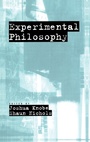
Experimental Philosophy
Published on 17. July 2008
Book
Paperback/Softback
256 pages
978-0-19-532326-9 (ISBN)
Description
Experimental philosophy is a new movement that seeks to return the discipline of philosophy to a focus on questions about how people actually think and feel. Departing from a long-standing tradition, experimental philosophers go out and conduct systematic experiments to reach a better understanding of people's ordinary intuitions about philosophically significant questions. Although the movement is only a few years old, it has already sparked an explosion of new research, challenging a number of cherished assumptions in both philosophy and cognitive science.
The present volume provides an introduction to the major themes of work in experimental philosophy, bringing together some of the most influential articles in the field along with a collection of new papers that explore the theoretical significance of this new research.
The present volume provides an introduction to the major themes of work in experimental philosophy, bringing together some of the most influential articles in the field along with a collection of new papers that explore the theoretical significance of this new research.
Reviews / Votes
an admirable introduction to the experimental philosophy movement * Richard Holton, Times Literary Supplement * This book is the first to package what is exciting and new about this movement; it collects the most important papers by the leading experimental philosophers...As such it is essential reading...This is an exciting read-it's not often that something so radical and new comes along in philosophy. * Finn Spicer The Philosophers' Magazine *More details
Language
English
Place of publication
New York
United States
Target group
College/higher education
Dimensions
Height: 234 mm
Width: 156 mm
Thickness: 15 mm
Weight
398 gr
ISBN-13
978-0-19-532326-9 (9780195323269)
Copyright in bibliographic data and cover images is held by Nielsen Book Services Limited or by the publishers or by their respective licensors: all rights reserved.
Schweitzer Classification
Other editions
Additional editions
Joshua Knobe | Shaun Nichols
Experimental Philosophy
Book
08/2008
Oxford University Press Inc
€225.70
Shipment within 15-20 days

Joshua Knobe | Shaun Nichols
Experimental Philosophy
E-Book
07/2008
1st Edition
OUP eBook
€23.99
Available for download

Joshua Knobe | Shaun Nichols
Experimental Philosophy
E-Book
07/2008
1st Edition
OUP eBook
€23.99
Available for download
Persons
Joshua Knobe is assistant professor in the philosophy department at the University of North Carolina - Chapel Hill. He has published widely in both psychology (Journal of Personality and Social Psychology, Psychological Science) and philosophy (Nous, Analysis).
Shaun Nichols is in the Philosophy Department and Cognitive Science Program at the University of Arizona. He is the author of Sentimental Rules (OUP) and co-author (with Stephen Stich) of Mindreading.
Shaun Nichols is in the Philosophy Department and Cognitive Science Program at the University of Arizona. He is the author of Sentimental Rules (OUP) and co-author (with Stephen Stich) of Mindreading.
Content
1. An Experimental Philosophy Manifesto ; 2. Normativity and Epistemic Institutions ; 3. Semantics, Cross-Cultural Style ; 4. Identification, Situational Constraint, and Social Cognition: Studies in the Attribution of Moral Responsibility ; 5. Is Incompatibilism Intuitive? ; 6. Moral Responsibility and Determinism: The Cognitive Science of Folk Intuitions ; 7. The Concept of Intentional Action: A Case Study in the Uses of Folk Psychology ; 8. Bad Acts, Blameworthy Agents, and Inentional actions: Some Problems for Juror Impartiality ; 9. Intentional Action: Two-and-a-Half Folk Concepts? ; 10. Empirical Philosophy and Experimental Philosophy ; 11. Abstract + Concrete=Paradox ; 12. How Are Experiments Relevant to Intuitions?