

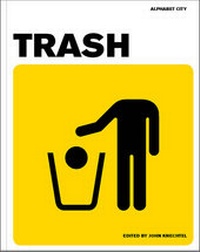
Trash
Published on 1. October 2006
Book
Hardback
224 pages
978-0-262-11301-4 (ISBN)
Description
Writers, artists, and filmmakers investigate the proposition that we are what we throw away.
Trash: the emptied out, the used up, the broken, the outgrown, the obsolete; the dispossessed, the lost, the left behind. In Trash , writers, artists, and filmmakers look at how we are defined by what we waste and discover that we are what we throw away. Trash surveys a terrain that ranges from micro (a typology of dust bunnies) to macro (studies of landfill design and the trashed space of urban brownfield sites). It investigates the logic of trash as it is applied to humans and looks at lives intimately dependent on trash, taking us from the abducted girls of Juarez to the recycling communities of China.
These excavations of trash include philosopher Barry Allen's tracing of the borderline where thought turns to trash, Susan Coolen's collection of paper airplanes found in the streets of Montreal, and the strange and obsessive project of artist Kristan Horton to recreate tableaux from the film Dr. Strangelove with bits of trash. Poet Priscilla Uppal writes about her Uncle Fernando, known to his neighbors in Brasilia as 'Dr. Garbage' ('When they go to the movies/he goes through their garbage'), and Karilee Fuglem's photographs reveal the intricacy of household fluff. Rebecca Duclos and David Ross create an advertisement for a fictional museum that houses artifacts discarded by other museums, and Priya Sarukkai Chabria's cantos of 'Refuse/Refused' give voice to an old woman in India discarded, like trash, by her family, a shard of a broken mirror ('My time will come when/yours is done'), and a worm in a 'cathedral of rot.'
Trash explores the ethics and psychology of trash and what these reveal about contemporary industrial society. The investigations range from the whimsical to the disturbing, and offers a variety of approaches to rehabilitating and rediscovering what is too commonly tossed aside.
Trash: the emptied out, the used up, the broken, the outgrown, the obsolete; the dispossessed, the lost, the left behind. In Trash , writers, artists, and filmmakers look at how we are defined by what we waste and discover that we are what we throw away. Trash surveys a terrain that ranges from micro (a typology of dust bunnies) to macro (studies of landfill design and the trashed space of urban brownfield sites). It investigates the logic of trash as it is applied to humans and looks at lives intimately dependent on trash, taking us from the abducted girls of Juarez to the recycling communities of China.
These excavations of trash include philosopher Barry Allen's tracing of the borderline where thought turns to trash, Susan Coolen's collection of paper airplanes found in the streets of Montreal, and the strange and obsessive project of artist Kristan Horton to recreate tableaux from the film Dr. Strangelove with bits of trash. Poet Priscilla Uppal writes about her Uncle Fernando, known to his neighbors in Brasilia as 'Dr. Garbage' ('When they go to the movies/he goes through their garbage'), and Karilee Fuglem's photographs reveal the intricacy of household fluff. Rebecca Duclos and David Ross create an advertisement for a fictional museum that houses artifacts discarded by other museums, and Priya Sarukkai Chabria's cantos of 'Refuse/Refused' give voice to an old woman in India discarded, like trash, by her family, a shard of a broken mirror ('My time will come when/yours is done'), and a worm in a 'cathedral of rot.'
Trash explores the ethics and psychology of trash and what these reveal about contemporary industrial society. The investigations range from the whimsical to the disturbing, and offers a variety of approaches to rehabilitating and rediscovering what is too commonly tossed aside.
More details
Series
Language
English
Place of publication
Cambridge, Mass.
United States
Publishing group
MIT Press Ltd
Target group
Professional and scholarly
Illustrations
colour illustrations throughout
Dimensions
Height: 159 mm
Width: 121 mm
Thickness: 25 mm
Weight
385 gr
ISBN-13
978-0-262-11301-4 (9780262113014)
Copyright in bibliographic data and cover images is held by Nielsen Book Services Limited or by the publishers or by their respective licensors: all rights reserved.
Schweitzer Classification
Person
John Knechtel is Director of Alphabet City Media in Toronto.