

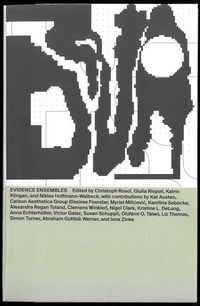
Evidence Ensembles
DNA #24
1st Edition
Published in 2022
Book
Paperback/Softback
80 pages
978-3-95905-664-9 (ISBN)
Description
In den stratigrafischen Schichtungen der Erde zeichnet sich die tiefenzeitliche Geschichte des Planeten ab. Die Identifikation, Analyse und Datierung dieser erdsystemischen Transformationsprozesse ist Aufgabe der geologischen Wissenschaften. Doch mit dem Übergang vom Holozän zum Anthropozän wird die Geologie zur Gesellschaftswissenschaft. Mikroskopische physikalische, chemische und biologische Spuren in den Sedimenten verweisen auf die eklatante Beschleunigung und Globalisierung ökonomischen Wachstums und ökologischer Verheerung der letzten Jahrzehnte. Der Band fragt danach, wie die Erdarchive des Anthropozäns lesbar gemacht werden können. In Auseinandersetzung mit konkreten stratigrafischen Materialien fragen Wissenschaftler·innen, Forscher·innen und Künstler·innen nach Möglichkeiten und Aufgaben planetarischer Wissensproduktion.
--
The history of deep time on our planet is delineated by Earth's stratigraphic layers. The task of identifying, analysing, and dating the transformation processes at work within the Earth's systems falls within the remit of the geological sciences. However, the transition from the Holocene to the Anthropocene is turning geology into a social science. Microscopic physical, chemical, and biological traces in the sediments are glaring indicators pointing to the acceleration and globalization of economic growth and ecological devastation that has taken place in the last decades. This book examines ways in which the archives of the Anthropocene can be made legible. Scientists, researchers, and artists grapple with concrete stratigraphic materials in an exploration of the opportunities and challenges involved in planetary knowledge production.
--
The history of deep time on our planet is delineated by Earth's stratigraphic layers. The task of identifying, analysing, and dating the transformation processes at work within the Earth's systems falls within the remit of the geological sciences. However, the transition from the Holocene to the Anthropocene is turning geology into a social science. Microscopic physical, chemical, and biological traces in the sediments are glaring indicators pointing to the acceleration and globalization of economic growth and ecological devastation that has taken place in the last decades. This book examines ways in which the archives of the Anthropocene can be made legible. Scientists, researchers, and artists grapple with concrete stratigraphic materials in an exploration of the opportunities and challenges involved in planetary knowledge production.