

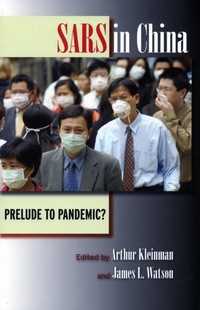
SARS in China
Prelude to Pandemic?
Published on 27. October 2005
Book
Paperback/Softback
256 pages
978-0-8047-5314-2 (ISBN)
Description
The SARS epidemic of 2003 was one of the most serious public health crises of our times. The event, which lasted only a few months, is best seen as a warning shot, a wake-up call for public health professionals, security officials, economic planners, and policy makers everywhere.
SARS in China addresses the structure and impact of the epidemic and its short and medium range implications for an interconnected, globalized world. Warnings from the World Health Organization (WHO) and the Centers for Disease Control and Prevention (CDC) made it clear that SARS may have been a prelude to bigger things. The authors of this volume focus on specific aspects of the SARS outbreak-epidemiological, political, economic, social, cultural, and moral. They analyze SARS as a form of social suffering and raise questions about the relevance of national sovereignty in the face of such global threats. Taken together, these essays demonstrate that SARS had the potential of becoming a major turning point in human history. This book forces us to ask what we have learned from SARS as we go on to face newer, and farther-reaching pandemics. The current case of the COVID-19 outbreak amplifies the urgency of this question, and illuminates the strengths and shortcomings of different national responses to such pandemics.
Contributors:
Erik Eckholm
Joan Kaufman
Arthur Kleinman
Dominic Lee
Sing Lee
Megan Murray
Thomas G. Rawski
Tony Saich
Alan Schnur
James L. Watson
Hong Zhang
Yun Kwok Wing
SARS in China addresses the structure and impact of the epidemic and its short and medium range implications for an interconnected, globalized world. Warnings from the World Health Organization (WHO) and the Centers for Disease Control and Prevention (CDC) made it clear that SARS may have been a prelude to bigger things. The authors of this volume focus on specific aspects of the SARS outbreak-epidemiological, political, economic, social, cultural, and moral. They analyze SARS as a form of social suffering and raise questions about the relevance of national sovereignty in the face of such global threats. Taken together, these essays demonstrate that SARS had the potential of becoming a major turning point in human history. This book forces us to ask what we have learned from SARS as we go on to face newer, and farther-reaching pandemics. The current case of the COVID-19 outbreak amplifies the urgency of this question, and illuminates the strengths and shortcomings of different national responses to such pandemics.
Contributors:
Erik Eckholm
Joan Kaufman
Arthur Kleinman
Dominic Lee
Sing Lee
Megan Murray
Thomas G. Rawski
Tony Saich
Alan Schnur
James L. Watson
Hong Zhang
Yun Kwok Wing
Reviews / Votes
"SARS in China not only makes a significant contribution to China studies but also provides important clues about the state of preparation for global health challenges such as avian flu."-China Review International "This book has lined up a remarkable team of authors to try to answer the question: what can we learn from SARS before the next pandemic? And its value lies in the significant issues that it has highlighted."-The China ReviewMore details
Edition
New edition
Language
English
Place of publication
Palo Alto
United States
Target group
College/higher education
Professional and scholarly
Edition type
New edition
Product notice
Paperback (trade)
Illustrations
6 figures
Dimensions
Height: 217 mm
Width: 139 mm
Thickness: 17 mm
Weight
312 gr
ISBN-13
978-0-8047-5314-2 (9780804753142)
Copyright in bibliographic data and cover images is held by Nielsen Book Services Limited or by the publishers or by their respective licensors: all rights reserved.
Schweitzer Classification
Other editions
Additional editions
E-Book
10/2005
Stanford University Press
from
€53.99
Available for download
Persons
Arthur Kleinman is Esther and Sidney Rabb Professor and Chair of the Department of Anthropology, Harvard University, and Professor of Medical Anthropology and Social Medicine at the Harvard Medical School. James L. Watson is Fairbank Professor of Chinese Society and Professor of Anthropology at Harvard University. He is also the author of Golden Arches East: McDonald's in East Asia (Stanford University Press, 1997).
Content
Contents Preface vii Contributors xi Introduction: SARS in Social and Historical Context 1 arthur kleinman and james l. watson Part I. The Epidemiological and Public Health Background 1. The Epidemiology of SARS 17 megan murray 2. The Role of the World Health Organization in Combating SARS, Focusing on the Efforts in China 31 alan schnur 3. SARS and China's Health-Care Response: Better to Be Both Red and Expert! 53 joan kaufman Part II. Economic and Political Consequences 4. Is SARS China's Chernobyl or Much Ado About Nothing? 71 tony saich 5. SARS and China's Economy 105 thomas g. rawski 6. SARS in Beijing: The Unraveling of a Cover-Up 122 erik eckholm Part III: Social, Moral, and Psychological Consequences 7. Psychological Responses to SARS in Hong Kong-- Report from the Front Line 133 dominic t. s. lee, m.d., and yung kwok wing, mrcpsych 8. Making Light of the Dark Side: SARS Jokes and Humor in China 148 hong zhang Part IV: Globalization and Cross-Cultural Issues 9. SARS and the Problem of Social Stigma 173 arthur kleinman and sing lee 10. SARS and the Consequences for Globalization 196 james l. watson Notes 205 Index 235