


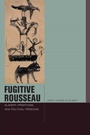
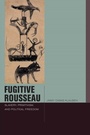
Fugitive Rousseau
Slavery, Primitivism, and Political Freedom
Will be published approx. on 1. February 2016
Book
Paperback/Softback
356 pages
978-0-8232-6747-7 (ISBN)
Description
Critics have claimed that Jean-Jacques Rousseau was a primitivist uncritically preoccupied with "noble savages" and that he remained oblivious to the African slave trade. Fugitive Rousseau presents the emancipatory possibilities of Rousseau's thought and argues that a fresh, "fugitive" perspective on political freedom is bound up with Rousseau's treatments of primitivism and slavery.
Rather than trace Rousseau's arguments primarily to the social contract tradition of Hobbes and Locke, Fugitive Rousseau places Rousseau squarely in two imperial contexts: European empire in his contemporary Atlantic world and Roman imperial philosophy. Anyone who aims to understand the implications of Rousseau's famous sentence "Man is born free, and everywhere he is in chains" or wants to know how Rousseauian arguments can support a radical democratic politics of diversity, discontinuity, and exodus will find Fugitive Rousseau indispensable.
Rather than trace Rousseau's arguments primarily to the social contract tradition of Hobbes and Locke, Fugitive Rousseau places Rousseau squarely in two imperial contexts: European empire in his contemporary Atlantic world and Roman imperial philosophy. Anyone who aims to understand the implications of Rousseau's famous sentence "Man is born free, and everywhere he is in chains" or wants to know how Rousseauian arguments can support a radical democratic politics of diversity, discontinuity, and exodus will find Fugitive Rousseau indispensable.
Reviews / Votes
"Jean-Jacques Rousseau obsessively deploys the rhetoric of slavery, but has almost nothing to say about the actually-existing slavery of his own time. Taking off from this striking observation and informed by the distinctive concerns of recent postcolonial and Black Atlantic scholarship, Jimmy Casas Klausen offers a string of illuminating discussions of often-overlooked themes in Rousseau's oeuvre, such as travel and cosmopolitan identity, primitivism and marronage. In place of the familiar contrast between the over-socialized citizen of The Social Contract and the figure of the solitary walker or pre-social savage, Klausen invites us to appreciate those moments where Rousseau shows himself sensitive to the often fragile kinds of freedom that become available when we are able to slip away from dominant and dominating social and political structures. Fugitive Rousseau is an original and stimulating contribution to eighteenth-century studies, as well as a significant work of political theory in its own right." -- -Christopher Brooke University of Cambridge "A complex and fascinating project. The ideas are original and provocative and should advance new thinking in political theory." -- -Anne Norton University of PennsylvaniaMore details
Series
Language
English
Place of publication
New York
United States
Target group
Professional and scholarly
Product notice
Paperback (trade)
Dimensions
Height: 221 mm
Width: 142 mm
Thickness: 20 mm
Weight
458 gr
ISBN-13
978-0-8232-6747-7 (9780823267477)
Copyright in bibliographic data and cover images is held by Nielsen Book Services Limited or by the publishers or by their respective licensors: all rights reserved.
Schweitzer Classification
Other editions
Additional editions
E-Book
03/2014
1st Edition
Fordham University Press
€25.49
Available for download
E-Book
03/2014
1st Edition
Fordham University Press
€24.49
Available for download
Person
Jimmy Casas Klausen holds an appointment at the Instituto de Relacoes Internacionais of the Pontificia Universidade Catolica do Rio de Janeiro. He is co-editor with James Martel of How Not to Be Governed. His articles have appeared in American Political Science Review, Polity, Political Theory, and Journal of Politics.
Content
List of Illustrations List of Abbreviations Acknowledgments Introduction I Slavery 1. Displacements 2... and Condensations II Freedom? 3. Cosmopolitanism 4. Nativism 5. Fugitive Freedom Afterword Notes Index