

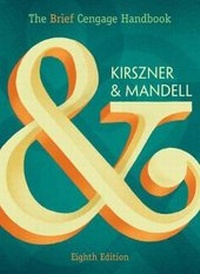
The Brief Cengage Handbook (with 2016 MLA Update Card)
8th Edition
Will be published approx. on 22. June 2016
Book
Spiral bound
688 pages
978-1-337-28743-2 (ISBN)
Description
Become a successful college writer with THE BRIEF CENGAGE HANDBOOK, 8th Edition. This comprehensive and practical text provides extensive coverage of rhetorical concerns, the writing and research process, composing in digital environments and in various genres, and other topics essential for 21st century writers. Numerous checklists summarize key information that you can quickly access as you work on writing and research projects. This versatile and proven text is a uniquely effective guide to help you develop the critical thinking, reading, and writing skills you need to be a successful communicator in college and beyond. Each student text is packaged with a free Cengage Essential Reference Card to the MLA HANDBOOK, Eighth Edition.
More details
Edition
8th edition
Language
English
Place of publication
Belmont, CA
United States
Publishing group
Cengage Learning, Inc
Target group
College/higher education
Weight
816 gr
ISBN-13
978-1-337-28743-2 (9781337287432)
Copyright in bibliographic data and cover images is held by Nielsen Book Services Limited or by the publishers or by their respective licensors: all rights reserved.
Schweitzer Classification
Persons
Laurie G. Kirszner is a nationally known, best-selling author. Kirszner and coauthor Stephen R. Mandell have written best sellers for nearly every English market. They have the deepest publishing record of any literature anthology author team and have successfully published up and down the curriculum from developmental to literature. Stephen R. Mandell is a nationally known, best-selling author. Mandell and coauthor Laurie G. Kirszner have written best sellers for nearly every English market. They have the deepest publishing record of any literature anthology author team and have successfully published up and down the curriculum from developmental to literature.
Content
How to Use This Book.
Acknowledgments.
Part I: APPROACHING TEXTS.
1. Understanding the Rhetorical Situation.
2. Reading and Interpreting Texts.
3. Reading and Interpreting Visuals.
Part II: DEVELOPING ESSAY PROJECTS.
4. Planning.
5. Shaping.
6. Drafting and Revising.
Part III: DEVELOPING CRITICAL THINKING AND ARGUMENTATION SKILLS.
7. Thinking Critically.
8. Writing an Argumentative Essay.
9. Writing Proposals.
10. Using Visuals as Evidence.
Part IV: CONDUCTING RESEARCH.
11. Developing a Research Project.
12. Finding Information.
13. Evaluating Sources.
14. Summarizing, Paraphrasing, and Quoting Sources.
15. Synthesizing Sources.
16. Using Sources Ethically.
Part V: DOCUMENTING SOURCES.
17. MLA Documentation Style.
18. APA Documentation Style.
19. Chicago Documentation Style.
20. CSE and Other Documentation Styles.
Part VI: COMPOSING AND EVALUATING DIGITAL DOCUMENTS.
21. Understanding, Exploring, and Developing Multimodal Texts.
22. Composing in Digital Environments.
23. Designing Effective Documents.
Part VII: COMPOSING IN THE DISCIPLINES.
24. Composing in the Humanities.
25. Composing a Rhetorical Analysis.
26. Composing a Literary Analysis.
27. Composing in the Social Sciences.
28. Composing in the Natural and Applied Sciences.
Part VIII: COMPOSING IN OTHER GENRES.
29. Creating a Writing Portfolio.
30. Writing Essay Exams.
31. Writing for the Public.
32. Writing in the Workplace.
33. Developing and Delivering Presentations.
Part IX: DEVELOPING PARAGRAPH AND SENTENCE STYLE.
34. Writing Effective Paragraphs.
35. Writing Varied Sentences.
36. Writing Emphatic Sentences.
37. Writing Concise Sentences.
38. Using Parallelism.
39. Choosing Words.
Part X: UNDERSTANDING SENTENCE GRAMMAR.
40. Using Verbs.
41. Using Pronouns.
42. Using Adjectives and Adverbs.
43. Revising Fragments.
44. Revising Run-Ons.
45. Revising Agreement Errors.
46. Revising Awkward or Confusing Sentences.
47. Revising Misplaced and Dangling Modifiers.
Part XI: UNDERSTANDING PUNCTUATION.
48. Using End Punctuation.
49. Using Commas.
50. Using Semicolons.
51. Using Apostrophes.
52. Using Quotation Marks.
53. Using Other Punctuation Marks.
Part XII: UNDERSTANDING SPELLING AND MECHANICS.
54. Improving Spelling.
55. Knowing When to Capitalize.
56. Using Italics.
57. Using Hyphens.
58. Using Abbreviations.
59. Using Numbers.
Part XIII: COMPOSING FOR MULTILINGUAL WRITERS.
60. Adjusting to the US Classroom.
61. Grammar and Style for Multilingual Writers.
Appendix A: Parts of Speech.
Appendix B: Sentence Review.
Appendix C: Glossary of Usage.
Credits.
Index.
Correction Symbols.
Acknowledgments.
Part I: APPROACHING TEXTS.
1. Understanding the Rhetorical Situation.
2. Reading and Interpreting Texts.
3. Reading and Interpreting Visuals.
Part II: DEVELOPING ESSAY PROJECTS.
4. Planning.
5. Shaping.
6. Drafting and Revising.
Part III: DEVELOPING CRITICAL THINKING AND ARGUMENTATION SKILLS.
7. Thinking Critically.
8. Writing an Argumentative Essay.
9. Writing Proposals.
10. Using Visuals as Evidence.
Part IV: CONDUCTING RESEARCH.
11. Developing a Research Project.
12. Finding Information.
13. Evaluating Sources.
14. Summarizing, Paraphrasing, and Quoting Sources.
15. Synthesizing Sources.
16. Using Sources Ethically.
Part V: DOCUMENTING SOURCES.
17. MLA Documentation Style.
18. APA Documentation Style.
19. Chicago Documentation Style.
20. CSE and Other Documentation Styles.
Part VI: COMPOSING AND EVALUATING DIGITAL DOCUMENTS.
21. Understanding, Exploring, and Developing Multimodal Texts.
22. Composing in Digital Environments.
23. Designing Effective Documents.
Part VII: COMPOSING IN THE DISCIPLINES.
24. Composing in the Humanities.
25. Composing a Rhetorical Analysis.
26. Composing a Literary Analysis.
27. Composing in the Social Sciences.
28. Composing in the Natural and Applied Sciences.
Part VIII: COMPOSING IN OTHER GENRES.
29. Creating a Writing Portfolio.
30. Writing Essay Exams.
31. Writing for the Public.
32. Writing in the Workplace.
33. Developing and Delivering Presentations.
Part IX: DEVELOPING PARAGRAPH AND SENTENCE STYLE.
34. Writing Effective Paragraphs.
35. Writing Varied Sentences.
36. Writing Emphatic Sentences.
37. Writing Concise Sentences.
38. Using Parallelism.
39. Choosing Words.
Part X: UNDERSTANDING SENTENCE GRAMMAR.
40. Using Verbs.
41. Using Pronouns.
42. Using Adjectives and Adverbs.
43. Revising Fragments.
44. Revising Run-Ons.
45. Revising Agreement Errors.
46. Revising Awkward or Confusing Sentences.
47. Revising Misplaced and Dangling Modifiers.
Part XI: UNDERSTANDING PUNCTUATION.
48. Using End Punctuation.
49. Using Commas.
50. Using Semicolons.
51. Using Apostrophes.
52. Using Quotation Marks.
53. Using Other Punctuation Marks.
Part XII: UNDERSTANDING SPELLING AND MECHANICS.
54. Improving Spelling.
55. Knowing When to Capitalize.
56. Using Italics.
57. Using Hyphens.
58. Using Abbreviations.
59. Using Numbers.
Part XIII: COMPOSING FOR MULTILINGUAL WRITERS.
60. Adjusting to the US Classroom.
61. Grammar and Style for Multilingual Writers.
Appendix A: Parts of Speech.
Appendix B: Sentence Review.
Appendix C: Glossary of Usage.
Credits.
Index.
Correction Symbols.