

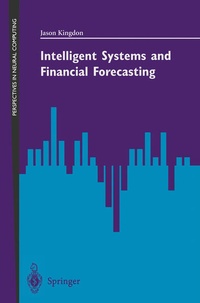
Intelligent Systems and Financial Forecasting
Published on 28. April 1997
Book
Paperback/Softback
XII, 227 pages
978-3-540-76098-6 (ISBN)
Description
A fundamental objective of Artificial Intelligence (AI) is the creation of in telligent computer programs. In more modest terms AI is simply con cerned with expanding the repertoire of computer applications into new domains and to new levels of efficiency. The motivation for this effort comes from many sources. At a practical level there is always a demand for achieving things in more efficient ways. Equally, there is the technical challenge of building programs that allow a machine to do something a machine has never done before. Both of these desires are contained within AI and both provide the inspirational force behind its development. In terms of satisfying both of these desires there can be no better example than machine learning. Machines that can learn have an in-built effi ciency. The same software can be applied in many applications and in many circumstances. The machine can adapt its behaviour so as to meet the demands of new, or changing, environments without the need for costly re-programming. In addition, a machine that can learn can be ap plied in new domains with the genuine potential for innovation. In this sense a machine that can learn can be applied in areas where little is known about possible causal relationships, and even in circumstances where causal relationships are judged not to exist. This last aspect is of major significance when considering machine learning as applied to fi nancial forecasting.
More details
Series
Edition
Softcover reprint of the original 1st ed. 1997
Language
English
Place of publication
London
United Kingdom
Publishing group
Springer Berlin
Target group
Professional and scholarly
Research
Illustrations
8 s/w Abbildungen
XII, 227 p. 8 illus.
Dimensions
Height: 235 mm
Width: 155 mm
Thickness: 14 mm
Weight
371 gr
ISBN-13
978-3-540-76098-6 (9783540760986)
DOI
10.1007/978-1-4471-0949-5
Schweitzer Classification
Other editions
Additional editions
Jason Kingdon
Intelligent Systems and Financial Forecasting
E-Book
12/2012
Springer
€96.29
Available for download
Content
1 From Learning Systems to Financial Modelling.- 1.1 Introduction.- 1.2 Adaptive Systems and Financial Modelling.- 1.3 Time Series Analysis.- 1.4 Brief History of Neural Networks.- 1.5 Book Overview.- 1.6 Summary.- 2 Adaptive Systems and Financial Modelling.- 2.1 Financial Modelling.- 2.2 The Problems with Financial Modelling.- 2.3 Evidence Against the Efficiency Hypothesis.- 2.4 An Adaptive Systems Approach.- 2.5 Neural Nets and Financial Modelling.- 2.6 Genetic Algorithms in Finance.- 2.7 Summary.- 3 Feed-Forward Neural Network Modelling.- 3.1 Neural Net Search.- 3.2 MLP Training: The Model.- 3.3 MLP: Model Parameters.- 3.4 The Data.- 3.5 MLP: Training Parameters.- 3.6 Network Performance.- 3.7 Summary.- 4 Genetic Algorithms.- 4.1 Using Genetic Algorithms.- 4.2 Search Algorithms.- 4.3 GA Parameters.- 4.4 A Strategy for GA Search: Transmutation.- 4.5 Summary.- 5 Hypothesising Neural Nets.- 5.1 System Objectives.- 5.2 Hypothesising Neural Network Models.- 5.3 Occam's Razor and Network Architecture.- 5.4 Testing Occam's Razor.- 5.5 Strategies using Occam's Razor.- 5.6 Validation.- 5.7 GA-NN Hybrids: Representations.- 5.8 Summary.- 6 Automating Neural Net Time Series Analysis.- 6.1 System Objectives.- 6.2 ANTAS.- 6.3 Primary Modelling.- 6.4 Secondary Modelling.- 6.5 Validation Modules.- 6.6 Control Flow.- 6.7 Summary.- 7 The Data: The Long Gilt Futures Contract.- 7.1 The Long Gilt Futures Contract.- 7.2 The LGFC Data.- 7.3 Secondary Data.- 7.4 Data Preparation.- 7.5 Data Treatment Modules.- 7.6 Efficient Market Hypothesis and the LGFC.- 7.7 Summary.- 8 Experimental Results.- 8.1 Experimental Design.- 8.2 Phase I - Primary Models.- 8.3 GA-RB Module and Combined Validation.- 8.4 Phase II - Secondary GA-RB Models.- 8.5 Phase III - Validation and Simulated LiveTrading.- 8.6 Controls: Analysis of ANTAS.- 8.7 ANTAS: Conclusions.- 8.8 Summary.- 9 Summary, Conclusions and Future Work.- 9.1 Motivations.- 9.2 Objectives: Neural Networks and Learning.- 9.3 Book Outline and Results.- 9.4 Conclusions.- 9.5 Future Work.- Appendices.- A Test Functions.- B ANTAS Outline Code.- C ANTAS Results.- References.