

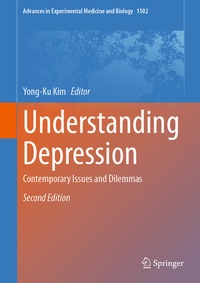
Understanding Depression
Description
This book focuses on contemporary issues and dilemmas in relation to depression. The aim of the book is equip readers with an up-to-date understanding of the clinical and neurobiological underpinning of depression, the clinical manifestations, and the development of more effective treatments.
The book is divided into four sections, the first of which discusses conceptual and diagnostic issues in major depression, highlighting current criticism and future perspective on DSM-5, biological classification, neural circuit taxonomy. The Second section considers symptomatic and clinical issue in major depression, including anhedonia, cognition, pain, suicide, obesity and gender difference. The Third examines important etiological and neurobiological issues, including epigenetics, genetics, HPA axis, neuroimaging, and gut-brain axis. A concluding section is devoted to current therapeutic issues in major depression, focusing new antidepressant, psychedelics, neurostimulation, digital therapy, and personalized integrative treatment.
Understanding Depression is an indispensable resource for psychiatrists, neurologists, pharmacologists, medical researchers and graduate students engaged in affective neuroscience and clinical psychiatry.
More details
Other editions
Additional editions
Previous edition
Person
Dr. Yong-Ku Kim, MD, PhD is prominent South Korean psychiatrist and full Professor of Psychiatry and Biomedical Sciences at Korea University College of Medicine, primarily based at the Korea University Ansan Hospital. He earned his M.D in 1987, followed by a Master's degree in 1991 and Ph.D. in Psychiatry in 1998, all from Korea University. He is recognized globally for his extensive research in biological psychiatry and neuropsychopharmacology. His research focuses heavily on understanding the biological and structural mechanisms behind psychiatric conditions. His main areas of study include Immunopsychiatry, Biomarkers and Pathophysiology of Depression, Biological markers of Suicide, Neuroimaging, and Gut-Brain Axis. He serves as an Associate Editor for Progress in Neuropsychopharmacology and Biological Psychiatry (PNPBP) and sits on the editorial boards of numerous global journals. He is an incredibly prolific author with over 600 papers published across domestic and international medical journals, alongside writing dozens of academic books. He serves as a full member of the prestigious Korean Academy of Medicine. Elsevier and Stanford University have consistently listed him among top 2% most-cited scientists in the world since 2021.
Content
Part I. Conceptual and diagnostic issues.- 1. Current criticism on DSM-5 and future perspective on DSM-6 in major depression.- 2. Diagnostic biomarkers and biogoical classification in major depression.- 3. Neural circuit taxonomy and precision psychiatry in major depression.- 4. Lifelog and Voice Informed Forecast and Detection for diagnosis of major depression.- 5. Differentiation of major depression from bipolar depression.- 6. Rethinking the treatment resistant depression.- 7. Understanding psychotic depression.- Part II. Etiological and neurobiological issues.- 8. Complex role of serotonin-dopamine-glutamate receptors in major depression.- 9. New concept of gene-environment interections and epigenetics in major depression.- 10. Early life stress in HPA axis and MR/GR receptors in the development of major depression.- 11. Molecular, structural and functional neuroimaging in major depression.- 12. Chronic inflammation and neuroprogression in the pathophysiology in major depression.- 13. Understanding the connection between the gut-brain axis and major depression.- 14. Different biological mechanisms and treatments of depressive subtypes.- Part III. Symptomatic and clinical issues.- 15. Reconceptualization of anhedonia as a crucial symptom in major depression.- 16. Chronic pain and major depression: shared psychological and neurobiological mechanism.- 17. Current knowledge of cognitive dimension of major depression.- 18. Suicide behavior as a distinct psychobiology in major depression.- 19. Directional relationship between obesity and major depression.- 20. Gender differences in disease progression in major depression.- 21. Current knowledge of postpartum depression.- 22. Neurobiology and risk factors in late life depression.- Part IV. Therapeutic issues.- 23. New antidepressant development in the treatment of depression.- 24. Chronotherapy in the treatment of major depression.- 25. Psychedelics: future therapeutics in major depression?.- 26. Novel therapeutic strategies for treatment-resistant depression(TRD).- 27. New clinical applications of neurostimulation in major depression.- 28. Promising digital therapeutics in the treatment of major depression.- 29. Novel psychological interventions in the treatment of major depression.- 30. Personalized intergrative treatment in major depression.