

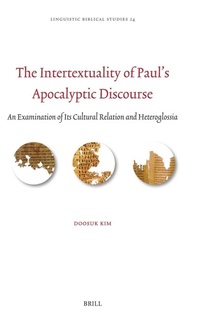
The Intertextuality of Paul's Apocalyptic Discourse
An Examination of Its Cultural Relation and Heteroglossia
Published on 18. May 2023
Book
Hardback
268 pages
978-90-04-54627-1 (ISBN)
Description
This book attempts to investigate two strands in a single work: 'apocalyptic Paul' and 'intertextuality'. First, what does 'apocalyptic Paul' mean? Is it synonymous to eschatology as a theological notion, or the end-time mystery? Many seminal works have delved into the intriguing yet unorganized notion of the 'apocalyptic'. Instead of attempting to provide a universal definition of the 'apocalyptic', the author presents his understanding of the phenomenon, particularly in the cultural realm. The author contends that 'apocalyptic' is neither all about the end-time event nor merely a literary genre, but an interpretive lens to understand the world and social phenomena-one that is shaped and developed through culture and society. Accordingly, the term 'apocalyptic Paul' implies how Paul views and understands the world, history, and supernatural phenomena through interaction with his cultural texts and context. Second, the author also suggests that 'intertextuality' is not only about comparative literature study. Rather, intertextuality refers to cultural semiotics: a sign system to deliver the meaning of text. Based on this notion of intertextuality, the author interprets how Paul envisages multiple phenomena (heavenly ascent, resurrection, afterlife, the origins of sin, and two ages) within his cultural context.
More details
Series
Edition
xvi, 249 pp.
Language
English
Place of publication
Leiden
Netherlands
Target group
Professional and scholarly
Product notice
sewn/stitched
Cloth over boards
Dimensions
Height: 234 mm
Width: 155 mm
Thickness: 16 mm
Weight
544 gr
ISBN-13
978-90-04-54627-1 (9789004546271)
Copyright in bibliographic data and cover images is held by Nielsen Book Services Limited or by the publishers or by their respective licensors: all rights reserved.
Schweitzer Classification
Person
Doosuk Kim, Ph.D. (2022), McMaster Divinity College, is a lecturer at Hanam University and Seoul Bible Graduate School of Theology in South Korea. He has published articles, including "Intertextuality and New Testament Studies" (2022 CBR), and presented papers at SBL and ETS. His main academic interests and expertise include New Testament and linguistics, Apocalyptic Paul, Intertextuality, Paul and Judaism, Discourse Analysis, among others.
Content
Acknowledgements
List of Figures and Tables
AbbreviationsI
1 An Introduction to Apocalyptic Paul
?1.1?The Elephant in the Room: What Is Apocalyptic?
?1.2?Apocalyptic as a Cultural Semiotic
?1.3?Investigating the Meaning of Paul's Apocalyptic Discourse An Overview of Analytic Program
?1.4?What This Book Argues
2 A Survey of Apocalyptic Paul
?2.1?What Counts for Apocalyptic Paul?
?2.2?Apocalyptic Eschatology
?2.3?Apocalyptic as a Revelation
?2.4?Apocalyptic as a Literary Genre
?2.5?The Function of Apocalyptic Writings in Its Social Setting
?2.6?Conclusion
3 Methodology: Intertextual Thematic Formation and Heteroglossia
?3.1?Origins and Fundamental Notion of Intertextuality: Poststructuralism
?3.2?A Suggestion for Poststructuralist Intertextuality
?3.3?A Methodological Proposal to Intertextuality
?3.4?Identifying Thematic Formations and Heteroglossia
?3.5?An Example of Thematic Formation and Heteroglossia
4 Intertextuality of the Other Worldly Journey
?4.1?An Overview
?4.2?An Analysis of Intertextuality of the Heavenly Ascent: 1 Cor 12:1-10, 1 En 14:1-17:5, and the Poimandres
?4.3?Heteroglossia in 2 Corinthians 12
?4.4?Conclusion
5 Intertextuality of the Afterlife
?5.1?An Overview
?5.2?An Analysis of ITFs in 1 Corinthians 15, 1 Enoch, and Plato's Phaedo
?5.3?Heteroglossia in 1 Corinthians 15
?5.4?Conclusion
6 Intertextuality of Sin and Evil
?6.1?An Overview
?6.2?An Analysis of the Intertextuality of Sin and Evil: Rom 5:12-21, Rom 7:7-25, Wisdom of Solomon, and Philo's Opif. and Leg.
?6.3?Heteroglossia in Rom 5:12-21 and 7:5-25
?6.4?Conclusion
7 Intertextuality of Two Ages and Heavenly Jerusalem
?7.1?An Overview
?7.2?An Analysis of Intertextuality of Apocalyptic Eschatology
?7.3?Heteroglossia of Paul's Discourse
?7.4?Conclusion
8 Conclusion
Bibliography
Index of Modern Authors 240
Index of Ancient Sources 245
List of Figures and Tables
AbbreviationsI
1 An Introduction to Apocalyptic Paul
?1.1?The Elephant in the Room: What Is Apocalyptic?
?1.2?Apocalyptic as a Cultural Semiotic
?1.3?Investigating the Meaning of Paul's Apocalyptic Discourse An Overview of Analytic Program
?1.4?What This Book Argues
2 A Survey of Apocalyptic Paul
?2.1?What Counts for Apocalyptic Paul?
?2.2?Apocalyptic Eschatology
?2.3?Apocalyptic as a Revelation
?2.4?Apocalyptic as a Literary Genre
?2.5?The Function of Apocalyptic Writings in Its Social Setting
?2.6?Conclusion
3 Methodology: Intertextual Thematic Formation and Heteroglossia
?3.1?Origins and Fundamental Notion of Intertextuality: Poststructuralism
?3.2?A Suggestion for Poststructuralist Intertextuality
?3.3?A Methodological Proposal to Intertextuality
?3.4?Identifying Thematic Formations and Heteroglossia
?3.5?An Example of Thematic Formation and Heteroglossia
4 Intertextuality of the Other Worldly Journey
?4.1?An Overview
?4.2?An Analysis of Intertextuality of the Heavenly Ascent: 1 Cor 12:1-10, 1 En 14:1-17:5, and the Poimandres
?4.3?Heteroglossia in 2 Corinthians 12
?4.4?Conclusion
5 Intertextuality of the Afterlife
?5.1?An Overview
?5.2?An Analysis of ITFs in 1 Corinthians 15, 1 Enoch, and Plato's Phaedo
?5.3?Heteroglossia in 1 Corinthians 15
?5.4?Conclusion
6 Intertextuality of Sin and Evil
?6.1?An Overview
?6.2?An Analysis of the Intertextuality of Sin and Evil: Rom 5:12-21, Rom 7:7-25, Wisdom of Solomon, and Philo's Opif. and Leg.
?6.3?Heteroglossia in Rom 5:12-21 and 7:5-25
?6.4?Conclusion
7 Intertextuality of Two Ages and Heavenly Jerusalem
?7.1?An Overview
?7.2?An Analysis of Intertextuality of Apocalyptic Eschatology
?7.3?Heteroglossia of Paul's Discourse
?7.4?Conclusion
8 Conclusion
Bibliography
Index of Modern Authors 240
Index of Ancient Sources 245