


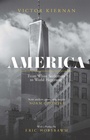
America
From White Settlement to World Hegemony
Published on 15. October 2015
Book
Paperback/Softback
472 pages
978-1-78360-598-9 (ISBN)
Description
While there have been many analyses of American imperialism, few have equalled the breadth or insight of this seminal text, one of the first to provide a historical perspective on the origins of the American empire. Victor Kiernan, one of the world's most respected historians, employs a nuanced knowledge of history, literature, and politics in tracing the evolution of American power.
Far reaching and ambitious in scope, the book combines accounts of the changing relationship between Native Americans and the white population with readings of the works of key cultural figures, such as Melville and Whitman, as well as an analysis of the way in which money and politics became so closely intertwined in American democracy.
Also included is a preface by Eric Hobsbawm providing insight into his own views on American imperialism as well as a valuable introduction to Victor Kiernan's work. Together, they shed useful light on such issues as the uses and misuses of American military might, its lack of respect for international agreements, and the right to pre-emptive defence - issues which remain just as urgent today.
Far reaching and ambitious in scope, the book combines accounts of the changing relationship between Native Americans and the white population with readings of the works of key cultural figures, such as Melville and Whitman, as well as an analysis of the way in which money and politics became so closely intertwined in American democracy.
Also included is a preface by Eric Hobsbawm providing insight into his own views on American imperialism as well as a valuable introduction to Victor Kiernan's work. Together, they shed useful light on such issues as the uses and misuses of American military might, its lack of respect for international agreements, and the right to pre-emptive defence - issues which remain just as urgent today.
Reviews / Votes
Readers of many kinds will have much to learn from a study so packed with information and insight, both conveyed with unflagging elegance. It surveys, period by period, in groups of closely linked essays, U.S. dealings with Amerindians at home and with non-Anglo-Saxon peoples abroad ... And Kiernan is one of the few British historians ... who know how to use literature as evidence. * Angus Calder, in New Edinburgh Review * He (Kiernan) became the master of the perfectly chosen quotation inserted into a demure but uncompromising survey of a global scene. * Eric Hobsbawm * The re-issue of Kiernan's fine study of American imperialism is a very welcome event. His acute analysis, penetrating insights, and immense knowledge have lost none of their luster and are of great contemporary significance. * Noam Chomsky * A graphic account of imperial imaginings * Perry Anderson, in American Foreign Policy and Its Thinkers *More details
Language
English
Place of publication
United Kingdom
Publishing group
Bloomsbury Publishing PLC
Target group
College/higher education
Dimensions
Height: 216 mm
Width: 138 mm
Weight
608 gr
ISBN-13
978-1-78360-598-9 (9781783605989)
Copyright in bibliographic data and cover images is held by Nielsen Book Services Limited or by the publishers or by their respective licensors: all rights reserved.
Schweitzer Classification
Other editions
Persons
Victor Kiernan (1913-2009) ranks among Britain's most distinguished historians. After a fellowship at Trinity College, Cambridge, and a long period spent teaching in India, he joined the History Department at the University of Edinburgh, where he served as professor of modern history from 1970 until his retirement. Over the course of his life he authored such works as The Lords of Human Kind, European Empires from Conquest to Collapse, Shakespeare: Poet and Citizen, Tobacco: A History and numerous others, as well as translating two volumes of Urdu poetry.
Content
Preface by Eric Hobsbawm
Foreword
Introduction by John Trumpbour
Part I: The Winning of the National Territory
1. The Birth of a Nation
2. The Pursuit of Happiness
3. White Man and Red Man
Part II: Middle Decades
1. The Literary Mirror
2. From West Indies to Far East
3. Civil War and After
4. The Last Indian Wars
Part III: Overseas Expansion and the War with Spain
1. The Red Man in Custody
2. New Visions of Empire
3. Latin America and Further Asia
4. Anglo-Saxons and Their Wars
Part IV: Imperial Choices for a New Century
1. The Progressivist Era
2. The Philippines Experiment, and Direct or Indirect Rule
3. Dollar Diplomacy in Central America
4. Old World Frustrations, and Ideas of a New World Order
Part V: Two Strides to World Power
1. Great War and Not So Great Peace
2. Victory and After: The Mirror of Science Fiction
3. America, the World's Banker
4. Slump Years, and a New Look at the Red Indian
5. From Isolationism to Conquest
Part VI: The American Hegemony
1. Capitalism, Militarism and the Cold War
2. The Old Empires and Neo-Colonialism
3. War in Vietnam and its Repercussions
4. The Middle East and Africa
5. Latin America
6. Retrospect and Prospect
Epilogue by John Trumpbour
Foreword
Introduction by John Trumpbour
Part I: The Winning of the National Territory
1. The Birth of a Nation
2. The Pursuit of Happiness
3. White Man and Red Man
Part II: Middle Decades
1. The Literary Mirror
2. From West Indies to Far East
3. Civil War and After
4. The Last Indian Wars
Part III: Overseas Expansion and the War with Spain
1. The Red Man in Custody
2. New Visions of Empire
3. Latin America and Further Asia
4. Anglo-Saxons and Their Wars
Part IV: Imperial Choices for a New Century
1. The Progressivist Era
2. The Philippines Experiment, and Direct or Indirect Rule
3. Dollar Diplomacy in Central America
4. Old World Frustrations, and Ideas of a New World Order
Part V: Two Strides to World Power
1. Great War and Not So Great Peace
2. Victory and After: The Mirror of Science Fiction
3. America, the World's Banker
4. Slump Years, and a New Look at the Red Indian
5. From Isolationism to Conquest
Part VI: The American Hegemony
1. Capitalism, Militarism and the Cold War
2. The Old Empires and Neo-Colonialism
3. War in Vietnam and its Repercussions
4. The Middle East and Africa
5. Latin America
6. Retrospect and Prospect
Epilogue by John Trumpbour