

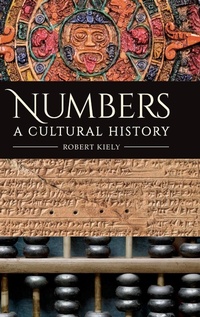
Numbers
A Cultural History
Published on 4. August 2022
Book
Hardback
368 pages
978-1-4408-6933-4 (ISBN)
Description
Numbers: A Cultural History provides students with a compelling interdisciplinary view of the development of mathematics and its relationship to world cultures over 4,500 years of human history.
Mathematics is often referred to as a "universal language," and that is a fitting description. Many cultures have contributed to mathematics in fascinating ways, but despite its "universal" character, mathematics is also a human endeavor. It has played pivotal roles in societies at particular times; and it has influenced, and been influenced by, a wide range of ideas and institutions, from commerce to philosophy. Ancient Egyptian views of mathematics, for example, are tied closely to engineering and agriculture. Some European Renaissance views, on the other hand, relate the study of number to that of the natural world.
This work seeks to place the history of mathematics into a broad cultural context. While it treats mathematical material in detail, it also relates that material to other subject matter: science, philosophy, navigation, commerce, religion, art, and architecture. It examines how mathematical thinking grows in specific cultural settings and how it has shaped those settings in turn. It also explores the movement of ideas between cultures and the evolution of modern mathematics and the quantitative, data-driven world in which we live.
Mathematics is often referred to as a "universal language," and that is a fitting description. Many cultures have contributed to mathematics in fascinating ways, but despite its "universal" character, mathematics is also a human endeavor. It has played pivotal roles in societies at particular times; and it has influenced, and been influenced by, a wide range of ideas and institutions, from commerce to philosophy. Ancient Egyptian views of mathematics, for example, are tied closely to engineering and agriculture. Some European Renaissance views, on the other hand, relate the study of number to that of the natural world.
This work seeks to place the history of mathematics into a broad cultural context. While it treats mathematical material in detail, it also relates that material to other subject matter: science, philosophy, navigation, commerce, religion, art, and architecture. It examines how mathematical thinking grows in specific cultural settings and how it has shaped those settings in turn. It also explores the movement of ideas between cultures and the evolution of modern mathematics and the quantitative, data-driven world in which we live.
More details
Language
English
Place of publication
United States
Publishing group
Bloomsbury Publishing Plc
Target group
College/higher education
Primary & secondary/elementary & high school
Illustrations
27 bw illus
Dimensions
Height: 240 mm
Width: 161 mm
Thickness: 24 mm
Weight
710 gr
ISBN-13
978-1-4408-6933-4 (9781440869334)
Copyright in bibliographic data and cover images is held by Nielsen Book Services Limited or by the publishers or by their respective licensors: all rights reserved.
Schweitzer Classification
Other editions
Additional editions
E-Book
08/2022
1st Edition
ABC-CLIO
€138.99
Available for download
Person
Robert Kiely, PhD, teaches the history of ideas in the Liberal Arts Department of the School of the Art Institute of Chicago, USA.
Content
Preface
Introduction
1. Numbers in Ancient Mesopotamia
2. Numbers in Ancient Egypt
3. Numbers in Ancient Greece
4. Numbers in the Hellenistic Mediterranean
5. Numbers in Traditional China
6. Numbers and the Classical Maya
7. Numbers in Ancient and Medieval India
8. Numbers in the Medieval Arabic World
9. Numbers in Medieval Europe
10. Numbers in Early Modern Europe
11. Numbers in 18th- and 19th-Century Europe
12. Women and Numbers
13. Numbers in the 20th Century
Appendix: A Brief Look at Navigation
Bibliography
Index
Introduction
1. Numbers in Ancient Mesopotamia
2. Numbers in Ancient Egypt
3. Numbers in Ancient Greece
4. Numbers in the Hellenistic Mediterranean
5. Numbers in Traditional China
6. Numbers and the Classical Maya
7. Numbers in Ancient and Medieval India
8. Numbers in the Medieval Arabic World
9. Numbers in Medieval Europe
10. Numbers in Early Modern Europe
11. Numbers in 18th- and 19th-Century Europe
12. Women and Numbers
13. Numbers in the 20th Century
Appendix: A Brief Look at Navigation
Bibliography
Index