

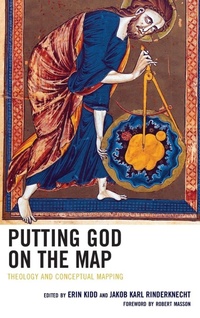
Putting God on the Map
Theology and Conceptual Mapping
Published on 15. September 2018
Book
Hardback
268 pages
978-1-9787-0396-4 (ISBN)
Description
Since the middle of the last century, the emergence and development of fields as diverse as artificial intelligence, evolutionary science, cognitive linguistics, and neuroscience have led to a greater understanding of the ways in which humans think. One of the major discoveries involves what researchers refer to as conceptual mapping. According to theories of conceptual mapping, human thought is profoundly shaped by the ability to make connections. Simply put, human thinking is metaphorical all the way down. This insight has revolutionized the way in which scientists and philosophers think about the mind/body problem, the formation and function of language, and even the development of scientific progress itself. Until recently however, this research has gone largely unnoticed within Christian theology. But this revolution in understanding human cognition calls for broader and richer engagement with theology and religious studies: How does this new insight into human meaning-making bear on our understanding of religious meaning-making? And how might Christian theology interpret and respond to this new understanding of the development of human thought?
This edited volume offers an introduction to conceptual mapping that is accessible to those with no previous knowledge of the field, and demonstrates the substantial resources this interdisciplinary research has for thinking about a variety of theological questions. The book begins with a chapter introducing the reader to the basics of conceptual mapping. The remaining chapters apply these insights to a variety of theological topics including anthropology, sacramental theology, biblical studies, ecumenical theology, and ethics.
This edited volume offers an introduction to conceptual mapping that is accessible to those with no previous knowledge of the field, and demonstrates the substantial resources this interdisciplinary research has for thinking about a variety of theological questions. The book begins with a chapter introducing the reader to the basics of conceptual mapping. The remaining chapters apply these insights to a variety of theological topics including anthropology, sacramental theology, biblical studies, ecumenical theology, and ethics.
Reviews / Votes
I enjoyed reading Putting God on the Map and consider it essential for getting a handle on some "first principles" of theology . . . Putting God on the Map is exemplary theological prolegomena and a genuine example of how interdisciplinary studies can be beneficial. * Reading Religion * Kidd and Rinderknecht have assembled an excellent collection of essays that brings insights from the cognitive sciences to bear on key loci in Christian theology and theological anthropology. Together, these essays shed important new light on how distinctive aspects of human embodiment and our capacities for symbolic thinking can shape our ideas about God, our engagement with God, and our understanding of humanity's relationship to God. The book is engaging and accessible; and, focusing as it does on issues at the intersection of philosophy, theology, and the cognitive sciences, it is also richly interdisciplinary. -- Michael Rea, University of Notre Dame Cognitive linguistics offers incredibly helpful tools to understand what is going on in theological debates. This book nicely adds to the growing list of people using conceptual blending to help Christians better understand, and perhaps even resolve, debates ranging from the Eucharist to frozen embryos. -- John Sanders, Hendrix CollegeMore details
Language
English
Place of publication
United States
Publishing group
Bloomsbury Publishing Plc
Target group
Professional and scholarly
Illustrations
23 b/w illustrations;
Dimensions
Height: 235 mm
Width: 157 mm
Thickness: 21 mm
Weight
593 gr
ISBN-13
978-1-9787-0396-4 (9781978703964)
Copyright in bibliographic data and cover images is held by Nielsen Book Services Limited or by the publishers or by their respective licensors: all rights reserved.
Schweitzer Classification
Other editions
Additional editions
E-Book
09/2018
1st Edition
Lexington Books/Fortress Academic
€107.99
Available for download
E-Book
09/2018
1st Edition
Bloomsbury eBooks US
€107.99
Available for download
Persons
Erin Kidd is assistant professor in the Department of Theology and Religious Studies at St. John's University.
Jakob Karl Rinderknecht is the director of the Pastoral Institute at the University of the Incarnate Word.
Jakob Karl Rinderknecht is the director of the Pastoral Institute at the University of the Incarnate Word.
Content
Foreword
Robert Masson
Chapter One: An Introduction to Conceptual Mapping
Erin Kidd & Jakob Karl Rinderknecht
Chapter Two: The Embodied Mind and How to Pray With One
Erin Kidd
Chapter Three: Homo Symbolicus: Cognition and Communion
Julia Feder
Chapter Four: Conceptual Blending, Human Distinctiveness, and the Image of God
Jason P. Roberts
Chapter Five: Kenosis as a Pauline Metaphor within a Double-scope Blend
Christopher M. Hadley
Chapter Six: Eucharistic Spirituality and Metaphoric Asymmetry
Stephen R. Shaver
Chapter Seven: Conceptual Mapping and Reception in Ecumenical Theology
Jakob Karl Rinderknecht
Chapter Eight: My Good, Your Good, and the Good: Conceptual Mapping and Altruism
Adam Willows
Chapter Nine: Beyond 'Cannot Be Resolved': Considering Ways Forward for Frozen Embryos
Kathryn Lilla Cox
Robert Masson
Chapter One: An Introduction to Conceptual Mapping
Erin Kidd & Jakob Karl Rinderknecht
Chapter Two: The Embodied Mind and How to Pray With One
Erin Kidd
Chapter Three: Homo Symbolicus: Cognition and Communion
Julia Feder
Chapter Four: Conceptual Blending, Human Distinctiveness, and the Image of God
Jason P. Roberts
Chapter Five: Kenosis as a Pauline Metaphor within a Double-scope Blend
Christopher M. Hadley
Chapter Six: Eucharistic Spirituality and Metaphoric Asymmetry
Stephen R. Shaver
Chapter Seven: Conceptual Mapping and Reception in Ecumenical Theology
Jakob Karl Rinderknecht
Chapter Eight: My Good, Your Good, and the Good: Conceptual Mapping and Altruism
Adam Willows
Chapter Nine: Beyond 'Cannot Be Resolved': Considering Ways Forward for Frozen Embryos
Kathryn Lilla Cox