


Manchester
3rd Edition
Published on 8. May 2002
Book
Paperback/Softback
288 pages
978-0-7486-1551-3 (ISBN)
Description
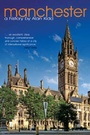
The core of this text tells the story of Manchester's emergence as the first great industrial city between 1780 and 1850, and its time until World War I as the "Capital of Cotton". Alongside his history of Manchester's economy and politics, with its tale of factories, utilitarian entrepreneurs, Peterloo and the emergence of a politicized working class, the author places a less familiar history of the people and their culture. The development of middle-class suburban havens like Didsbury and Rusholme, the cinemas and music halls, the libraries and newspapers, and the great Victorian buildings typified by Waterhouse's Town Hall all contribute to this complex portrait. The last third of the book tells the story of Manchester's 20th-century deindustrialization (mirroring Britain's retreat from commercial predominance) and the dynamic regeneration of the last few years.
The core of this text tells the story of Manchester's emergence as the first great industrial city between 1780 and 1850, and its time until World War I as the "Capital of Cotton". Alongside his history of Manchester's economy and politics, with its tale of factories, utilitarian entrepreneurs, Peterloo and the emergence of a politicized working class, the author places a less familiar history of the people and their culture. The development of middle-class suburban havens like Didsbury and Rusholme, the cinemas and music halls, the libraries and newspapers, and the great Victorian buildings typified by Waterhouse's Town Hall all contribute to this complex portrait. The last third of the book tells the story of Manchester's 20th-century deindustrialization (mirroring Britain's retreat from commercial predominance) and the dynamic regeneration of the last few years.
The core of this text tells the story of Manchester's emergence as the first great industrial city between 1780 and 1850, and its time until World War I as the "Capital of Cotton". Alongside his history of Manchester's economy and politics, with its tale of factories, utilitarian entrepreneurs, Peterloo and the emergence of a politicized working class, the author places a less familiar history of the people and their culture. The development of middle-class suburban havens like Didsbury and Rusholme, the cinemas and music halls, the libraries and newspapers, and the great Victorian buildings typified by Waterhouse's Town Hall all contribute to this complex portrait. The last third of the book tells the story of Manchester's 20th-century deindustrialization (mirroring Britain's retreat from commercial predominance) and the dynamic regeneration of the last few years.
More details
Series
Edition
3rd Revised edition
Language
English
Place of publication
Lancaster
United Kingdom
Target group
Professional and scholarly
Edition type
Revised edition
Illustrations
76 b/w illustrations
Dimensions
Height: 235 mm
Width: 159 mm
Weight
625 gr
ISBN-13
978-0-7486-1551-3 (9780748615513)
Copyright in bibliographic data is held by Nielsen Book Services Limited or its licensors: all rights reserved.
Schweitzer Classification
Other editions
New editions
Book
05/2007
4th Edition
Carnegie Publishing Ltd
€26.20
Article is exhausted; no reprint