


The Death of Hamlet
A Counterfactual Reading of Shakespeare
1st Edition
Published on 7. January 2025
Book
Hardback
128 pages
978-1-032-73462-0 (ISBN)
Description
This book is an intervention in Hamlet scholarship. In Thus Spake Zarathustra (1885), Nietzsche famously posited the death of God, taken to mean the dissolution of all horizons within which human beings construct a plausible ontology that gives words significance. The idea of God, as a transcendental signified (to borrow from Derrida), underwrites meaning and values. Socrates placed knowing as the highest philosophical good over two millennia ago; however, once we find that God (i.e. any transcendental signified) is unknowable, the world vanishes. In a world bereft of concepts and meaning, Nietzsche's philosophical project becomes one of "redeeming" pure willing as itself constitutive of world.
Hamlet and the criticism surrounding it is caught within competing horizons we know are circuitous and unending. We tiresomely make theoretical rounds between competing sets of interpretations that boil down to either establishing meaning within the play (the text transcending its history and revealing universal truths) or situating the text within its proper historical timeframe in order to get it to speak. In short, we are trapped between contextualizing and decontextualizing approaches. Yet we know both approaches, as competing horizons we commit to at the outset, are dead. But to abandon both at the outset means that the text, Hamlet, is itself dead. So how to get it to speak?
Hamlet and the criticism surrounding it is caught within competing horizons we know are circuitous and unending. We tiresomely make theoretical rounds between competing sets of interpretations that boil down to either establishing meaning within the play (the text transcending its history and revealing universal truths) or situating the text within its proper historical timeframe in order to get it to speak. In short, we are trapped between contextualizing and decontextualizing approaches. Yet we know both approaches, as competing horizons we commit to at the outset, are dead. But to abandon both at the outset means that the text, Hamlet, is itself dead. So how to get it to speak?
Reviews / Votes
"A take-no-prisoners account of Hamlet and its critical and political afterlives. Original and provocative."--Professor Richard Halpern, New York University, USA
"Amir Khan's captivating exploration of Ah Q and Hamlet shifts focus away from Hamlet's delay and refreshingly revitalizes Hamlet's inner life. Khan reveals a vast and relevant landscape of Shakespearean interpretations. Bold and thought-provoking, this book redefines our understanding of Hamlet."
-Dr. Ivy Hao Liu, Tsinghua University, People's Republic of China
More details
Series
Language
English
Place of publication
London
United Kingdom
Publishing group
Taylor & Francis Ltd
Target group
College/higher education
Postgraduate
Illustrations
1 s/w Abbildung, 1 s/w Photographie bzw. Rasterbild
1 Halftones, black and white; 1 Illustrations, black and white
Dimensions
Height: 235 mm
Width: 157 mm
Thickness: 13 mm
Weight
370 gr
ISBN-13
978-1-032-73462-0 (9781032734620)
Copyright in bibliographic data and cover images is held by Nielsen Book Services Limited or by the publishers or by their respective licensors: all rights reserved.
Schweitzer Classification
Other editions
Additional editions
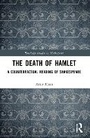
Book
approx. 07/2026
1st Edition
Routledge
€57.50
Not yet published
E-Book
01/2025
1st Edition
Routledge
€60.49
Available for download
E-Book
01/2025
1st Edition
Routledge
€60.49
Available for download
Person
Amir Khan is Associate Professor of English in the Foreign Studies College at Hunan Normal University in Changsha. His books include Shakespeare in Hindsight (2016) and Comedies of Nihilism (2017). He is also managing editor of Conversations: The Journal of Cavellian Studies. He lives and works in China.
Content
Preface
1. Overture, or How to Do Things with Greg
2. Invisible Speech in Hamlet
3. Ah Q and Hamlet: Materialism meets Modernity
4. Hamlet as Conspirator: A Reading of Julius Caesar
5. Timon of Athens and the Pursuit of Human Unhappiness
6. Marxian Coda
1. Overture, or How to Do Things with Greg
2. Invisible Speech in Hamlet
3. Ah Q and Hamlet: Materialism meets Modernity
4. Hamlet as Conspirator: A Reading of Julius Caesar
5. Timon of Athens and the Pursuit of Human Unhappiness
6. Marxian Coda